Spend five minutes in any griddle group on Facebook, and you’ll see the same post. A photo of a blotchy, sticky top, and one line underneath: What did I do to my griddle?
The replies don’t help. Use bacon. Never use bacon. Crisco. Avocado oil. Don’t you dare let soap touch it.
Almost every one of those griddles is suffering from the same handful of seasoning myths and mistakes. Here they are, counting down to the one behind more flaking than anything else.
What even is ‘Seasoning’?
Get a thin coat of oil hot enough to smoke, and it polymerizes, a fancy way of saying the oil stops being a liquid and hardens into a tough, slick film, like varnish drying hard on a wooden deck. Each coat adds another, which keeps rust off and stops food from sticking.
17. Why your seasoning keeps turning sticky
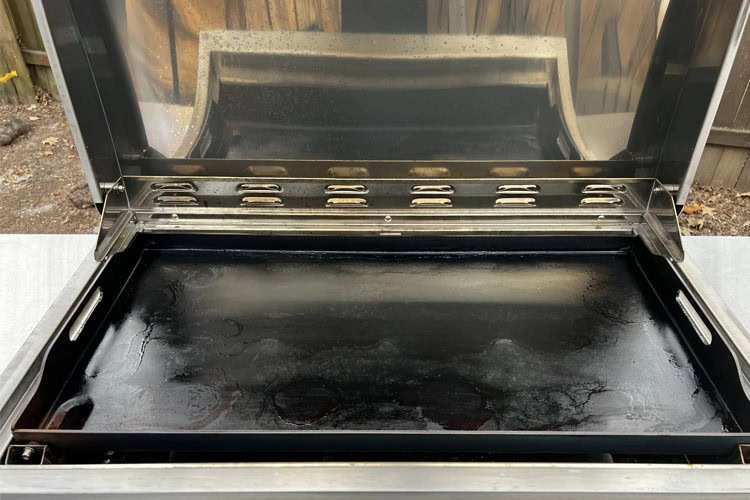
You’ve done five coats, the top looks dark, and it still grabs at the paper towel like tape. That tacky finish is the most common seasoning complaint you hear.
The culprit is usually impatience when each new coat goes down before the last one has finished curing.
Every coat smokes, then thins out and stops. That smoke is the oil polymerizing into a hard layer, and adding more while it’s still rolling just stacks liquid on liquid until the steel can’t take any more.
Scrape the excess off while the top is warm, then give it a light pass with a griddle stone. Not down to bare metal, just back to an even surface.
Then go again with thin coats, and wait for the smoke to stop every time. Around 15 minutes per coat is normal.
16. Thinking your new griddle looks ruined
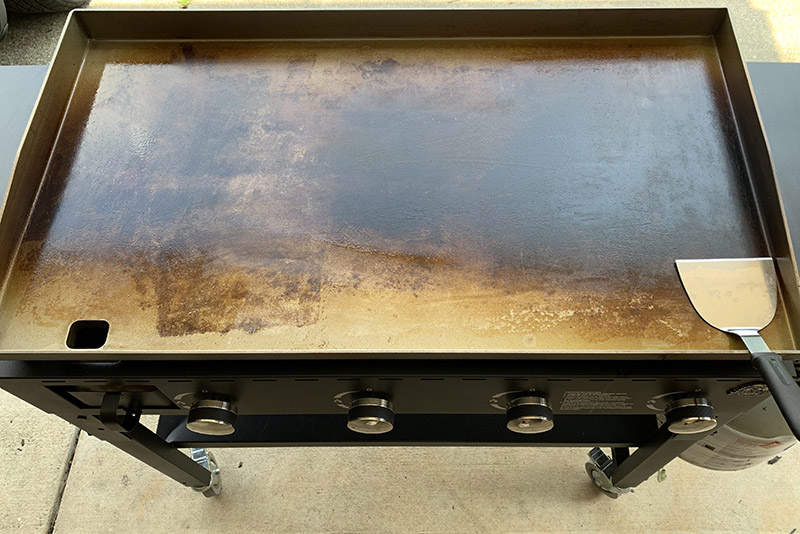
Brown patches, bronze streaks, a pale band around the border, scuffs wherever the spatula went. Plenty of new owners look at that and assume they’ve wrecked it.
They haven’t. That’s what young seasoning looks like. The layers are still thin and the steel hasn’t evened out yet.
The color keeps changing after you finish, too. The top darkens as it cools, and the light patches fill in with every cook while the dark areas keep building.
SEASONING MYTH: Your griddle has to be jet black before you cook on it. It doesn’t. Once the initial coats are done, start cooking. Cooking is what finishes the job.
Refer to our guide on seasoning a new griddle for the full process.
15. Seasoning a brand new top with bacon
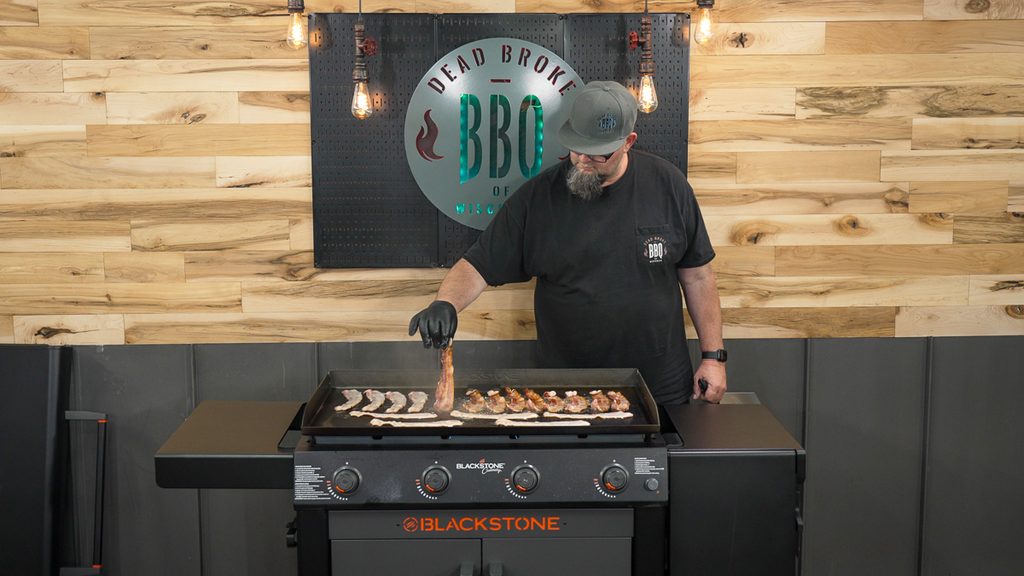
A pound of bacon is the most repeated break-in advice online. Blackstone’s own chef tells people not to do it.
Store bacon is cured, so salt and nitrates come along with the fat. According to Blackstone, a base layer built from it turns dry and brittle, then chips and flakes off.
There’s a catch, and it explains why the advice won’t die. If you cook on your griddle every single day, almost any fat holds up, because fresh layers keep going down.
Most people cook once or twice a week, or leave the griddle parked for a month between camping trips. That’s when bacon fails.
Base layers in plant oil. Bacon for breakfast afterward.
14. Reaching for flaxseed (or a fake avocado oil)
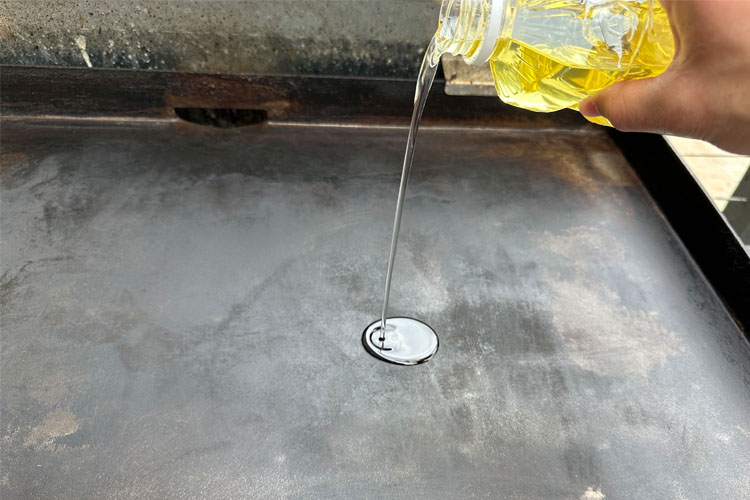
Flaxseed oil has a cult following in the cast iron world, where it builds a hard, glossy finish. It also has a reputation for turning brittle and flaking, which is the last thing you want on a surface you scrape every cook.
A griddle makes it harder still. You can’t hold one at a steady oven temperature, and the steel runs well past flaxseed’s smoke point during seasoning.
Avocado oil is a great pick, but read the label. Some bottles are blends cut with olive oil, and you want 100% avocado. Grapeseed, canola, and Crisco all season well too.
If you’d rather skip the label reading altogether, Blackstone’s Griddle Seasoning and Cast Iron Conditioner is made for the job. It’s a paste rather than a pour, so it spreads thin and is hard to over-apply, which heads off the sticky and flaking problems further down this list. One tub covers the first seasoning and plenty of top-ups after.
13. Oiling a griddle that isn’t hot yet
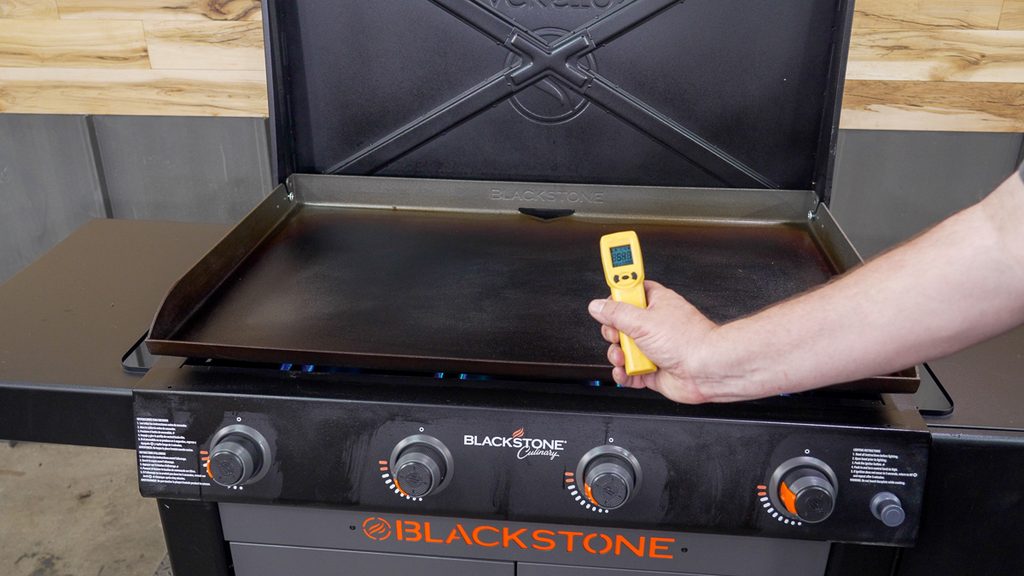
The first coat should hit steel that has already been running on high for 10 to 15 minutes. Not three.
Wait for the color change. Bronze and blue tinges spread across the plate as the factory residue burns off, and that’s the signal it’s ready.
Oil a cool top and it soaks into a surface that can’t cure it yet. You’ve made a sticky film, not a seasoning layer.
12. Feeding a young top tomato sauce and teriyaki
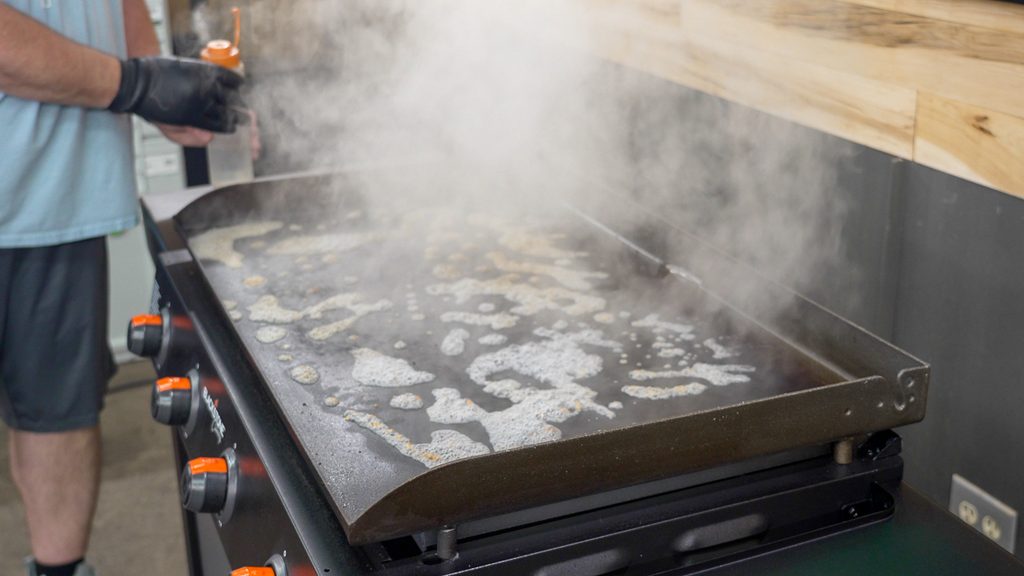
Sauce and glaze aren’t banned, they just need the right cleanup. Water on a hot top does most of the work
Acid eats seasoning. Tomato sauce, citrus, vinegar, and wine all work on it, and a new top doesn’t have many layers to spare.
Sugar does its damage differently. Teriyaki and sweet glazes caramelize hard onto the steel, and the scraping it takes to get them off strips seasoning along with the residue.
Neither is off the menu for good. Birria dipped in enchilada sauce is a flat top favorite for a reason.
Give the top a few weeks of regular cooks first, and re-season after the cook when you do.
11. Seasoning with short tools and bare hands
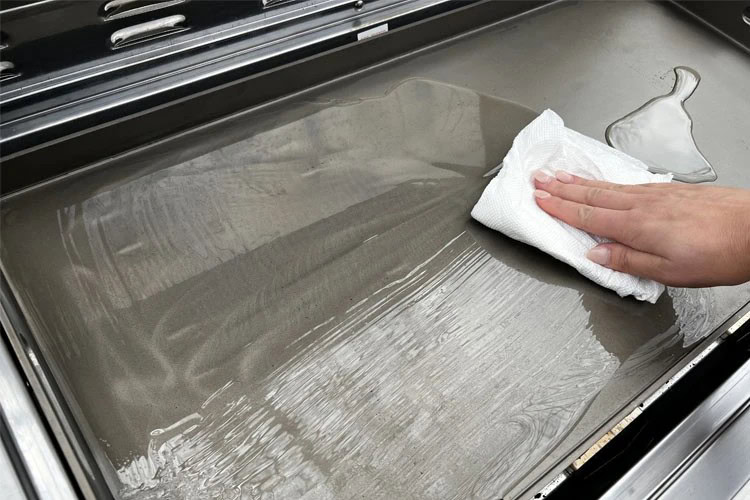
During seasoning the steel sits somewhere between 450°F and 600°F, and an oil-soaked paper towel picks up that heat fast.
Hold a folded wad in long tongs, and wear heat-resistant gloves. Plain paper towels hold together at this heat better than shop towels do.
Keep a metal bucket or foil pan beside the griddle for the used ones. Hot, oily paper in a plastic trash can is how a seasoning session turns into a fire.
10. Counting coats instead of watching the color
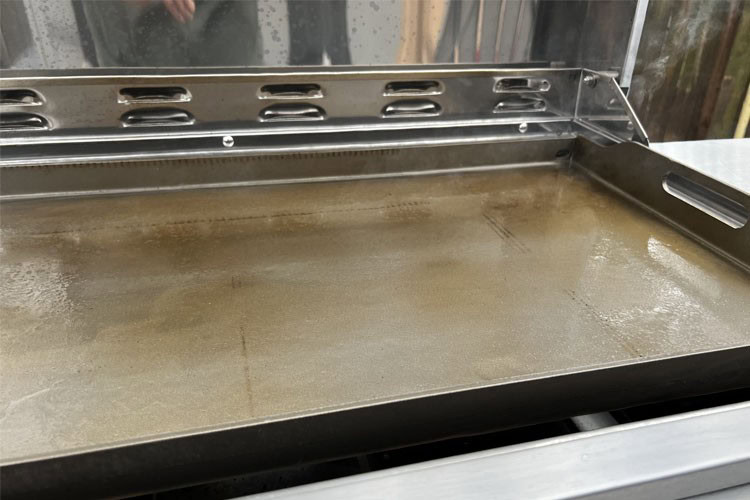
Blackstone suggests three or four coats. Their own chef usually stops at four, sometimes five. One owner needed seven to get his top black from edge to edge, and the whole job took close to two hours.
None of them did it wrong. Burner output, weather and the oil all change how fast the steel takes a coat, so the number was never the point.
Stop when the cooking surface is an even, deep brown to black. Don’t chase jet black while it’s still hot, because it darkens as it cools.
And start with a full propane tank. One that dies on coat five leaves you with a half-cured layer on a cooling plate.
09. Getting the first wash wrong
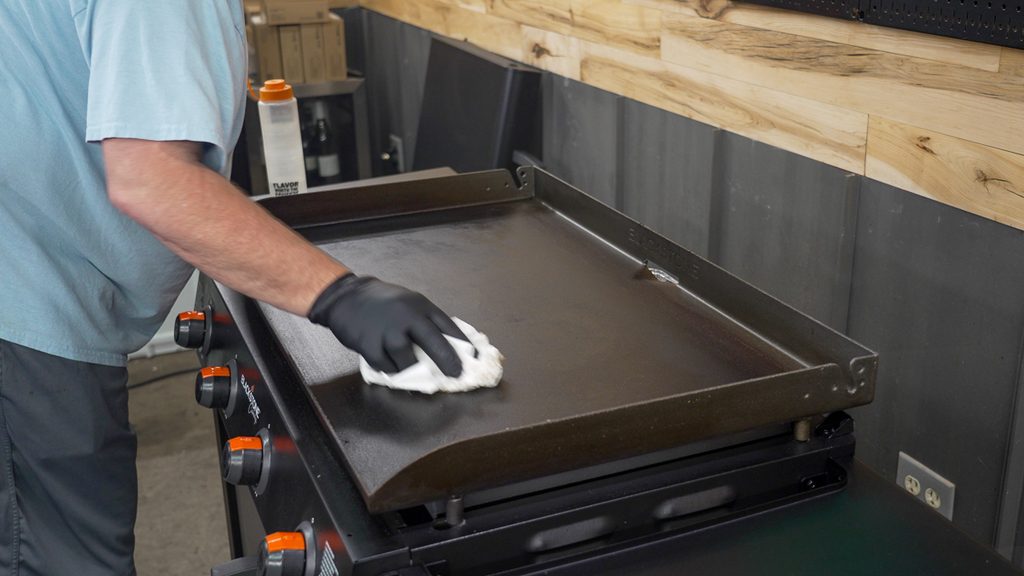
A new griddle needs a wash before the first coat. Factory oil, dust and sticky residue from the packing tape all have to come off, or they get baked into your base layer.
Go light on the soap. A heavily soaped top takes forever to rinse, and any film left behind cooks straight into the seasoning.
A few drops on a damp shop towel, a thorough rinse, then dry every inch. Shop towels won’t leave lint stuck to the steel the way paper towels do.
Pre-seasoned tops still get the wash. A factory coat is a starting point, not a finished one.
SEASONING MYTH: Soap should never touch a seasoned griddle – A little mild soap won’t strip properly cured seasoning. It just isn’t needed day to day, because scraping and a squirt of water clean a hot griddle better. A scrubbing pad does far more damage than the soap ever will.
08. Re-seasoning at the wrong point in the cook
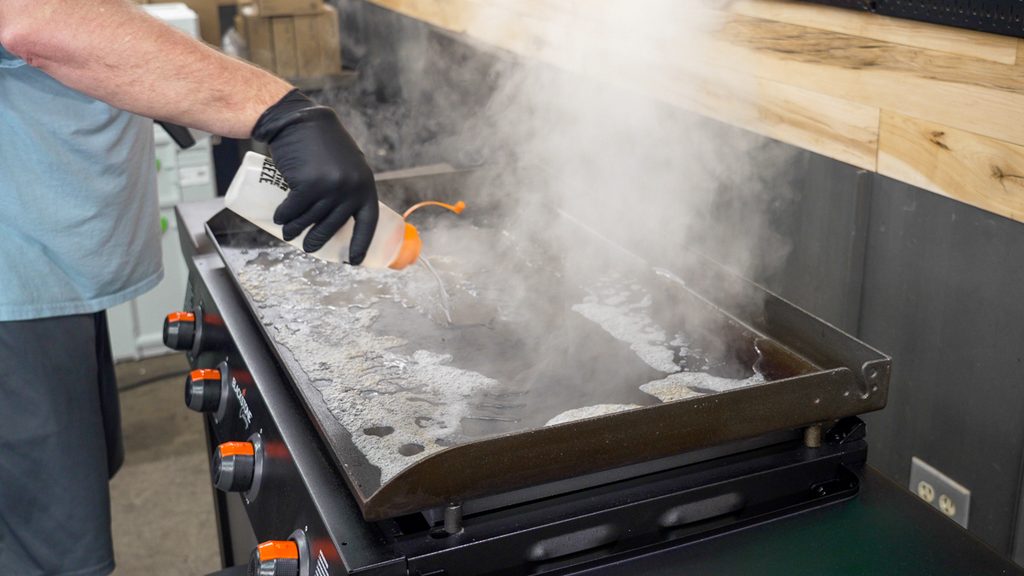
A quick re-season fits around a cook, and whether it goes before or after depends on what’s for dinner.
Steak, wings or smash burgers? Do it before. Wipe a thin coat on the clean top and preheat as normal. By the time it’s smoking you’ve re-seasoned, and you were heading that hot anyway.
Pancakes and eggs? Do it after. Nobody needs a 475°F griddle for breakfast, so cook first, scrape it clean, then add the coat once the food is off.
07. Wasting the first cook on something lean
Screenshot
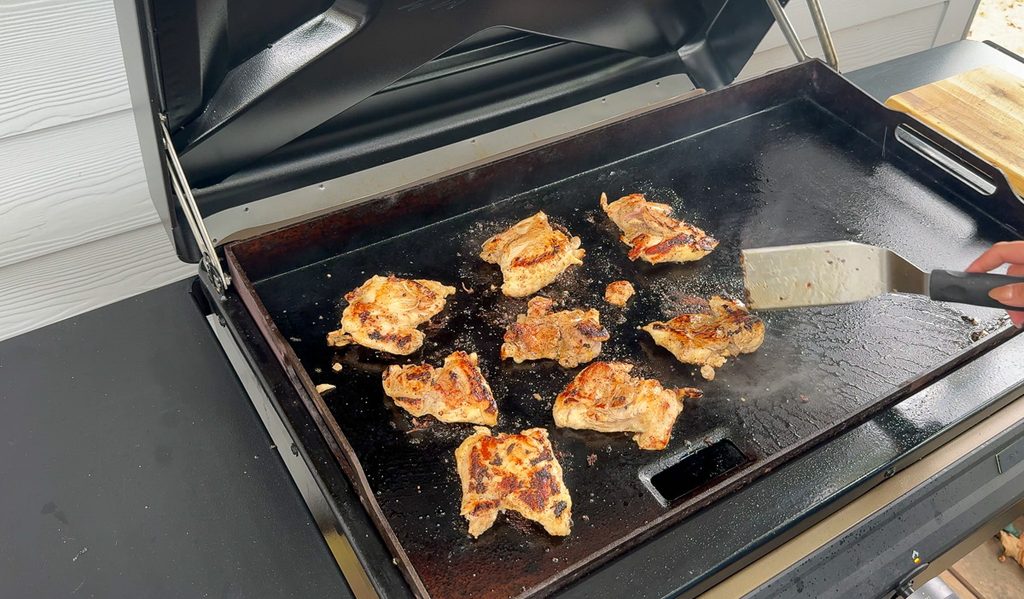
The first few cooks are still part of the seasoning. A plain chicken breast does nothing for it.
Onions, peppers, zucchini and sliced potatoes all want a little oil, and pushing them around the plate works that oil into every corner. A cheesesteak on fatty ribeye is even better, because rendered beef fat goes down as you cook.
By the end of that cook you’ll feel the surface getting slicker under the spatula.
Make breakfast the second cook. That’s when you learn your hot spots and find any patches that want another coat.
06. Always Re-seasoning on high
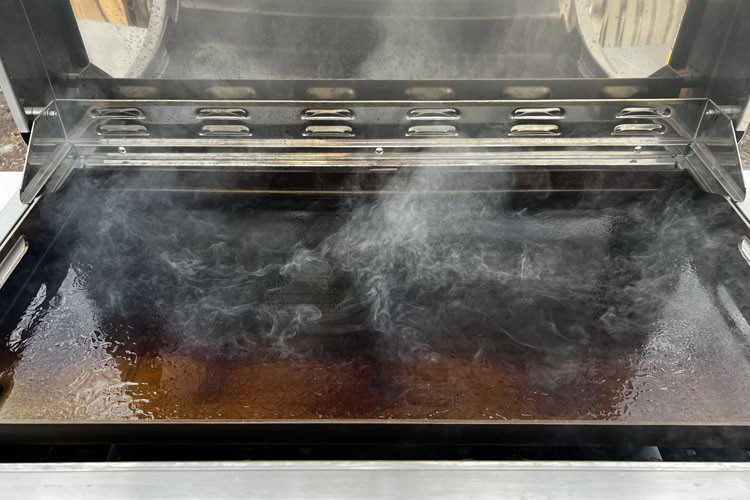
The first seasoning runs on high because you’re building on bare steel. Topping it up needs nowhere near that.
Clean the top, wipe on a thin coat, and leave the burners on low. Even low reaches smoke point in three to five minutes, because the flame never stops feeding the plate.
Once it smokes, shut off the burners and the tank. Residual heat finishes the job.
05. Forgetting the sides and the grease trough
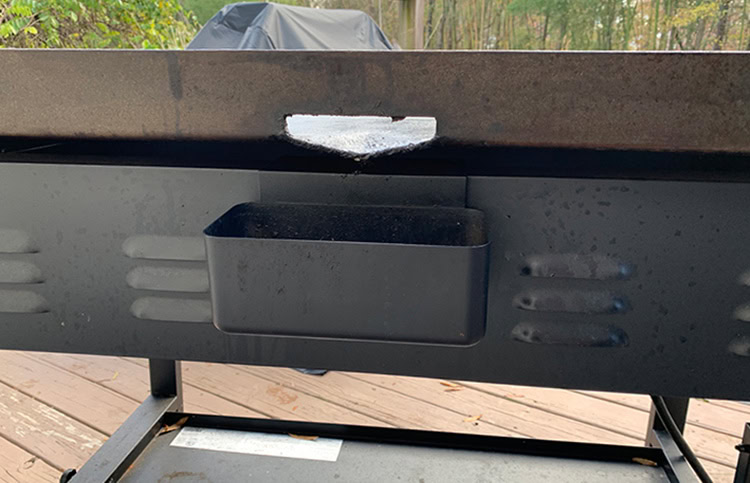
Ask experienced owners where a griddle rusts first and they all point to the same spot. The grease trough.
It collects water, rarely gets a proper coat, and nobody looks at it until it’s orange. The sides, front lip and back edge get skipped almost as often.
Run the oil all the way to the outer edges and into the trough on every coat, re-seasons included. Then let it smoke like the rest of the plate.
04. Treating seasoning as one and done
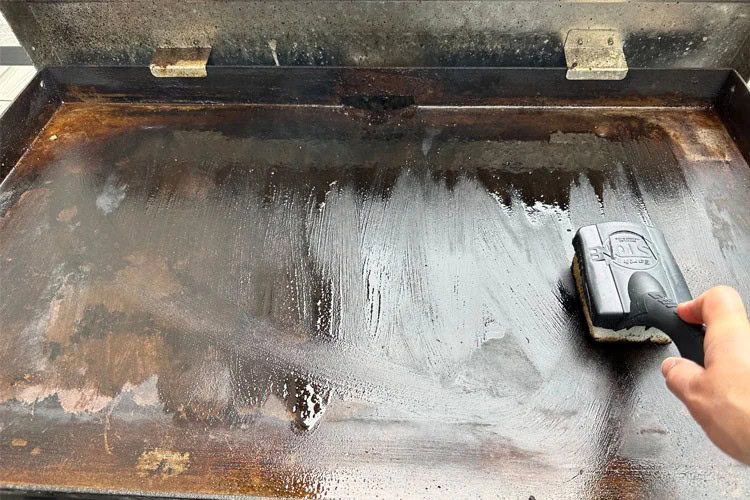
Those first coats aren’t permanent. Every cook takes a little off, whether it’s scraping, steam, acidic sauce or the hard clean after a sticky glaze.
The signs are easy to miss. Eggs that used to slide start to grab. Patches turn bronze. Water stops beading on the surface.
Plenty of experienced griddle cooks rank re-seasoning above cleaning. A quick top-up on low after a cook keeps the layers building instead of wearing down.
SEASONING MYTH: The oil you wipe on after cleaning counts as re-seasoning. It’s protection, and you should keep doing it, because a thin film stops moisture reaching the steel between cooks. But oil only becomes seasoning when the steel takes it to smoke point. Without the heat, it’s still just oil.
03. Why the edges never turn black
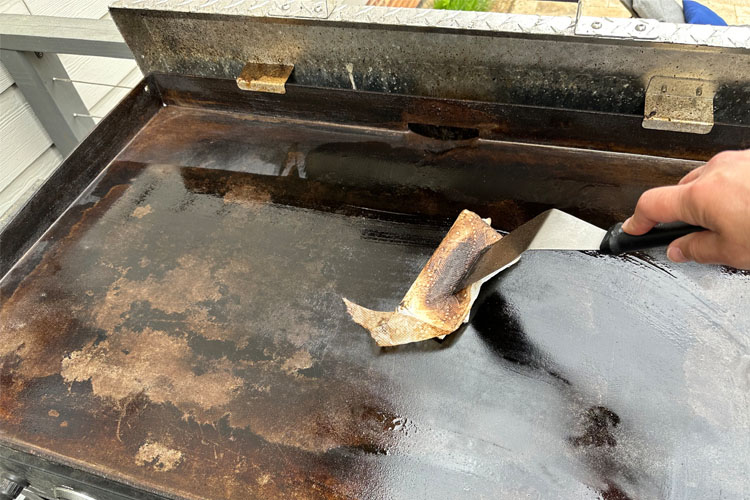
The burners sit under the middle of the plate. The edges never get the same heat, so they’re always the last to darken.
Push a heavy coat across the whole top and you can watch the problem happen. The middle smokes, separates and dries out while the edges stay wet and pale, because they never got hot enough to start.
Same coat. Scorched in the middle, barely seasoned at the edges.
An infrared thermometer shows you the spread in seconds. Feed the hot zone with the oil already in your towel instead of adding more, and give the edges time to catch up before the next layer.
Flooding pale edges with extra oil only makes them sticky.
02. Stripping it to bare metal over bronze patches
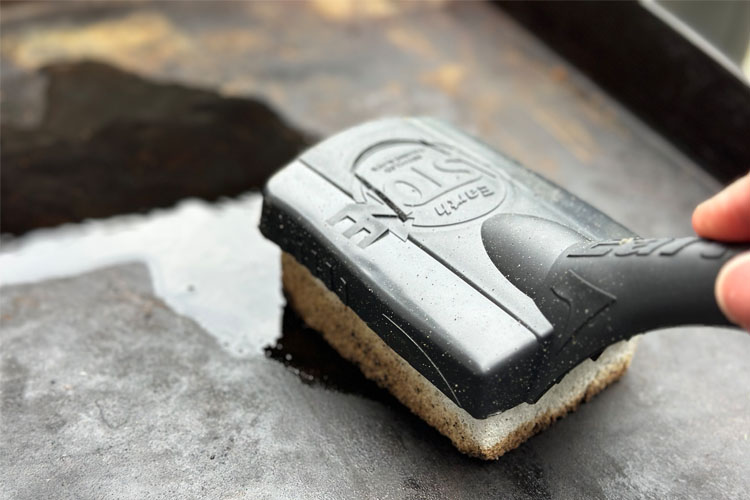
Some owners see uneven color and go straight for a drill and a wire wheel. Then they spend the next two hours seasoning a bare griddle from scratch.
Bronze patches don’t mean the seasoning failed. If the surface is smooth, firmly attached and free of rust, it wants another coat, not a restart.
Real flaking, heavy buildup or rust is different, and even then, start gentle. A griddle stone and a little oil lift most of it.
Bare steel should be the last resort, not the first.
01. Laying it on thick
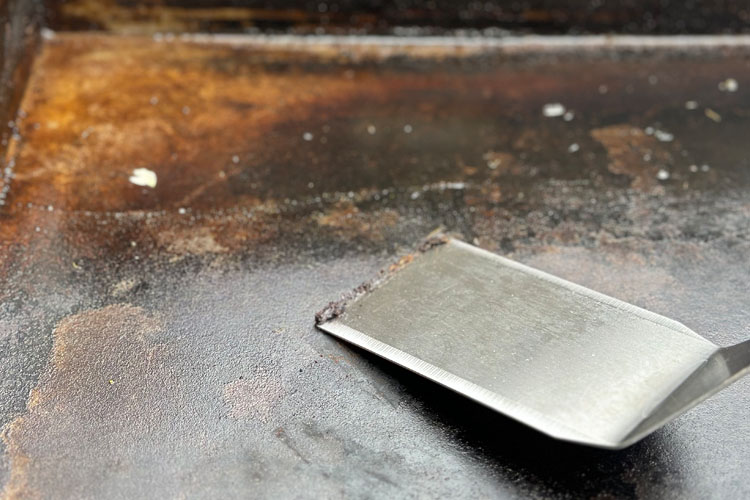
Ask anyone who has seasoned a lot of griddles what matters most and you get the same three words. Thin, even, smooth.
Blackstone’s own method uses two to three tablespoons per coat on a full 36-inch top. Spread it with a paper towel in tongs until the surface barely looks wet. If it pools or streaks, keep wiping. A spatula leaves ridges and puddles, so skip it.
Thick coats never bond properly. They build into dark patches that look a lot like rust, then turn brittle and chip off in flakes a few weeks later.
If it has already happened, Blackstone’s fix is simple. Heat the griddle on high for 10 minutes, turn it off, add a little oil, and work the buildup with a griddle stone. Wipe, repeat until the patches are gone, then re-season.
Getting Your Seasoning Right
Nearly every problem on this page comes back to thin coats, enough heat, and waiting for each coat to smoke out before the next one goes on. Nail those three and the sticky patches, pale edges and flaking mostly sort themselves out.
If your top still looks patchy, keep cooking on it. Every cook adds another layer.
Then make sure your cooking isn’t undoing the work. Our list of costly griddle mistakes covers the habits that trip up new owners, from trusting the knobs to the preheat that can warp a top.
Did you miss our previous article...
https://manstuffnews.com/backyard-grilling/english-cut-smoked-beef-ribs
 Backyard GrillingWeekend WarriorsAdvice from DadBeard GroomingTV Shows for Guys4x4 Off-Road CarsMens FashionSports NewsAncient Archeology World NewsPrivacy PolicyTerms And Conditions