The Ultimate Crowd-Pleaser: Apple Wood Smoked Pork Loin
When it comes to versatility, value, and sheer “wow factor” on a budget, nothing beats a whole Smoked Pork Loin. If you’re looking for a recipe that can feed a backyard full of hungry guests, or provide you with the best sandwich leftovers of your life, you’ve landed in the right spot.
Pork Loin is a magnificent, lean cut taken from the back of the pig. It’s often confused with the much smaller pork tenderloin, but the loin is a heavy-hitter, much larger in size and perfectly suited for a low-and-slow smoke session. Because it is so lean, it acts like a sponge for flavor, making it the perfect canvas for your favorite BBQ rub and a “kiss” of sweet fruitwood smoke.
Slowly smoked over apple wood, this pork loin stays incredibly juicy, turning a humble cut of meat into a tender, sliceable masterpiece. Whether you are hosting a Sunday family dinner or meal-prepping for the week ahead, this technique is easy to master and consistently delicious.
So, let’s get that smoker stabilized. Sit back, grab your favorite beverage, and enjoy this guide to the Apple Wood Smoked Pork Loin.
Why the Pork Loin is a BBQ Cheat Code:
The “Lean” Win: It’s a lighter alternative to brisket or pork butt that still delivers big on wood-fired flavor.
Scale: One loin can easily feed 10-12 people without breaking the bank.
Versatility: Slice it thick for “pork steaks” or thin for the ultimate smoked ham substitute.
Pork Loin Planning Guide
Because pork loins can range from a small roast to a full-sized “long-haul” cut, use this chart to estimate your time and portions.
| Loin Weight | Est. Cook Time (at 250°F) | Servings (approx.) | Best For |
| 2 - 3 lbs | 1 - 1.5 Hours | 4 - 6 People | Small Family Dinner |
| 4 - 6 lbs | 1.5 - 2.5 Hours | 8 - 12 People | Sunday Night Roast |
| 8 - 10 lbs | 3 - 4.5 Hours | 16 - 20 People | Large Parties / Crowds |
The “Golden Rules” for Any Size:
- The Pull Temp: Always pull at 140°F regardless of the weight.
- The Rest: 10 minutes is the minimum, but for a larger 10lb loin, let it rest for up to 20 minutes.
- The Yield: Plan on about 1/2 lb of raw meat per person. This accounts for a little bit of shrinkage during the smoke and ensures everyone gets a generous portion!
Trimming the Pork Loin
Preparation: Trimming for Tenderness
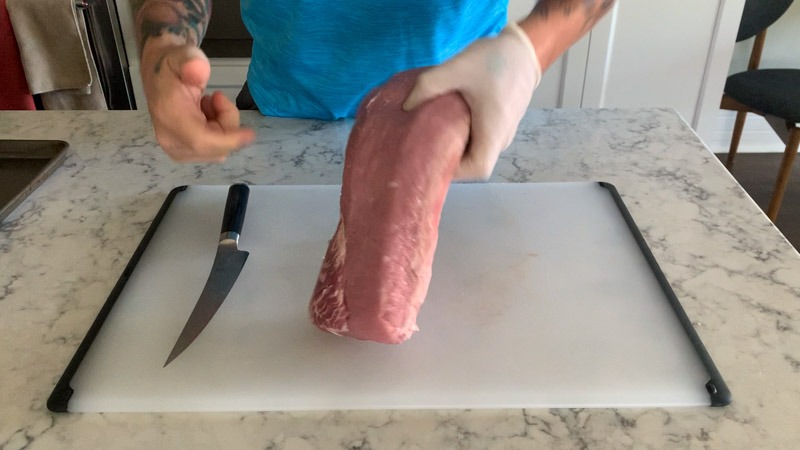
Before we apply the rub or light the fire, we need to prep the meat. Pork loin can be purchased either bone-in or boneless; while the bone-in version is spectacular, I find that a boneless roast offers the most versatility for even slicing.
Size and Selection
For this particular cook, I’m using a 2-pound boneless pork loin. If you are feeding a larger crowd, you can easily scale this up to a full 8- or 10-pound loin. The beauty of this cut is its uniform shape, which allows every slice to cook at the same rate.
The Trim: Fat Cap and Silverskin
Even though the loin is a lean cut, it often comes with a thick “fat cap” on one side and a tough, iridescent membrane known as silverskin. Here is why you want to take the time to trim:
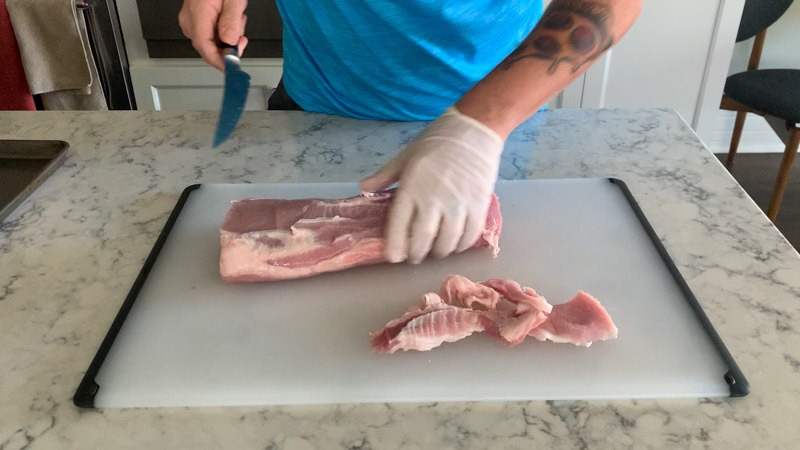
- Removing the Silverskin: Unlike the fat, silverskin does not render down or melt during the cooking process. If left on, it acts as a rubbery barrier that prevents your rub from reaching the meat and makes for a tough bite. Use a sharp boning knife to get underneath the membrane and peel it away in strips.
- Managing the Fat Cap: While a little fat is good for flavor, a thick, hard fat cap can prevent the smoke from penetrating the meat. I like to trim the fat down to a thin, even layer (about 1/8-inch). This allows the fat to render quickly, basting the meat as it cooks without creating a greasy exterior.
Aerodynamics and Seasoning
By cleaning up the exterior, you’re creating a smooth surface for your BBQ rub to adhere to. Removing that excess “shag” also helps the smoke flow evenly over the meat, ensuring you get a consistent mahogany color from end to end.
Pitmaster Tip: Don’t be afraid to get aggressive with the silverskin. Your goal is to see that beautiful pink muscle meat. The cleaner the prep, the better the bark!
Slather and Season the Pork Loin
The Slather and Seasoning: Building the Flavor Profile
Once your pork loin is trimmed and cleaned, it’s time to build the flavor crust. Because pork loin is so lean, the seasoning serves two purposes: it provides the “pop” of flavor on the outside and helps seal in the natural juices of the meat during the smoking process.
The Binder: Why Yellow Mustard?
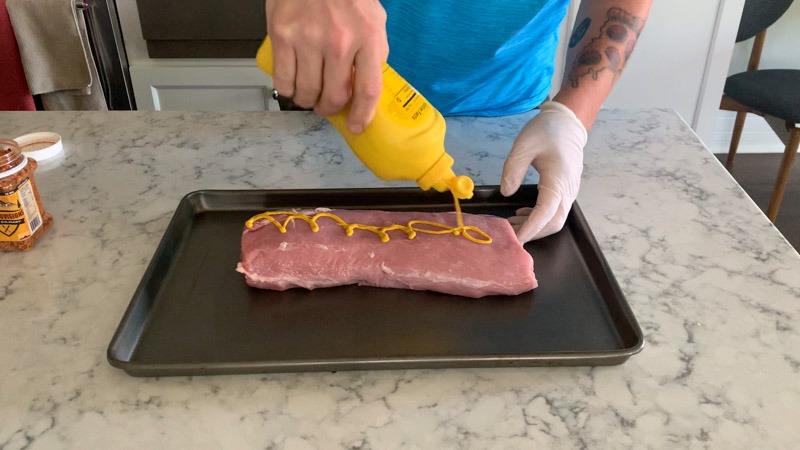
Start by applying a small amount of yellow mustard as a base. You aren’t looking for a thick coating; you just want a light, tacky film across the entire surface.
Much like with our smoked ham, the mustard acts as a “glue” for the dry rub. It ensures the seasoning stays on the meat rather than falling off onto the grates. As the pork loin smokes, the mustard flavor mellows out completely, leaving behind a beautiful bark and a tender exterior.
Choosing Your Rub
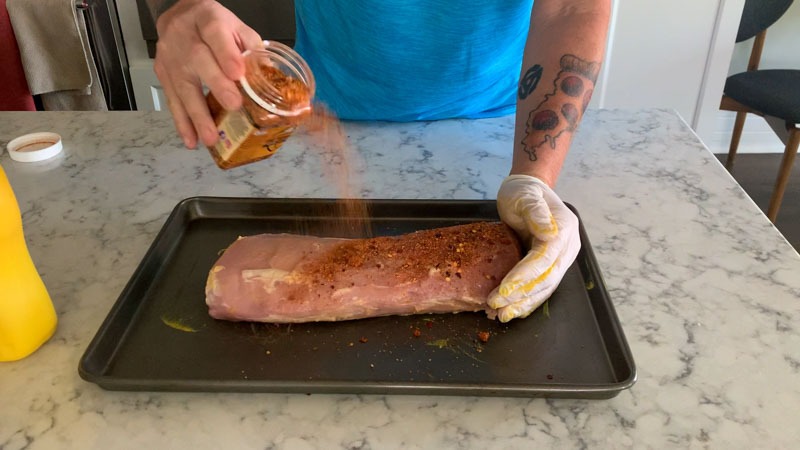
You have plenty of options here depending on your taste and what you have in the pantry. For this cook, I used 5280 Culinary Oink. It’s a fantastic commercial blend that balances sweetness with a hint of savory heat, designed specifically to complement the natural flavor of pork.
If you don’t have Oink on hand, here are three ways to go:
- The Pro Choice (Commercial): Look for rubs that list brown sugar, paprika, and garlic powder as primary ingredients. Popular options like Meat Church Honey Hog or Killer Hogs BBQ Rub work brilliantly here.
- The Pantry Staple (Homemade): If you want to whip up a quick rub right now, try this “Buddha’s Basic” ratio:
- 2 parts Brown Sugar (for caramelization)
- 1 part Kosher Salt
- 1 part Smoked Paprika (for color)
- ½ part Black Pepper & Garlic Powder
- The Savory Route: If you prefer a less “BBQ-style” flavor, a simple blend of Kosher salt, coarse black pepper, and dried thyme or rosemary is excellent for a more traditional “roast pork” profile.
Application is Key
Apply a generous amount of your chosen rub. Don’t just sprinkle it, pat it into the mustard slather so it forms a solid coating. Make sure to get the ends of the loin as well! Once seasoned, let the meat sit at room temperature for about 20 minutes. This allows the salt in the rub to start pulling a little moisture to the surface, creating a “paste” that will eventually turn into a glorious, smoky crust.
Setting Up the Big Green Egg
The Fire: Setting the Big Green Egg for Indirect Success
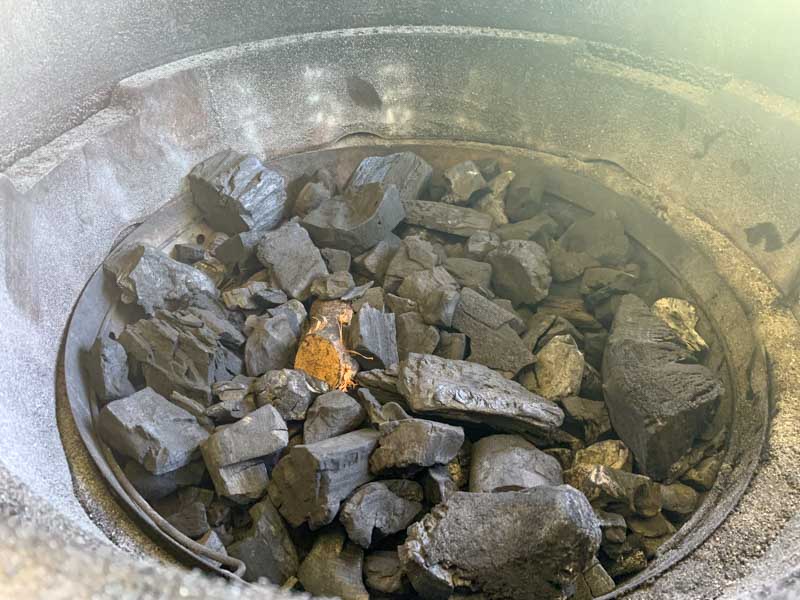
While the pork loin is sitting at room temperature and the rub is “sweating” into the meat, it’s time to prepare the Big Green Egg. For a lean cut like pork loin, we want a stable, indirect heat environment. This isn’t a “hot and fast” sear; we are looking for a gentle cook that allows the smoke to permeate the meat without drying it out.
The Indirect Setup
Since we are smoking this roast, you’ll need to set up the Egg for indirect cooking.
- The convEGGerator: Install your convEGGerator with the legs facing up.
- The Drip Pan: I highly recommend placing a disposable drip pan on top of the convEGGerator. This catches any rendered fat and prevents it from burning, which keeps the smoke tasting clean and sweet.
Wood Selection: Why Apple Wood?
For this cook, I used two chunks of apple wood. When it comes to pork, apple wood is the undisputed champion. It provides a light, fruity, and slightly sweet smoke profile that enhances the natural flavor of the loin rather than masking it.
Unlike heavier woods like mesquite or hickory, apple wood produces a mellow smoke that won’t turn the meat bitter. If you don’t have apple, other fruitwoods like Cherry or Peach are excellent substitutes.
Stabilizing at 250°F
Preheat the grill to 250°F. This lower temperature is the “sweet spot” for pork loin, it gives the fat time to render and the rub time to form a beautiful bark, all while keeping the lean interior succulent.
Wait for the “Thin Blue Smoke”: This is the most important part of the setup. When you first light the charcoal and add the wood chunks, the smoke will be thick and white. Wait for that smoke to transition into a faint, bluish-gray (or nearly invisible) wisp. This “clean smoke” indicates that the wood is burning at the right temperature, ensuring your pork tastes like a backyard masterpiece rather than a campfire.
The Internal Temperature Goal
Once your Egg is locked in at 250°F and the smoke is clean, you are ready to place the loin on the grate. We’ll be monitoring the internal temperature closely to ensure we hit that perfect “blush pink” finish.
Monitoring the Temperature
Precision Timing: Monitoring the Temperature
Because pork loin is such a lean cut, the window between “perfectly juicy” and “unpleasantly dry” is narrow. This is not a “guess and check” kind of cook; to get those professional results, you need to monitor the internal temperature with precision.
Tools for the Job
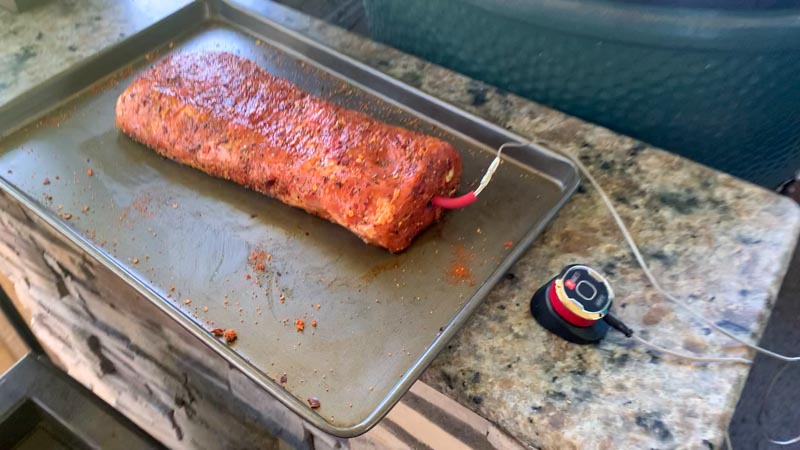
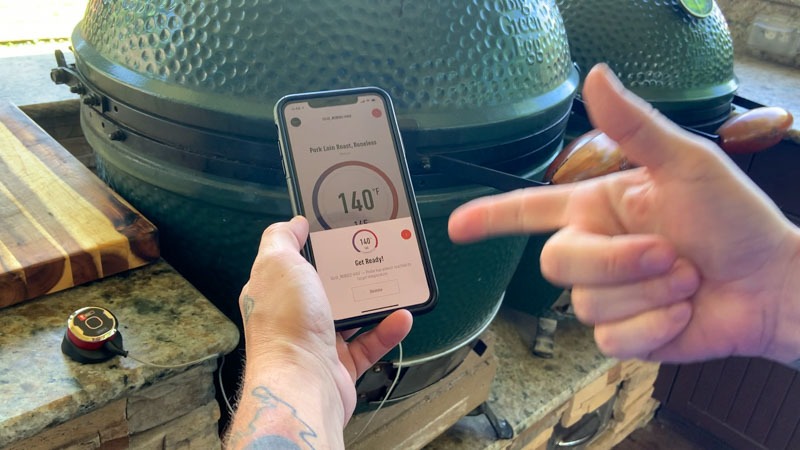
To keep a close eye on the progress without constantly opening the lid of the Big Green Egg, I recommend using a remote probe thermometer. I’ve used the Weber iGrill Mini, which is a great, compact tool that syncs to your phone and alerts you the second you hit your target.
If you don’t have an iGrill, there are plenty of other excellent options to ensure you don’t overcook the meat:
- The “Leave-In” Probe: Devices like the Meater or ThermoWorks Dot allow you to monitor the temp in real-time from your kitchen.
- The Instant-Read: If you prefer to go manual, a high-quality instant-read thermometer like a Thermapen is essential for double-checking different parts of the loin as you near the finish line.
The 145° Goal and Carryover Cooking
The USDA states that pork is safe and at its culinary peak at an internal temperature of 145°F. At this temperature, the meat will be incredibly tender with just a faint hint of blush pink in the center.
However, here is the “Pitmaster Secret”: Pull the roast off the smoker when it hits 140°F.
This accounts for carryover cooking. Once you remove the meat from the heat and let it rest, the internal temperature will continue to rise about 5 degrees. By pulling at 140°F, the loin will naturally coast up to that perfect 145°F finish while it rests on your cutting board. If you wait until 145°F to pull it, carryover cooking will push it to 150°F+, which is where the meat begins to lose its moisture.
The Smoke Window
At a cooking temp of 250°F, a 2-pound loin will typically take about 60 to 90 minutes to reach the pull temp. Use this time to prep your side dishes or simply enjoy the aroma of the apple wood working its magic.
Pull the Pork Loin at 140°
The Final Stretch: The Pull and the Rest
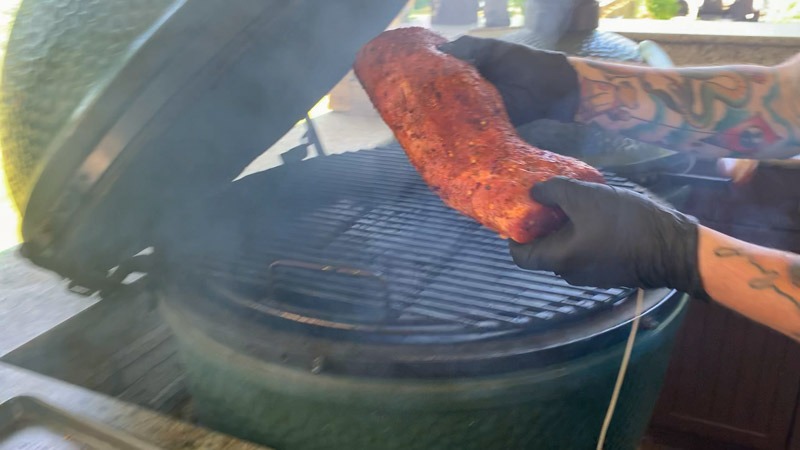
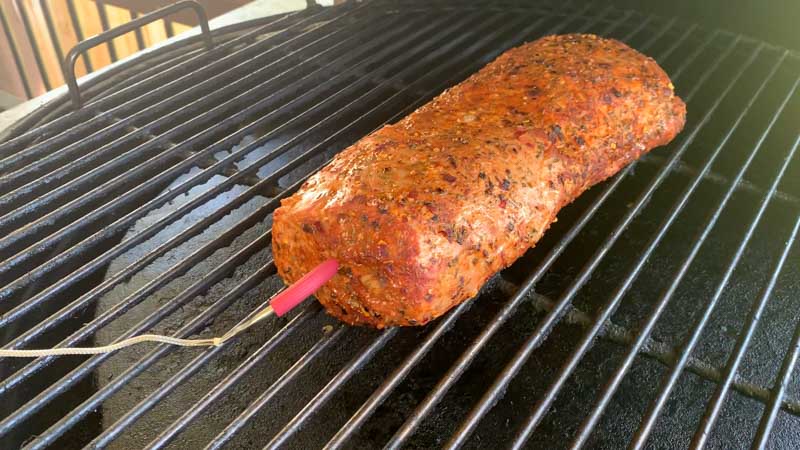
Once the pork loin is on the Big Green Egg, the best thing you can do is leave it undisturbed. Every time you open the dome, you lose that precious “convection” heat and steady apple wood smoke. Trust your temperature probe and let the Egg work its magic until that internal temperature hits exactly 140°F.
The Importance of the Rest
When that alarm goes off at 140°F, pull the pork loin immediately and move it to a cutting board or a warm platter. Now comes the hardest part of the entire cook: letting it rest for 10 minutes.
During the smoking process, the heat forces the juices into the center of the roast. If you slice it the moment it comes off the grill, those juices will end up on your cutting board rather than in your mouth. By waiting 10 minutes, the muscle fibers relax and reabsorb that moisture, ensuring every slice is as succulent as the first.
Hitting the Safety Mark
While the roast sits on the counter, carryover cooking takes over. Even though the meat is away from the coals, the residual heat on the exterior continues to move inward. This will naturally push your internal temperature up those final few degrees to the USDA-recommended 145°.
By following this “pull early, rest long” method, you guarantee two things:
- Safety: You’ve hit the 145°F mark for a safe, healthy meal.
- Quality: You’ve avoided the 150°F “danger zone” where pork loin begins to turn dry and chalky.
Slicing for the Crowd
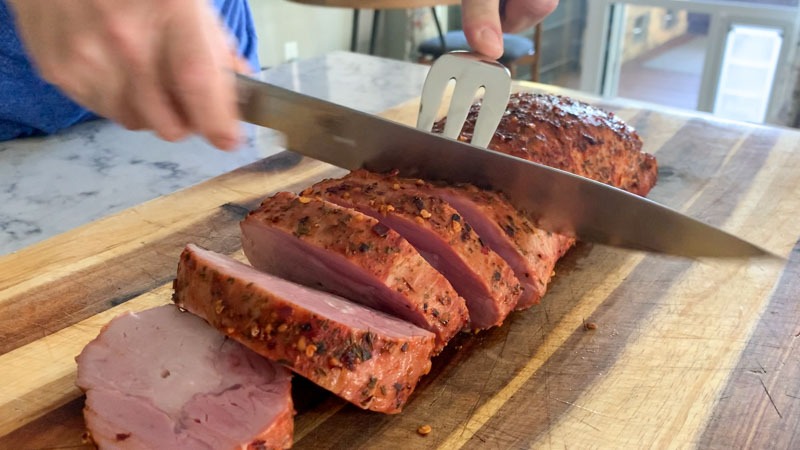
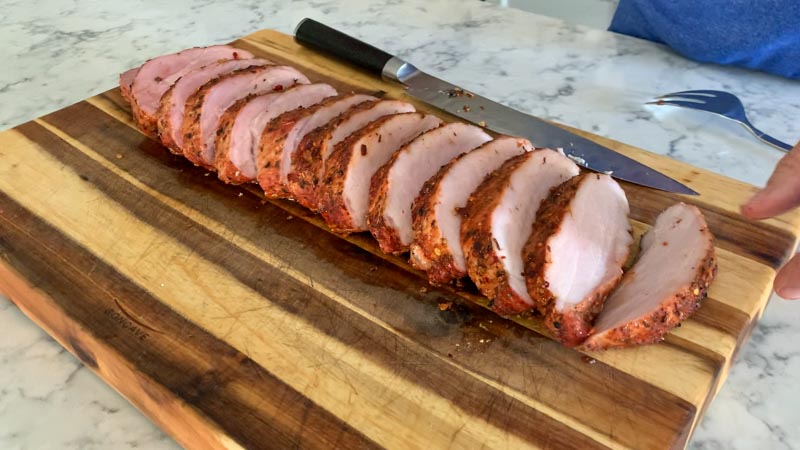
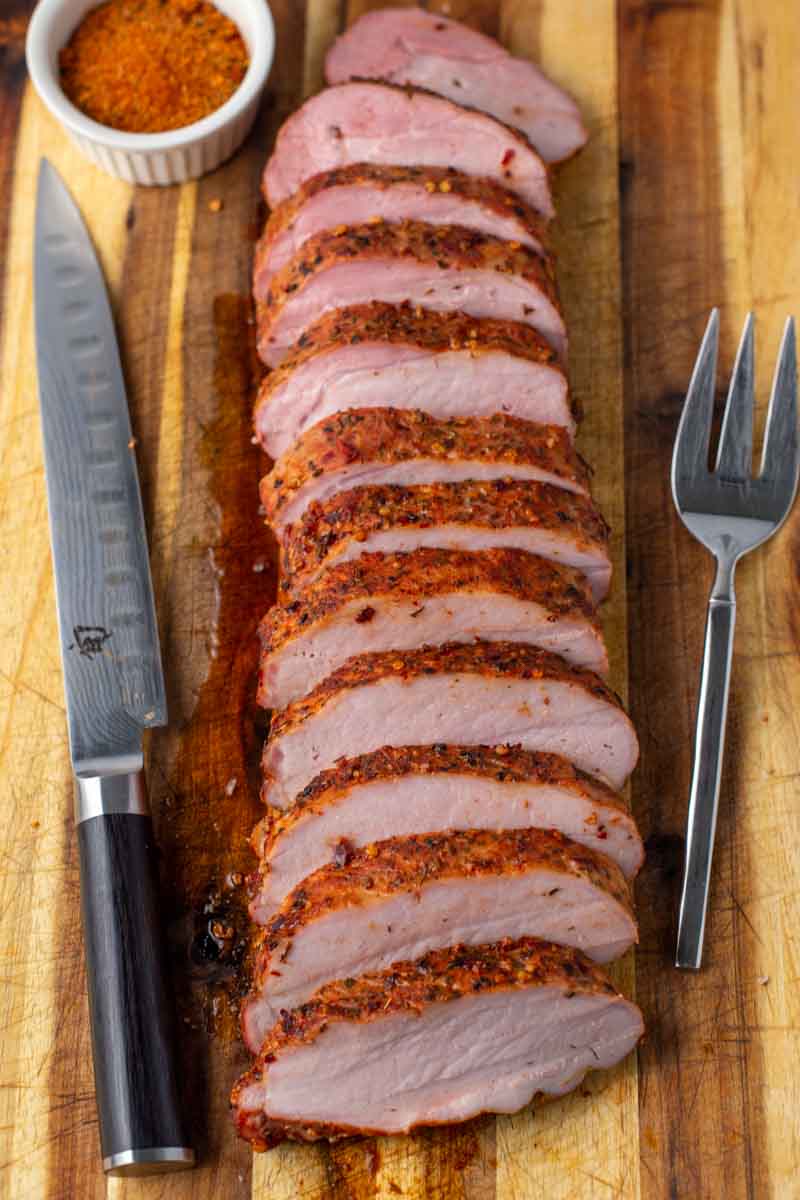
When the 10 minutes are up and your thermometer confirms that 145°F finish, it’s time to slice. I recommend cutting the loin into 1/4-inch to 1/2-inch medallions. You’ll see a beautiful smoke ring around the edges from the apple wood and a perfectly moist, glistening center.
Pro Tip: If you have any leftover rub, give the sliced medallions a very light “dusting” just before serving to hit your guests with one last pop of flavor!
Slice and Serve the Pork Loin
The Payoff: Slice and Serve!
Now for the best part. After the rest, grab a long, sharp carving knife and slice the loin into medallions. I recommend cutting them about 1/2-inch thick to really appreciate the texture and that beautiful, thin smoke ring the apple wood left behind.
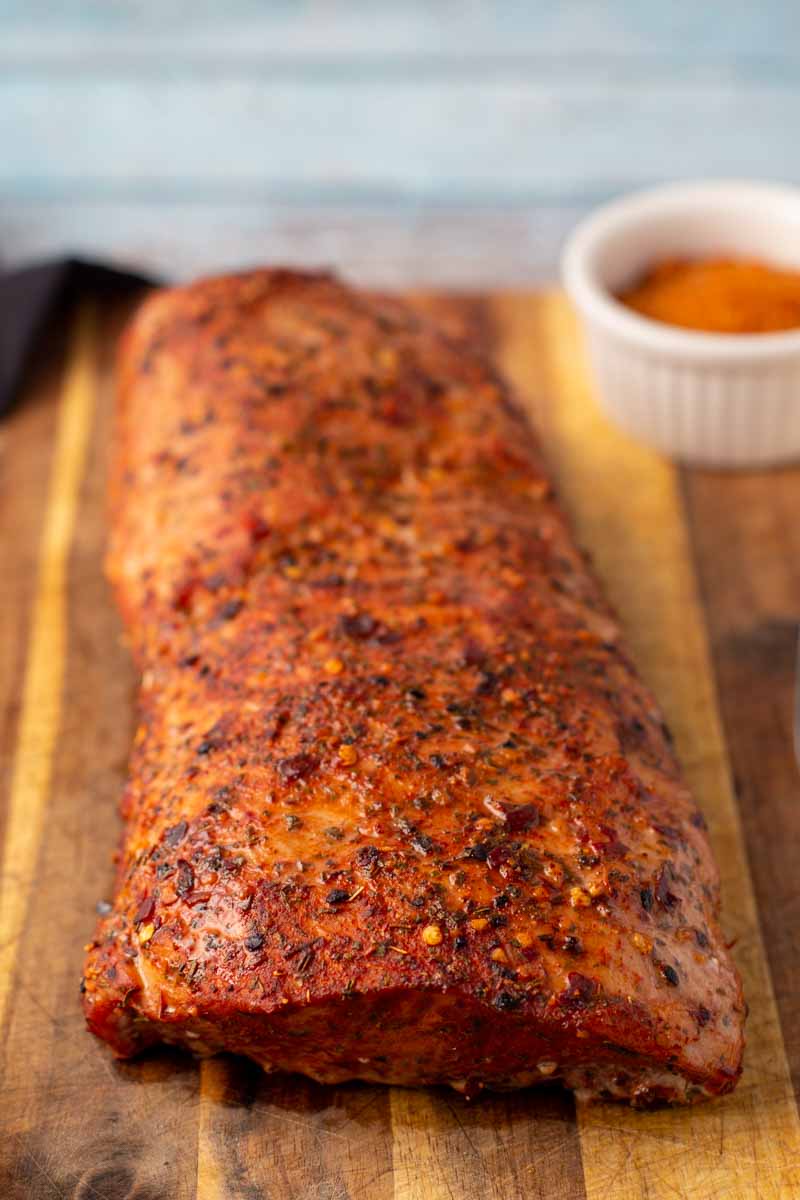
The first thing you’ll notice is the contrast: the dark, savory bark from the Oink rub and the succulent, slightly pink interior. The flavor is a perfect harmony… the natural sweetness of the pork is elevated by the fruity smoke, with a savory finish from the mustard and spice crust.
Maximum Versatility: Beyond the Dinner Plate
One of the greatest benefits of the pork loin is its sheer size relative to the effort. If you aren’t feeding a crowd, you’ve just set yourself up for a week of elite-level meals. Because this cut is so lean and sliceable, the leftovers are incredibly versatile:
- The Ultimate Sandwich: Thinly slice the cold leftovers for the best “smoked ham” substitute you’ve ever had. It’s perfect for a Cubano, a classic slider with coleslaw, or even just piled high on a brioche bun with a little extra BBQ sauce.
- The Main Event: Pair the warm medallions with grilled seasonal vegetables or a loaded baked potato for a healthy, high-protein dinner that feels like a steakhouse meal.
- Meal Prep Power: Dice up the remaining loin to toss into fried rice, morning hash, or even a smoky pork tacos, the apple wood flavor adds a depth that makes “leftovers” feel like a brand-new dish.
Final Thoughts
This Apple Wood Smoked Pork Loin is proof that you don’t need a 12-hour brisket cook to get incredible BBQ results. In under two hours, you can take a budget-friendly cut and turn it into a juicy, flavor-packed centerpiece that rivals any expensive roast.
Gather your friends, fire up the Big Green Egg, and let the apple wood do the work. Your Sunday dinners will never be the same!
Print
Apple Wood Smoked Pork Loin
This recipe for Apple Wood Smoked Pork Loin is easy and delicious. In addition, this will feed a large crowd or give you leftovers for a week!
Prep Time 10 minutes minutes
Cook Time 1 hour hour 30 minutes minutes
Total Time 1 hour hour 40 minutes minutes
Servings 6
Author The BBQ Buddha
- 2 pound Pork Loin trimmed
- 1.5 tbsp Yellow Mustard for slather
- 3 tbsp BBQ Rub
Trim the silver skin and extra fat from the pork loin
Place a small amount of yellow mustard on the pork loin and rub all over creating a base for the BBQ rub
Generously apply the BBQ rub to all sides of the pork loin
Let sit at room temperature while you start your grill/smoker
Setup your Big Green Egg for indirect cooking and use apple wood chunks for smoke flavor
Preheat to 250° and let the smoke turn from white to grayish blue
Put the pork loin inside and let smoke until the internal temp measures 140°
Make sure the temperature rises to 145°F before serving up
Pull the pork loin and let rest 10 minutes before slicing and serving
The post Apple Wood Smoked Pork Loin appeared first on The BBQ Buddha.
Did you miss our previous article...
https://manstuffnews.com/backyard-grilling/hearty-cowboy-soup
 Backyard GrillingWeekend WarriorsAdvice from DadBeard GroomingTV Shows for Guys4x4 Off-Road CarsMens FashionSports NewsAncient Archeology World NewsPrivacy PolicyTerms And Conditions