Turbo Ribs: The Best Kept Secret of the Big Green Egg
If you are like me, you love ribs in any way, shape, or form! In the world of BBQ, mastering spare ribs is a rite of passage. They sit right in that sweet spot of difficulty between a forgiving Boston Butt and the high-stakes challenge of a Brisket.
Typically, low and slow spare ribs will take you about 6 hours. In the grand scheme of BBQ, that isn’t bad, but let’s be honest: sometimes you don’t have all day to babysit the vents. What if I told you that you could achieve competition level results, tender, juicy, and perfectly rendered, in half the time?
Believe me? I know the low and slow purists might be shaking their heads, but after reading this post, I’m confident I’ll make you a convert to the Turbo Style. We are cranking the heat, cutting the clock, and keeping all the flavor.
So, sit back, grab yourself a cold Shiner Bock, and enjoy this guide on How to Cook Hot and Fast Spare Ribs on the Big Green Egg.
Step 1: Picking the Spare Ribs
Selecting Your Ribs: The Foundation of the Cook
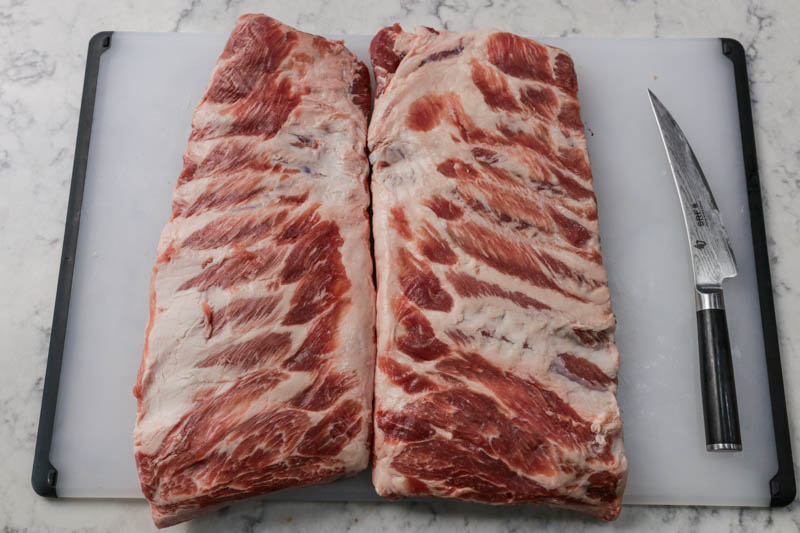
For this cook, I had two racks of Snake River Farms Kurobuta spare ribs on hand. If you aren’t familiar with Kurobuta, it is essentially the “Wagyu of pork,” known for incredible intramuscular fat and rich flavor. However, don’t worry if you don’t have these specific ribs in your fridge. Aside from the initial prep work, this “Turbo” method works perfectly for any quality spare ribs you find at your local butcher or grocery store.
Understanding the St. Louis Style Cut
The secret to a uniform cook, especially when we are cranking up the heat, is the St. Louis Style cut (often referred to as KC Style).
Spare ribs naturally come as a large, rectangular slab with a boney, gristly section at the bottom called the “brisket flap” or “rib tips.” In a St. Louis Style cut, we trim away that cartilage-heavy flap and the small, tapered ends of the rack.
Why this matters for Hot and Fast:
- Uniformity: By creating a clean, rectangular rack, every rib is roughly the same thickness. This prevents the thinner ends from burning while the middle is still cooking.
- Texture: You remove the tough gristle, leaving you with only the “long bones” that are easy to eat and perfect for presentation.
- Airflow: The Big Green Egg thrives on airflow. A clean, trimmed rack allows the heat to circulate evenly around the meat.
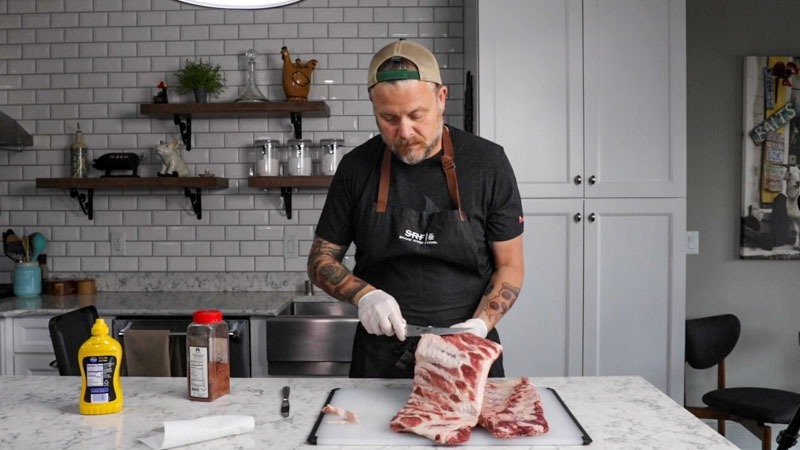
Want to learn how to do this yourself? If you bought full spare ribs and need to know how to get them into this shape, check out my detailed guide on How to Trim Ribs to St. Louis Style before you move on to the seasoning.
Once your ribs are trimmed and the silver skin is removed from the back, you are ready to start building that Texas style bark.
Step 2: Slather and Season the Spare Ribs
The Slather and the Rub: Prepping for High Heat
With the ribs trimmed into that clean St. Louis Style shape, it is time to build the flavor profile. Because we are cooking at a higher temperature, our approach to seasoning needs to be intentional.
The Binder: Why Yellow Mustard?
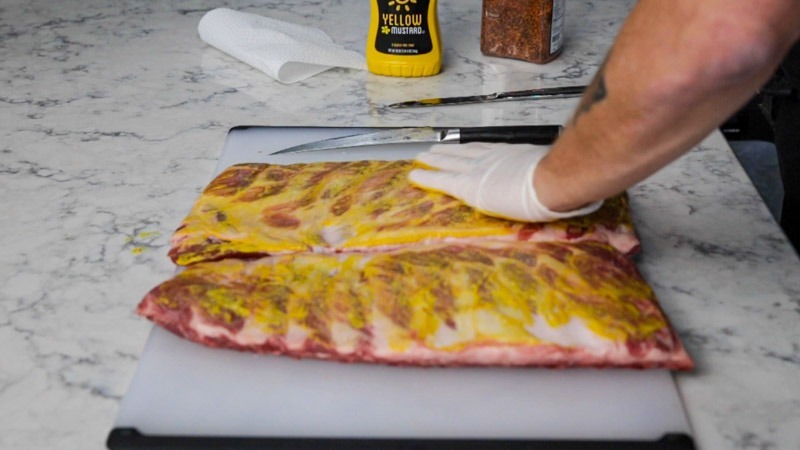
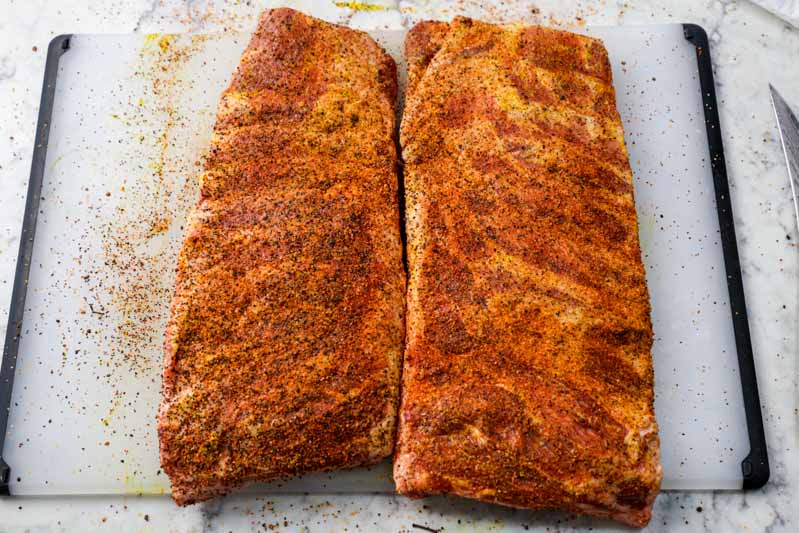
Before the dry rub hits the meat, you want to apply a light yellow mustard slather to both sides of the ribs.
Do not worry about the flavor. The mustard acts strictly as a binder, ensuring your rub adheres to the meat instead of falling off or clumping. The vinegar in the mustard also helps slightly tenderize the surface, and by the time you pull these off the Big Green Egg, the mustard taste will have completely vanished. You are left with a tacky surface that is perfect for building a world-class crust.
The Texas Style Profile
For a hot and fast cook, I lean heavily toward a Texas Style rub. Typically, this is a blend of:
- Coarse Kosher Salt
- 16-Mesh Black Pepper
- Smoked Paprika (for that deep, mahogany color)
The Heat Warning: In a traditional 6-hour cook, many pitmasters use rubs with high sugar content to get a sweet glaze. However, in a “Turbo” cook at 350°F, sugar is your enemy. Sugar begins to burn at around 320°F, so a sugary rub can quickly turn bitter and black at these higher temperatures.
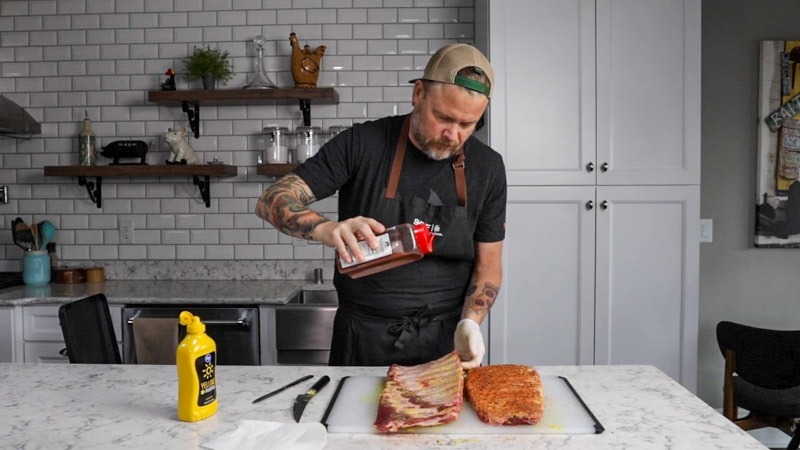
By sticking to a salt and pepper heavy rub, you allow the pork flavor to shine and ensure your bark stays savory and beautiful rather than charred. Apply the rub liberally to both sides, starting with the bone side first, and let the ribs sit for about 15 minutes while your Big Green Egg stabilizes.
Step 3: Setup the Big Green Egg
Big Green Egg Setup: The Power of 350°
While your ribs are sweating in the rub, it is time to get the Big Green Egg ready. This is where we break away from tradition. Most people associate the Egg with low and slow temperatures like 225°F, but today we are leaning into its ability to act like a high-end convection oven.
Indirect Heat is Essential
You must set up your grill for indirect cooking. On the Big Green Egg, this means using the ConvEGGtor with the legs facing up. We want the heat to circulate around the ribs rather than hitting the bottom of the meat directly. Without that heat shield, your ribs would char on the bottom long before the inside reached the perfect temperature.
Choosing Your Wood
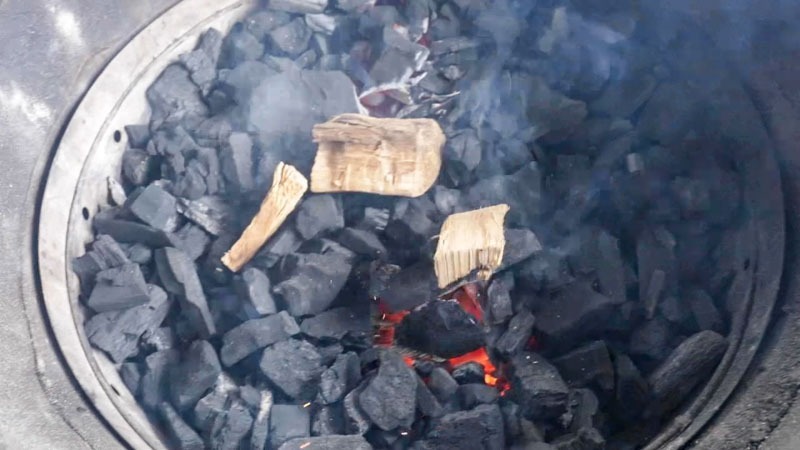
For that authentic Texas flavor, I used three large chunks of Post Oak. Oak is the backbone of Central Texas BBQ because it provides a clean, medium-heavy smoke flavor that stands up well to the richness of the pork without being overpowering.
Since this is a shorter cook, you want to bury those chunks within your lump charcoal so they begin to ignite and produce a steady stream of “blue smoke” by the time your ribs hit the grate.
Preheating for Success
Here is the part where you have to trust the process. I preheated the Big Green Egg to 350°F. It might feel strange to see the needle that high for a rack of ribs, but trust me, this works. The ceramic walls of the Egg help retain moisture, preventing the meat from drying out even at this elevated temperature. Make sure your temperature is stable and the smoke is running clear before you lay those racks down.
Step 4: Turbo Cooking the Spare Ribs
Step 1: The Placement
Once your temperature has locked in at 350°F and that Post Oak is producing a clean, thin blue smoke, it is time to get the meat on the grate.
Ditching the Rib Rack
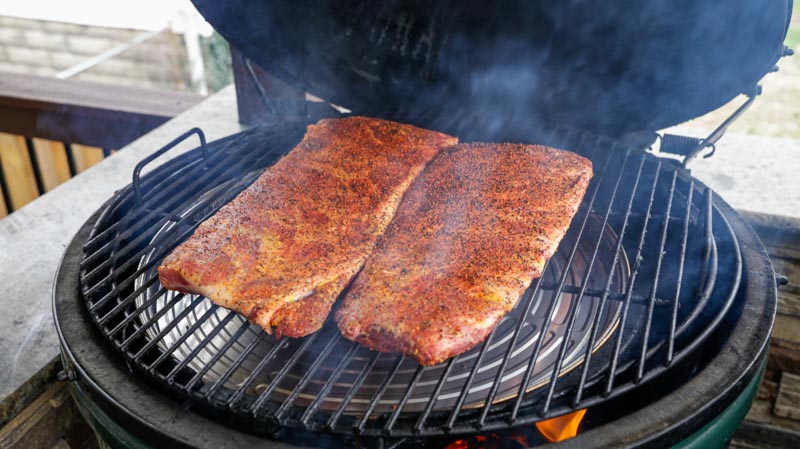
When it comes to positioning your ribs, I have a very specific preference: lay them flat on the grate. While many people use rib racks to save space, I generally avoid them. In my experience, a rib rack does more harm than good because the metal contact points can mess with the development of the bark. When ribs are propped up, you often end up with “bald spots” where the rub didn’t set, or areas where the smoke and heat couldn’t circulate evenly.
By laying them flat, you ensure the entire surface area of the rack is exposed to the convection heat of the Big Green Egg. This is especially important for “Turbo” ribs because we are relying on that consistent airflow to set the bark quickly.
The Positioning
Place your racks bone-side down, centered over the ConvEGGtor. If you are cooking multiple racks, make sure there is at least an inch of space between them. You want that 350°F air to move freely around every square inch of the meat.
Once the ribs are in place, close the dome and resist the urge to peek. For the first hour of a hot and fast cook, the goal is to let the heat and smoke work in tandem to “lock in” the rub and start the rendering process.
Step 5: Spritzing the Spare Ribs
The Spritz: Moisture and Color Control
Once the ribs are on the Big Green Egg, your job is easy for the first hour. Keep the lid closed and let the 350°F heat do the heavy lifting. This initial hour is critical for setting the bark and ensuring the rub sticks to the meat. However, once that hour mark hits, it is time to start your active management with a spritz.
Why We Spritz
When you are cooking at higher temperatures, the surface of the meat can dry out faster than the interior can render. Spritzing (or mopping) serves three main purposes:
- Moisture: It keeps the exterior of the ribs supple, preventing the bark from becoming too hard or “jerky-like.”
- Color: The sugars in the juice help caramelize the surface, giving the ribs that deep, mahogany glow.
- Flavor: It adds layers of acidity and tang that balance the savory salt and pepper rub.
My Signature Spritz Recipe
You don’t want to just use plain water. You want a liquid that adds character. For this cook, I use a balanced blend that hits sweet, tart, and savory notes:
- 1 cup Apple Juice: Provides the base and the natural sugars for color.
- 1/2 cup Apple Cider Vinegar: Adds the necessary acidity to cut through the pork fat.
- A few dashes of Hot Sauce: Adds a subtle background heat without making the ribs “spicy.”
- A few dashes of Worcestershire Sauce: Brings an earthy, umami depth to the profile.
The Routine
Starting at the 60-minute mark, open the dome and give the racks a thorough misting. Be quick about it so you don’t lose too much heat. Continue this process every 30 minutes until the ribs reach the finish line. If you notice any “hot spots” where the edges are getting too dark, give those areas an extra dose of moisture. This consistent attention is what separates good backyard ribs from great ones.
Step 6: How to Know When the Spare Ribs Are Done?
The Finish Line: How to Know They Are Done
When you are cooking at 350°F, things happen fast. Right around the 3 hour mark, you need to start paying close attention. Unlike a low and slow cook where you might have a 30 minute window of perfection, turbo ribs reach their peak quickly.
The Visual Signs
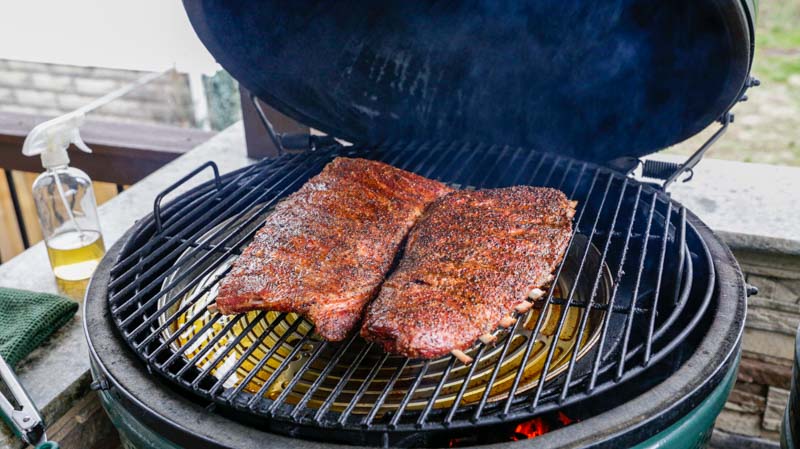
Before you even touch the ribs, look at the bones. You want to see the meat “pulling back” from the tips of the bones, exposing about a half inch of the rib ends. This pullback is a clear indicator that the meat has tightened up and the fats have rendered.
The Bend Test
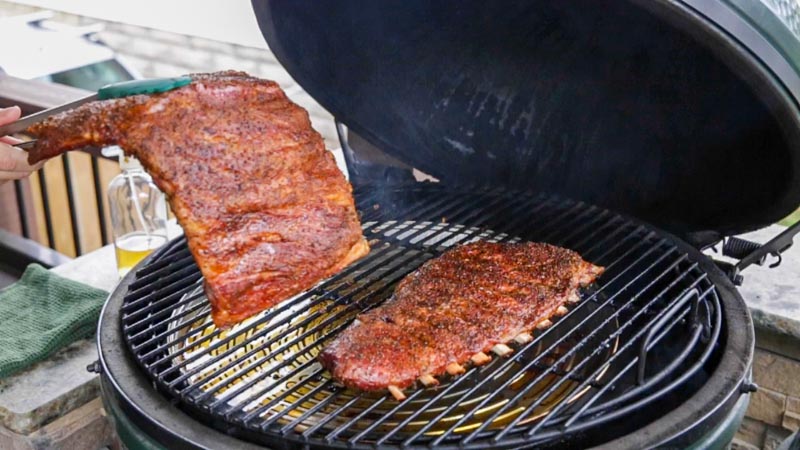
This is the most reliable way to check for doneness without a thermometer. Use a pair of tongs to pick up the entire rack about halfway through the slab.
- The Goal: Lift the ribs so they hang over the side of the tongs. If the rack bends easily and you see a clean crack form in the bark between the ribs, they are finished.
- The Warning: if the rack stays stiff, they need more time. If the rack completely breaks apart, you’ve gone a bit too far.
Checking the Temperature
While feel is king, you can use your ThermoPop to verify the internal temperature. For spare ribs, you are looking for a reading between 203°F and 205°F in the thickest part of the meat between the bones. At this temperature, the tough connective tissue has transformed into gelatin, giving you that “competition style” bite where the meat comes clean off the bone but still has a slight, satisfying tug.
Once they pass the bend test and hit that temperature range, pull them off the Big Green Egg immediately.
Step 7: Rest, Slice and Serve the Spare Ribs
The Finish: Glaze, Rest, and Slice
Once your ribs have passed the bend test, you have reached the final stage of the cook. This is where you decide on the finishing touches that will define the final flavor profile.
To Glaze or Not to Glaze?
If you prefer a wet rib, you can apply your favorite BBQ sauce or a sweet glaze during the final 30 minutes of the cook. This gives the sauce enough time to “tack up” and caramelize without burning.
However, for this specific cook, I wanted a true Texas Style experience. I opted to leave them exactly as they were, with nothing but the savory seasoning and that deep Post Oak smoke flavor. When you are using high-quality meat like the Snake River Farms ribs, sometimes the best thing you can do is let the pork be the star of the show.
The Essential Rest
I cannot stress this enough: resting is a must. Pull the ribs off the Big Green Egg and let them sit for at least 15 to 20 minutes before you even think about grabbing a knife.
If you slice into them immediately, the internal juices will run out onto your cutting board, leaving the meat dry. A short rest allows those juices to redistribute and stabilize within the meat fibers, ensuring every bite is as succulent as the last.
How to Slice for Presentation
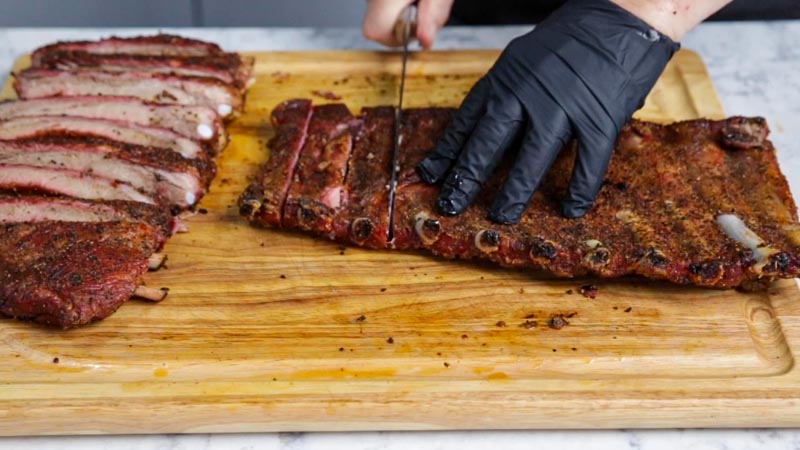
When you are ready to serve, flip the rack over so the bone side is facing up. This makes it much easier to see the path of the bones so you can guide your knife cleanly between them. Use a sharp slicing knife and cut in one smooth motion to keep the bark intact.
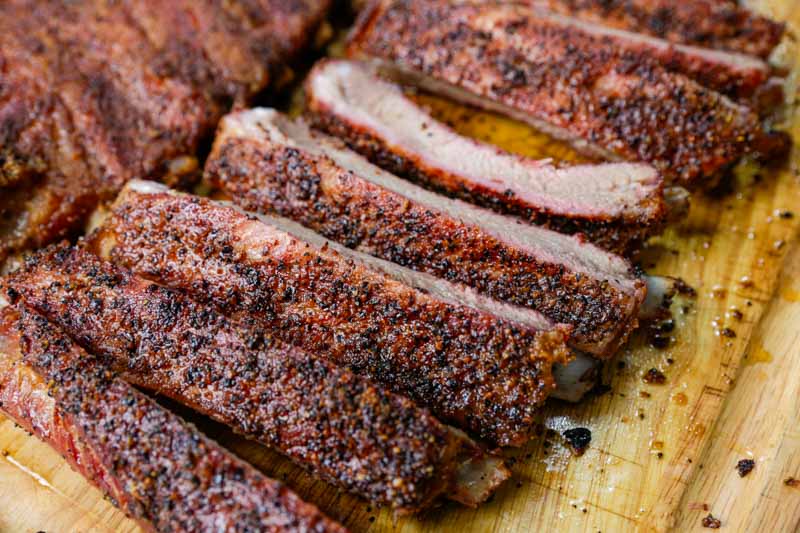
The result? A beautiful, mahogany rack of ribs with a perfect smoke ring and a clean, tender bite. These turbo ribs prove that you don’t need all day to produce world-class BBQ.
Final Thoughts on the Turbo Method
Cooking spare ribs at 350°F might feel like you are breaking the rules of BBQ, but the results speak for themselves. You get incredible rendered fat, a beautiful bark, and most importantly, you get to eat in half the time.
Give this a shot on your Big Green Egg and let me know what you think. Did you make the switch to the Turbo Style, or are you staying a low and slow purist?
Print
Hot and Fast Texas Style Spare Ribs
This recipe for Hot and Fast Texas Style Spare Ribs gets you awesome ribs in half the time. Following this method on your Big Green Egg will get you great results.
Prep Time 10 minutes minutes
Cook Time 3 hours hours 30 minutes minutes
Total Time 3 hours hours 40 minutes minutes
Servings 2
Author The BBQ Buddha
Spare Ribs Ingredients:
- 2 racks Spare ribs St. Louis cut
- 4 tbsp Yellow mustard for binder
Texas Style Rub Ingredients:
- 1/4 cup Kosher Salt
- 1/4 cup 16-Mesh Black Pepper
- 1 tbsp Smoked Paprika
- 1 tsp Garlic Powder optional
Spritz Ingredients:
- 1 cup Apple Juice
- 1/2 cup Apple Cider Vinegar
- 4 dashes Hot Sauce e.g., Texas Pete
- 3 dashes Worcestershire Sauce
Clean and trim the ribs to a St. Louis cut removing the membrane on the bone side
Mix the rub ingredients together
Apply yellow mustard to the racks of spare ribs then season both racks with the rub mixture
Setup your Big Green Egg for indirect cooking with 3 chunks of wood
Preheat the Big Green Egg to 350°
When the temp is stable and smoke clean put ribs inside
Let smoke for the first hour undisturbed
Mix your spritz ingredients together and place in spray bottle
After that mop or spray the ribs every 30 minutes until done
At the 3 hour mark check to see if the ribs pass the bend test and you see the bones sticking out
Once done pull the ribs, rest 20 minutes, slice, and serve
The post How to Cook Hot and Fast Spare Ribs on the Big Green Egg appeared first on The BBQ Buddha.
 Backyard GrillingWeekend WarriorsAdvice from DadBeard GroomingTV Shows for Guys4x4 Off-Road CarsMens FashionSports NewsAncient Archeology World NewsPrivacy PolicyTerms And Conditions