You’ve probably cooked with pork belly before, but beef belly is a little harder to find. This underrated cut comes from the plate section just behind the brisket and is packed with rich marbling and deep beef flavor.
You can turn it into burnt ends, cure it for beef bacon, or slice it like brisket. In this recipe, we cook it low and slow, brisket-style, but in roughly half the time of a full packer brisket. The result is tender slices with a well-set bark and a deep smoky finish.
More than a brisket back-up
Beef belly is rich and full of connective tissue, so it responds best to low and slow cooking. I smoke it like a brisket, build a bark, wrap to finish, then rest. From there, I slice some thick, cube others for burnt ends, and chop the rest. It’s one of the most satisfying cuts I’ve cooked.
- Big flavor, short cook – You get the deep beefiness of short rib or brisket point, with less than half the smoke time.
- Minimal prep – Little to no trimming required, and the fat renders beautifully with low and slow heat.
- Versatile cuts – Slice it like brisket, cube it for burnt ends, or chop it for sandwiches and tacos.
What you’ll need
- Beef belly – We used a dry-aged beef belly from Porter Road.
- Homemade brisket rub – Our ultimate brisket rub is the perfect blend of Kosher salt, black pepper, granulated garlic, paprika, onion powder, and chili powder.
- Equipment you’ll need
- Smoker – I used my Traeger Grills Ironwood, but any smoker grill will work for this recipe.
- Pellets – I used a blend of hickory, oak, and mesquite.
- Slicing knife – A sharp long slicing knife is essential for making nice clean cuts
- Baking sheet – I placed a cast-iron baking sheet under the beef belly to collect the rendered fat drippings to wrap the beef belly in.
- Meat thermometer – I used an instant read thermometer, however, a probe thermometer is recommended if you want to track the temperature throughout the cooking process.
What is beef belly?
Beef belly, also known as beef navel, comes from the plate section, just below the ribs and behind the brisket.
It’s heavily marbled, rich in flavor, and cooks a lot like brisket point, with the deep beefiness of short ribs; a perfect candidate for low-and-slow smoking.
Tips for smoking beef belly
- Wait for the bark – Don’t wrap by temp alone. Make sure the bark is set and dry.
- Catch the drippings – Place a pan underneath to save rendered fat for the wrap.
- Low and slow wins – Drop to 200°F for more smoke if you’ve got the time.
- Give it time to rest – A 30-minute rest keeps those juices locked in.
- Slice it your way – Mix up thick slices, cubes, and chopped ends to show off the cut.
How to make smoked beef belly
1. Fire up the smoker
Preheat your smoker to 225°F.
I used a pellet blend with hickory, oak, and mesquite. A pellet blend works great because the mesquite and oak will give the beef belly a great smoke ring and bark; however, the hickory’s slight sweetness will add an incredible flavor.
Pro tip – If using a traditional smoker, I recommend using charcoal to get a bed of coals going, then adding wood chunks to smoke the beef belly throughout the rest of the cook.
2. Prep the beef belly
Trim off any hanging or hard pieces of fat. The beef belly requires very minimal trimming, similar to beef ribs.
Save the fat trimmings to add an extra depth of flavor to BBQ side dishes, such as beans, collard greens, roasted potatoes, and mac and cheese.
3. Season
Using our ultimate brisket rub or your favorite beef rub, season the beef belly generously on all sides.
Since the beef belly is so rich and fatty, both in flavor and texture, there’s no need for a binder. The brisket rub will adhere to the meat with no problem.
4. Smoke
Place the beef belly on the top rack of your smoker, with a grill-safe pan underneath to catch the drippings. This setup helps the meat cook evenly while also collecting the rendered fat, which you’ll use later when wrapping.
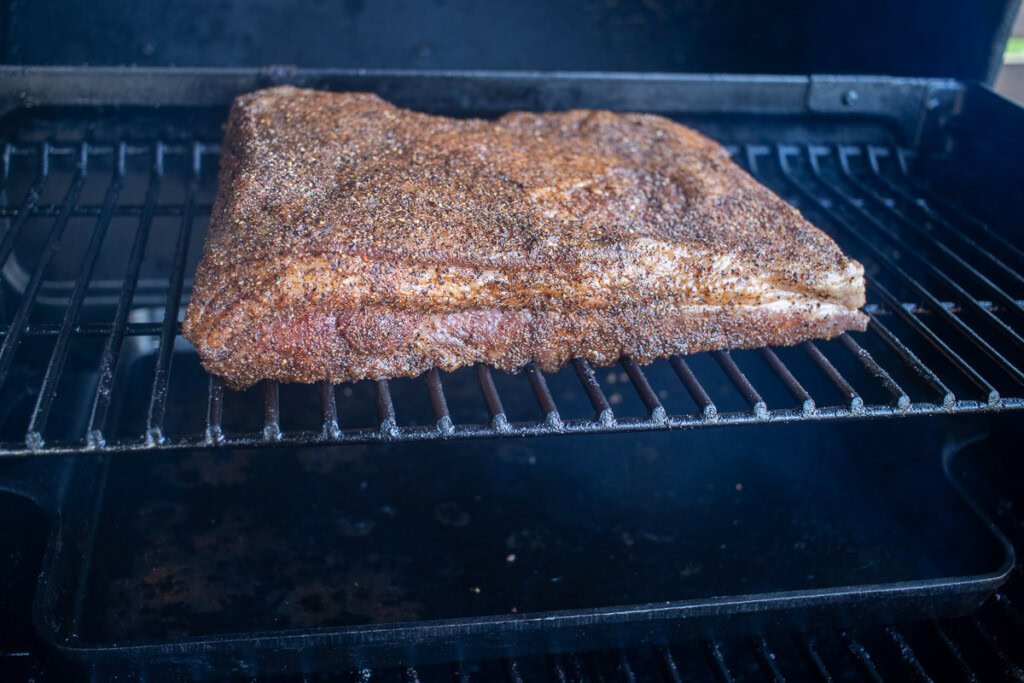
Placing a pan underneath also gives you the added bonus of a cleaner smoker.
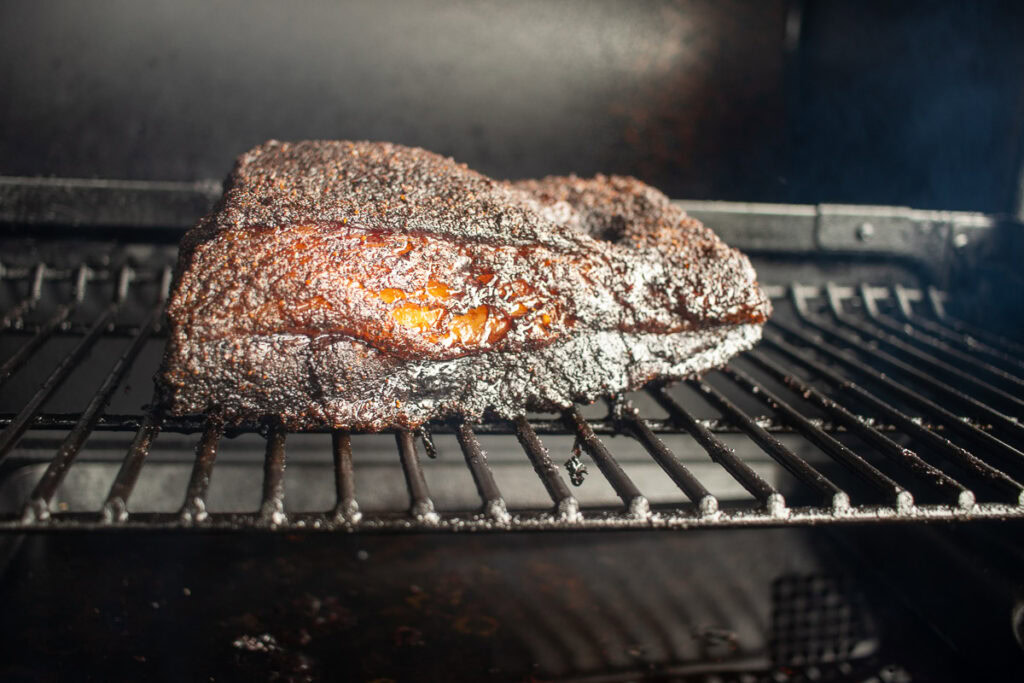
Smoke at 225°F for approximately six hours, or until the internal temperature reaches 170°F.
For a deeper smoke ring and more intense flavor, you can run it at a lower and slower temperature of 200°F for eight hours.
5. Increase the temperature and wrap
Remove the beef from the smoker and increase the smoker temperature to 275°F.
Place the beef belly on a piece of butcher paper and pour the rendered fat drippings over it.
Pro tip – Before wrapping the beef belly, it’s essential to consider not only the internal temperature but also the appearance. You don’t want to wrap a protein if it doesn’t have a visible bark. Wrapping too soon will cause the bark to sweat off the protein, which will affect its overall BBQ flavor and appearance.

If you don’t have fat drippings from the beef belly, you can use tallow, a few pats of butter, or skip adding any fat.
Wrap it in the butcher paper and return it to the smoker.
Smoke at 275°F until the internal temperature reaches between 198°F and 200°F. It should probe like softened butter when it’s ready, no resistance.
Braising is a crucial step, as it allows the fat to break down, resulting in a juicy and mouthwatering bite. I recommend not braising at temperatures above 325°F, as this may cause shrinkage and result in a tougher texture.
8. Rest
Remove the beef belly from the smoker and let it rest for at least 30 minutes, loosely tented with aluminum foil.
9. Slice
I like to slice in a few different ways to showcase the cut’s versatility.
Thick slices provide a brisket-like experience, featuring both flat and point in one bite.
I’ll also cube some pieces for burnt ends, then chop or thin-slice the rest for sandwiches or snacking.
A drizzle of hot honey or BBQ sauce over the cubes turns them into pure meat candy.
What to serve with smoked beef belly
Smoked beef belly is rich, forgiving, and packed with deep beefy flavor, like brisket’s more laid-back cousin. With less time on the smoker and endless ways to serve it, it’s bound to be one of those cuts that’ll earn a permanent spot in your BBQ lineup.
Fired up the smoker for this one? Let us know how it turned out by dropping a comment and a star rating so other pitmasters know it’s worth the effort.
Print
Smoked Beef Belly
Smoked low and slow, this beef belly delivers tender slices, crispy bark, and rich, beefy flavor in half the time of brisket.
Course Main Course
Cuisine American
Prep Time 15 minutes minutes
Cook Time 7 hours hours
Resting time 30 minutes minutes
Total Time 7 hours hours 45 minutes minutes
Servings 6
Calories 747kcal
- 4-5 lb beef belly
- 4 tbsp ultimate brisket rub might vary depending on the size of the meat
Preheat your smoker to 225°F.
Trim off any hanging or hard pieces of fat from the beef belly.
Using our homemade brisket rub or your favorite beef rub, season the meat generously on all sides.
Place the beef belly in the top rack of your smoker, and place a grill-safe dish below to catch the drippings. Smoke at 225°F for six hours or until the internal temperature reaches 170°F.
Remove the meat from the smoker and increase the temperature to 275℉.
Place the beef belly on a piece of butcher paper and pour the rendered fat drippings over the top. Wrap it in the butcher paper and return it to the smoker.
Smoke at 275°F until the internal temperature reaches between 198°F and 200°F.
Remove it from the smoker and let it rest for 30 minutes before slicing.
Pellets – I used a blend with hickory, oak, and mesquite. A pellet blend works great because the mesquite and oak will give the beef belly a great smoke ring and bark; however, the hickory’s slight sweetness will add an incredible flavor.
If using a traditional smoker, I recommend using charcoal to get a bed of coals going, then adding wood chunks to smoke the beef belly throughout the rest of the cook.
For a deeper smoke ring and more intense flavor, you can run it at a lower and slower temperature of 200°F for eight hours.
Wrapping the beef belly – It’s essential to consider not only the internal temperature but also the appearance. You don’t want to wrap a protein if it doesn’t have a visible bark. Wrapping too soon will cause the bark to sweat off the protein, which will affect its overall BBQ flavor and appearance.
Braising – A crucial step, as it allows the fat to break down, resulting in a juicy and mouthwatering bite. I recommend not braising at temperatures above 325°F, as this may cause the beef belly to shrink and result in a tougher texture. Calories: 747kcal | Carbohydrates: 2g | Protein: 72g | Fat: 50g | Saturated Fat: 22g | Polyunsaturated Fat: 3g | Monounsaturated Fat: 24g | Cholesterol: 217mg | Sodium: 185mg | Potassium: 970mg | Fiber: 0.3g | Sugar: 0.1g | Vitamin A: 123IU | Vitamin C: 0.3mg | Calcium: 51mg | Iron: 7mg
Did you miss our previous article...
https://manstuffnews.com/backyard-grilling/pulled-pork-pierogi
 Backyard GrillingWeekend WarriorsAdvice from DadBeard GroomingTV Shows for Guys4x4 Off-Road CarsMens FashionSports NewsAncient Archeology World NewsPrivacy PolicyTerms And Conditions