So you’ve got yourself a pellet grill, or perhaps you’ve had one for years, but you want to make sure you’re getting the most out of it.
While pellet grills catch a lot of flak for being overly simplistic and not “real smokers”, you would be surprised just how many little tips and tricks there are that can help you get better smoke flavor, proper sears on hot and fast cooks, and most of them don’t cost you anything.
21. Watch out for hot spots on your grill
Pellet grills monitor the internal temperature of the cooking chamber and adjust the flow of wood pellets based on how that measurement matches up against your settings. However, it’s only monitoring one spot in the cooking chamber.
If you want the most accurate understanding of the cooking chamber, use a multi-probe thermometer like the Thermoworks Smoke X4 to track the temperature throughout the cooking chamber at the grates.
Then rotate food around the cooking chamber to ensure everything cooks properly and evenly.
20. Start most recipes out on low or “smoke” setting
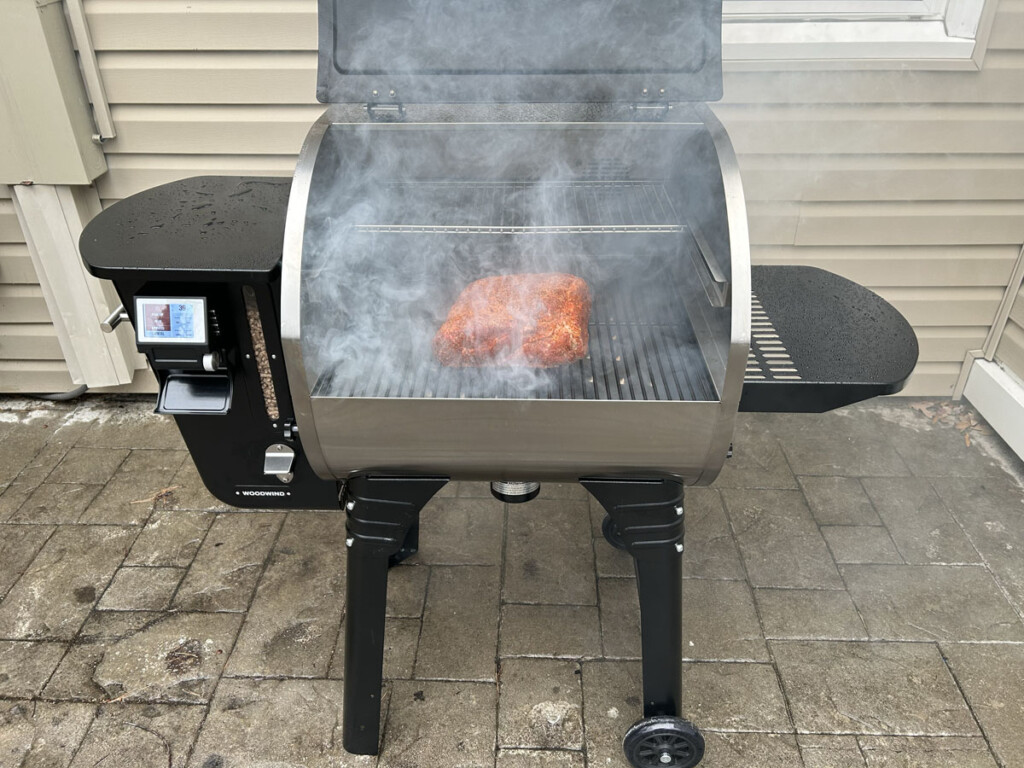
The flavor from a pellet grill isn’t as strong as smoking on an offset smoker fueled by wood logs. That’s part of the trade-off for simplicity and control.
However, there are ways to help boost the smoke flavor on your pellet grill.
Most pellet grills have a smoke setting. Older ones will have one you can select with the dial, while newer ones might have a setting to help provide extra smoke.
It may be for a set temperature range, like on a Traeger, or it might be a separate function altogether, like on a Camp Chef. Either way, use these settings to boost your smoke flavor during the early phases of the cook, and then you can always crank the temperature up at the end.
This is especially important if you are cooking chicken and need to crisp up the skin.
19. Don’t open the lid without a good reason
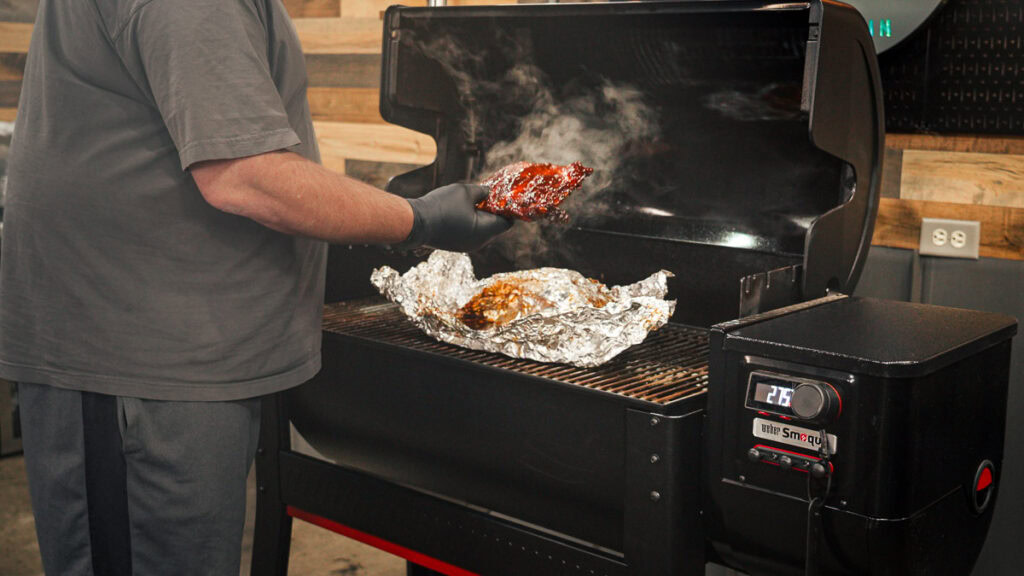
Gas grills forgive a quick look. Pellet grills don’t.
Lift the lid and the heat is gone in seconds. Getting it back isn’t instant, because the controller has to feed in new pellets and rebuild the fire from a low burn. Then it tends to overshoot on the way back up while it hunts for your set temperature.
Traeger’s own guidance puts that settling period at up to 15 minutes. Cold weather and wind stretch it further.
It costs pellets, too. Every recovery burns fuel, which is worth remembering if you’ve ever wondered where the bag went.
Make sure you’re using a leave-in thermometer so you don’t need to check on the meat throughout the cook. And when you do have to open, for spritzing, wrapping or saucing, get set up first. Sauce poured, foil torn, tongs in hand. Lid up, job done, lid down.
18. Always use 100% natural wood pellets
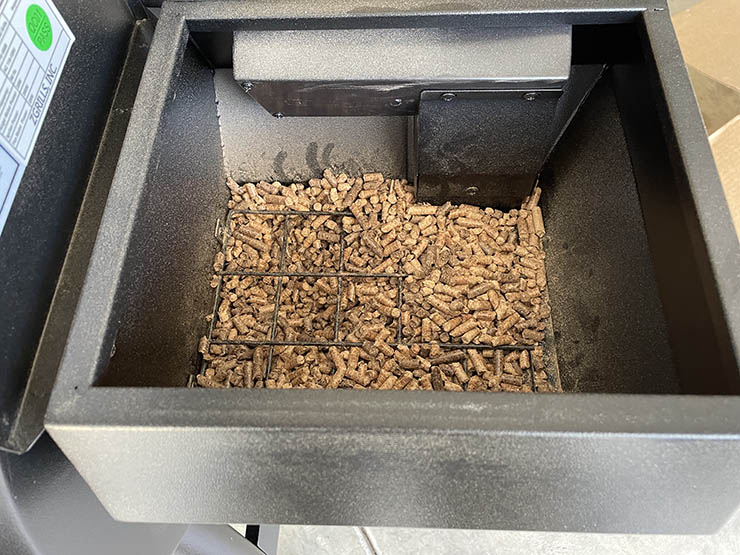
While you want to find the best deals possible on wood pellets for your pellet grill, you do want to be careful; you don’t want to use pellets designed for a pellet stove. This style of pellets is concerned with producing heat, not for cooking, and there could be all sorts of added chemicals that aren’t safe for food.
Instead, focus on 100% natural wood pellets designed specifically for use in pellet grills. The reputable manufacturers won’t give you any problems with chemicals.
17. Don’t overcrowd your grill
Some pellet grills have a sizable cooking space, while others might be smaller. Regardless of what size cooking area your grill has don’t fall prey to the temptation to throw every bit of meat and sides on your grill at once.
You want to leave clearance on every side of every piece of food you put on your grill to ensure even cooking.
Some pellet grills have an upper rack, so take advantage of that. Just remember, if you’re smoking a larger cut of meat like a turkey or brisket, you’ll likely need to remove that rack.
16. Store your pellets in an airtight, dry place
Moisture is the enemy of wood pellets. They are made mostly from sawdust, so moisture can cause them to swell. This can lead to a poor burn at a minimum and can also lead to the auger jamming, possibly causing damage to your pellet grill.
To avoid damage to your wood pellets, you can use a bucket with an air-tight lid. If you don’t have that kind of bucket hanging around, you can use any type of storage bin where the lead seals tightly.
One of the best ways to test your storage for wood pellets is by using the BOOM method. Simply put, B stands for Bucket or Bin, the first O is Off the ground, the second O is Open when needed, and the M is Moisture avoidance.
Always check your wood pellets before you fill up your pellet grill. If the pellets have lost their sheen or look worse for wear, don’t chance it. Get rid of them and start with fresh pellets.
15. Don’t run out of pellets mid-cook
There are few things worse than finding out that the hopper ran out of pellets mid-cook.
With some models, you’ll have to go through a lengthy shutdown process before you can attempt to restart the pellet grill.
Regardless of the shutdown process, you’ll need to prime the pellet grill to get pellets flowing again before restarting your cook. The whole process can lead to lost hours of cooking time.
Some pellet grills, such as Traeger, have add-on pellet sensors that will allow you to keep an eye on the hopper level via an app. Some models even come with pellet sensors as standard.
Other manufacturers have a window on the side of the hopper so you can physically see the level. Your best bet is to manually check the pellet level before you start cooking and add as needed.
Remember, a good rule of thumb is that most pellet grills will use one to three pounds of pellets per hour, depending on what temperature you’re running at.
14. Clean your smoker every 1-3 cooks
One of the biggest problems you can encounter with a pellet grill is when you don’t clean up the ash in the fire pot (and surrounding areas) as well as the grease on the grease tray. Ash will build up around the fire pot and can choke out any further fire.
Just because the flame is covered on a pellet grill doesn’t mean you can’t get grease fires like on a gas or charcoal grill. If you never clean your grease tray, all that accumulated grease could catch fire.
Also, no one wants that old grease ruining the flavor of your food.
Check our guide on how to clean a pellet grill in just 3 steps.
13. Remove the grease bucket and keep it somewhere safe after each cook
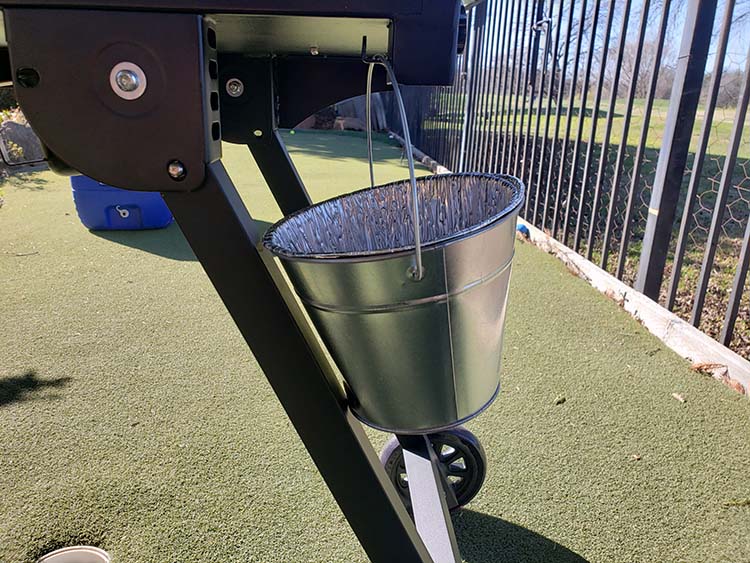
You may be tempted to leave the grease bucket hanging on your pellet grill after you’re done cooking. However, that grease can attract all manner of creatures. You don’t want your dog nosing around in it.
You really don’t want wild creatures nor bugs getting into it, either.
12. Use heavy-duty foil to make clean-up easier
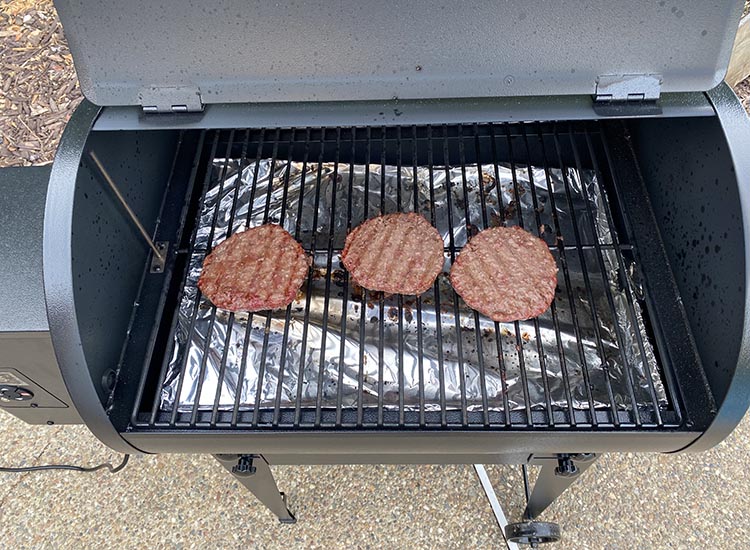
Speaking of clean-up, there are steps you can take beforehand to make your maintenance life easier. Before you fire up your pellet grill next, wrap the heat plate underneath the grill grates in heavy-duty aluminum foil.
Rather than removing the plateto clean it, you can undo the aluminum foil and throw it away before putting the new foil on.
You can do this for the grease bucket as well. That bucket can get pretty disgusting over time, so make your life easier by lining it with heavy-duty aluminum foil too.
Don’t bother going with branded liners, either. They’re going to be more expensive without offering any extra functionality or even making things easier.
11. Keep your grill covered when not using it
A pellet grill is an investment in making delicious food for you, your family, and your friends.
You want to take care of it, so make sure you keep it covered when not smoking or grilling on it. You can store it in a garage or shed, under a strong canopy or awning, or buy a good cover to keep it protected.
Moisture not only causes problems for wood pellets, but it can lead to rusting issues with your grill. Keep your grill safe, and also remember to empty out the pellet hopper if you aren’t going to use your pellet grill for a while. The last thing you want is pellets getting damaged and causing issues when you go to start your pellet grill.
10. Buy some high-heat gaskets to seal the lid
One of the problems with entry-level and mid-range pellet grills is that many of them have a poor seal around the lid. This allows smoke and heat to escape, affecting how many pellets your smoker has to use due to the lost heat.
You can help fix this by getting some high-heat gasket material from your local hardware store and putting it all around the lid where it touches the body of the grill. It can make a big difference in how much smoke escapes, preserving all that flavor in the cooking chamber.
You can even use any leftover gasket to help seal your pellet hopper lid better which can help prevent moisture from getting in and ruining pellets.
9. Burn off and season your smoker before you use it
After you finish putting your pellet grill together, it’s understandable to want to throw a brisket or a couple of racks of ribs on it and start smoking. However, you need to take the time to follow the manufacturer’s instructions and execute the burn-in process.
Manufacturers coat many of a grill’s internal parts in oils to help protect the grill during transport. You don’t want to be cooking food in that kind of environment, so before you use it for the first time, you need to know how to season your smoker properly.
This process is essentially how you prep your smoker for use, and is sometimes also known as pre-seasoning or curing. It involves coating the inside of the smoker with oil and heating it at a high temperature to burn off all the oils and chemicals from manufacturing.
8. Learn the basics of how a pellet grill works
Getting the best out of your pellet grill starts with knowing how your grill works. You’re likely familiar with pellet grills if you’re reading this article, but for a deep dive into what a pellet grill is and how it works, check out our in-depth guide.
You can use your pellet grill for a variety of cooking purposes, but where they really shine is as a self-regulating smoker.
They use a fan to circulate the heat and smoke created by burning wood pellets in a fire pot throughout the cooking chamber. The fan, the auger that carries pellets to the fire pot, and the hot rod that produces the heat to burn the pellets are all controlled by a computer.
The computerized controller essentially allows you to “set it and forget it” – meaning you don’t have to regulate the fire, as the grill does that for you.
7. Do a few easy cooks to get used to your new smoker
The best way to understand your pellet grill is by using it. While you may be tempted to tackle a brisket right away, you’re better off tackling easier cuts of meat. You can smoke a whole chicken, or even do a batch of chicken wings.
Chicken thighs can make great shredded chicken as well.
Taking the time to figure out the different features of your pellet grill is going to pay off in the long run. Some ruined chicken breasts aren’t going to hurt your heart (or wallet) like a ruined brisket.
6. Experiment with different wood pellets
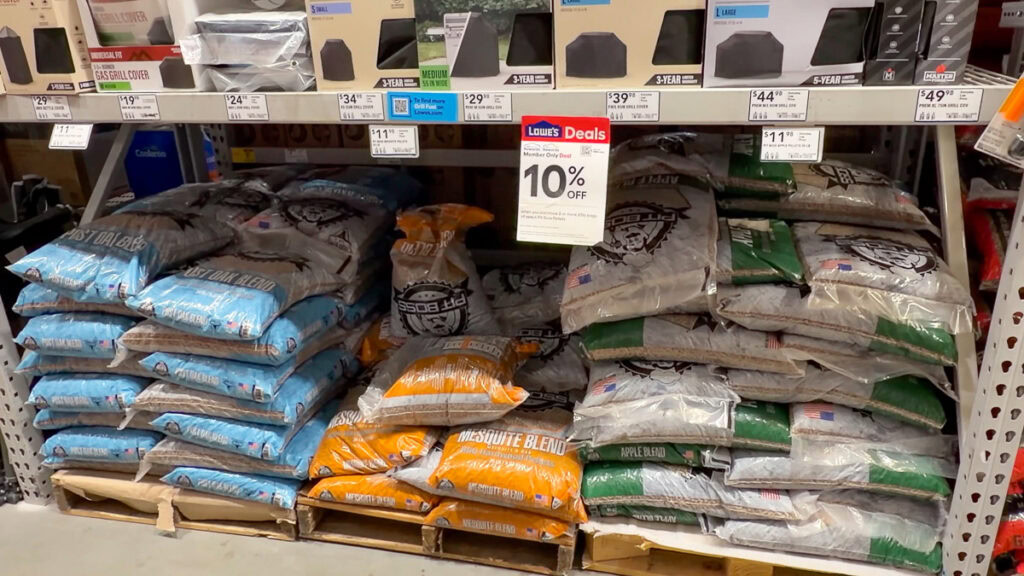
Speaking of wood pellets, don’t be afraid to try different combinations and brands.
You aren’t required to use the same brand of pellets as your grill manufacturer. There are good options all throughout the market, with different companies highlighting different flavors.
If you aren’t sure where to start, take a look at our top nine wood pellets for smokers.
Remember, the wood pellet manufacturers make blends, so don’t be afraid to mix-and-match flavors yourself and try different pellets with different recipes.
5. Experiment with different accessories
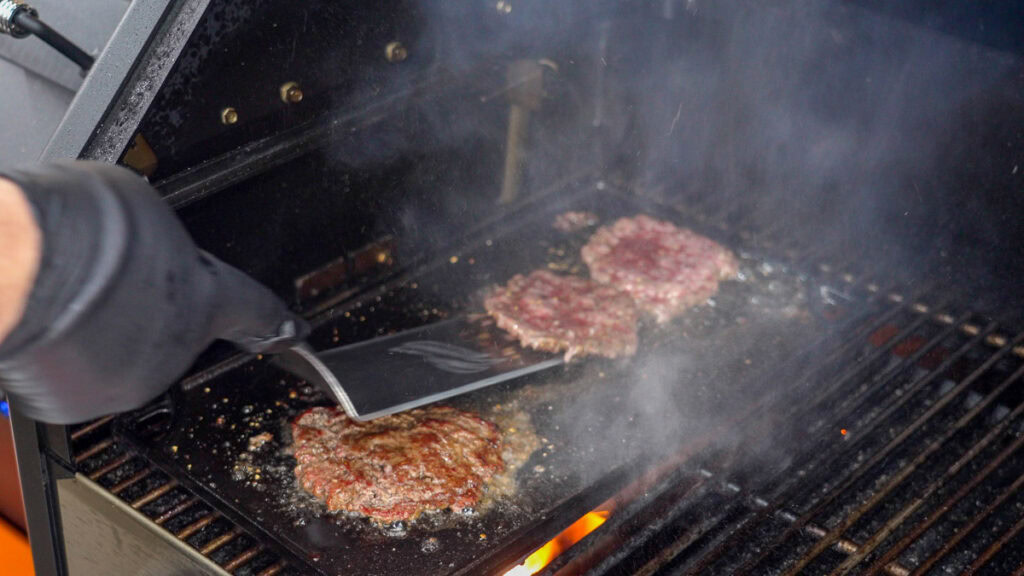
Once you start to get the hang of your pellet grill, look to see what sorts of accessories fit it.
Some manufacturers have rotisserie kits, searing plates, rib racks, and even replacement cast-iron grill grates.
All of these attachments can add to the experience of using your pellet grill.
You can even make pizza or bake bread and cookies on your pellet grill with certain accessories.
Don’t fall into the thinking that your pellet grill is only for meat and vegetables. Take advantage of the opportunities that wood smoke and great temperature control give you.
4. For even more smoke flavor, try using a smoke tube
Smoke settings aren’t the only way to boost the smoke flavor of your food on a pellet grill. Companies have developed an accessory called a smoke tube that works with all types of grills, including pellet grills.
The theory behind smoke tubes is simple. You load the metal cylinder with wood pellets or chips and ignite them. Then after 15 minutes, you actually blow out the fire to allow the pellets or chips to smolder. The resulting smoke will escape through the holes in the sides of the smoke tube and add more smoke flavor to your food.
3. Work out how to sear on your grill
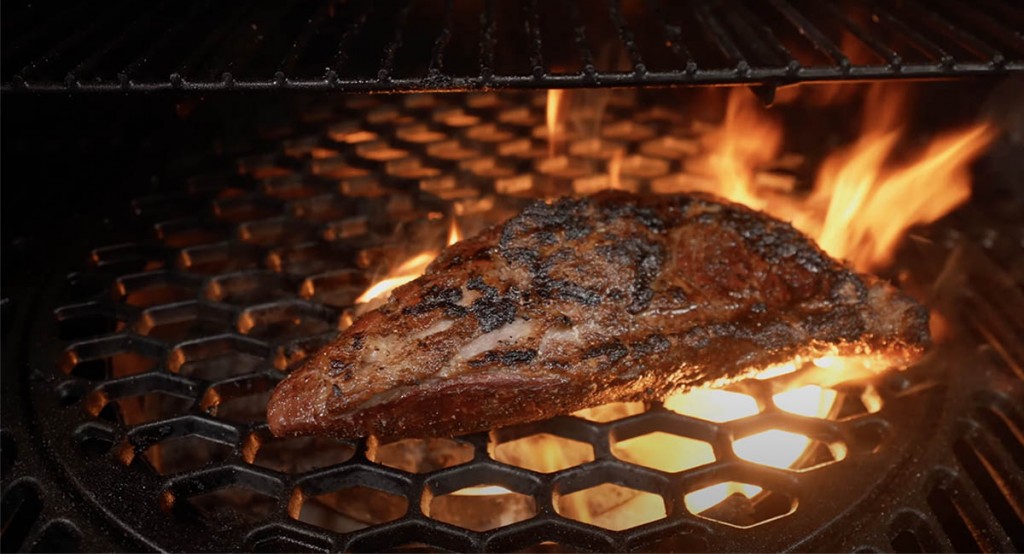
While pellet grills are advertised as being able to do just about everything, searing can be more difficult than on a gas or charcoal grill. There is a flame from the pellets burning, but there is a heat plate of some type over it on every model.
Different grill manufacturers have ways of dealing with that. For example, many Pit Boss models have a slide-out so you can expose the flame for direct searing.
On a Traeger you are limited to cranking the heat as high as it will go.
Others, like Camp Chef on their Woodwind series of pellet grills, have attachments you can purchase separately for using propane to sear.
Regardless of what manufacturer and model you have, experiment to see how you can get the best results.
2. Use the reverse sear method
If you want to cook some thick steaks or prime rib, pellet grills can be your best friend for reverse searing. Using the built-in probes or other options, you can smoke those thick cuts of meat to develop a smoky flavor.
Then you can use your preferred searing method to get that beautiful crust. Whether your pellet grill can open for direct flame, you want to heat up a cast-iron skillet, you have a gas burner attachment, or you want to fire up your gas or charcoal grill, your pellet grill is the perfect way to get steaks started with the reverse sear method.
1. Use a thermometer and cook to temperature, not time
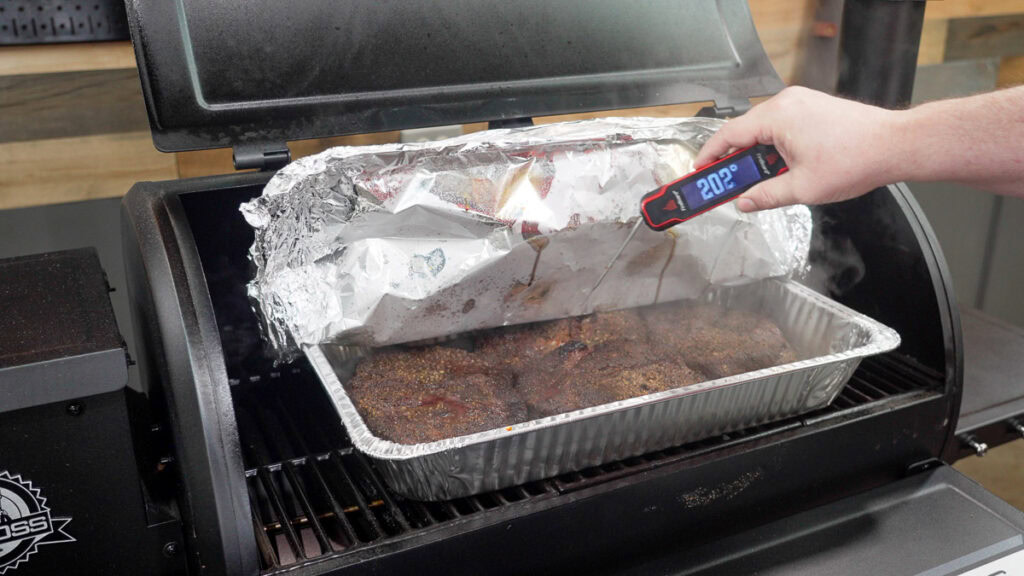
Time is a guess. Temperature is an answer.
Two briskets the same weight can finish two hours apart, so a recipe can only ever tell you roughly when to start checking. What actually decides doneness is the internal temperature, and the only way to know it is to measure it.
There are rough estimates about how long a pound of certain meats will take to cook at a specific temperature, but that’s all they are. Estimates.
Whether you are grilling burgers, steaks, or smoking a brisket, the most important way to tell if something is done properly is by monitoring its internal temperature. Most pellet grills include probes, so take advantage of that. If yours doesn’t, you can use an instant-read thermometer like the Thermapen ONE (which we’ve reviewed and definitely recommend).
If you are smoking a large cut of meat like a brisket or pork butt, you can help the internal temperature by wrapping it in pink butcher paper or aluminum foil when it reaches around 165° Fahrenheit.
Use these tips to get the most out of your pellet grill
That’s it. The 21 tips that turn a pellet grill from a set-and-forget box into something you actually control, from pulling real smoke flavour out of it to searing a steak properly at the end.
Work through them, and you’ll get more smoke, more consistent cooks, and a grill that lasts a good deal longer.
If you want something to practise on, grab our pellet grill recipes ebook, featuring 25 of our most popular pellet grill recipes, so you’ve got a reason to fire it up this weekend.
Let us know in the comments which one you’ve never heard before, or if there’s a tip we’ve missed.
Did you miss our previous article...
https://manstuffnews.com/backyard-grilling/grilled-savory-pork-steaks
 Backyard GrillingWeekend WarriorsAdvice from DadBeard GroomingTV Shows for Guys4x4 Off-Road CarsMens FashionSports NewsAncient Archeology World NewsPrivacy PolicyTerms And Conditions