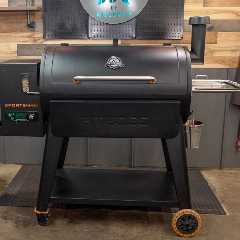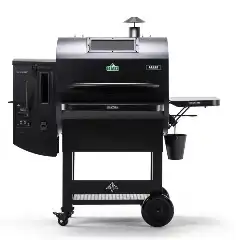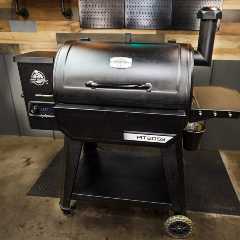

Green Mountain Grills first made its name as a Traeger alternative, offering more features for the money. In recent years, though, its lineup has stood still while Traeger refreshed its range and brands like
So is GMG still worth a look? We’ve put the Ledge Prime 2.0 up against its closest Traeger rival, the Woodridge, to find out. At the end, we’ll also cover a few alternatives worth considering.
|
|
 |
|
|
|
|
- Includes front and side shelves
- Peaked lid gives you extra headroom
- Lid and hopper window
- Useful accessories
- App experience not the best
- Large size for the price
- Digital controller and app
- Quite and efficient
- Lack of smoke flavor on base model
This is another article in a series on how Traeger grills compare with the competition. You may also want to check out our guides to Pit Boss vs Traeger and Camp Chef vs Traeger, or our list of the best Traeger alternatives.
Green Mountain Grills vs Traeger Pellet Grills – Head to head
Comparing grills from different brands is hard. Price points and features rarely line up, so fair comparisons are tricky.
With that in mind, here are the main differences between the two brands to help you decide:
- Green Mountain Grills are generally a little cheaper than the closest Traeger model, but the gap is much smaller than it used to be.
- Traeger gives you a lot more cooking space for the money. The Woodridge’s main grate alone is bigger than the Ledge’s entire cooking area, before you count the warming rack.
- The portable Trek from Green Mountain Grills comes with WiFi, while the Traeger Tailgater does not.
- GMG still has a slight edge on maximum temperature, topping out at 550°F compared to 500°F on most Traeger models.
- Traeger now has the better warranty, with a 10-year limited warranty on the Woodridge vs 3 years on GMG grills.
For most people, the best value in the Traeger lineup is now the Woodridge. If you’re on a tighter budget, the new Westwood is Traeger’s most affordable full-size grill yet.
To help you compare, we’ve put the Woodridge up against its closest GMG rival, the Ledge Prime 2.0, across a range of categories.
| GMG Ledge Prime 2.0 | Traeger Woodridge | |
|---|---|---|
| Dimensions | 52 x 51 x 33.5 in | 50 x 46 x 27 in |
| Hopper capacity | 18 lb | 24 lb |
| Cooking surface area (sq in) | 443 | 860 (520 main grate + 340 secondary) |
| Direct flame | No (sideBURN accessory available) | No |
| Meat probes | 2 | 1 |
| Temperature range | 150°F-550°F | 180°F-500°F |
| WiFi | Yes (WiFi and Bluetooth) | Yes (WiFIRE) |
| Control | Digital controller, 5°F increments | Digital controller with full-color display |
| Lid and hopper windows | Yes | No |
| Storage | Side shelf and collapsible front shelf | Front shelf available as a P.A.L. accessory |
| Ash and grease | Ashvac firepot cleanout | EZ-Clean Grease & Ash Keg |
| Warranty | 3 years (labor not included) | 10-year limited |
| Price | Check latest price | Check latest price |
The two grills are close in price, but there are some key differences. The GMG comes with a front shelf, while on the Traeger it’s an optional accessory that clips onto the P.A.L. rail.
The GMG also has a lot less cooking space. You can add extra elevated racks with GMG’s RACKT system, but even then you’ll struggle to match the Woodridge’s 860 square inches.
In the rest of this comparison, we’ll go through the similarities and differences in more detail, along with some brand history to help you make an informed purchase.
GMG VS Traeger top features compared
Size
Traeger offers more size options across its range, with most lines available in at least two sizes. With GMG, you’ll need to step up to the Peak Prime 2.0 if you want more space.
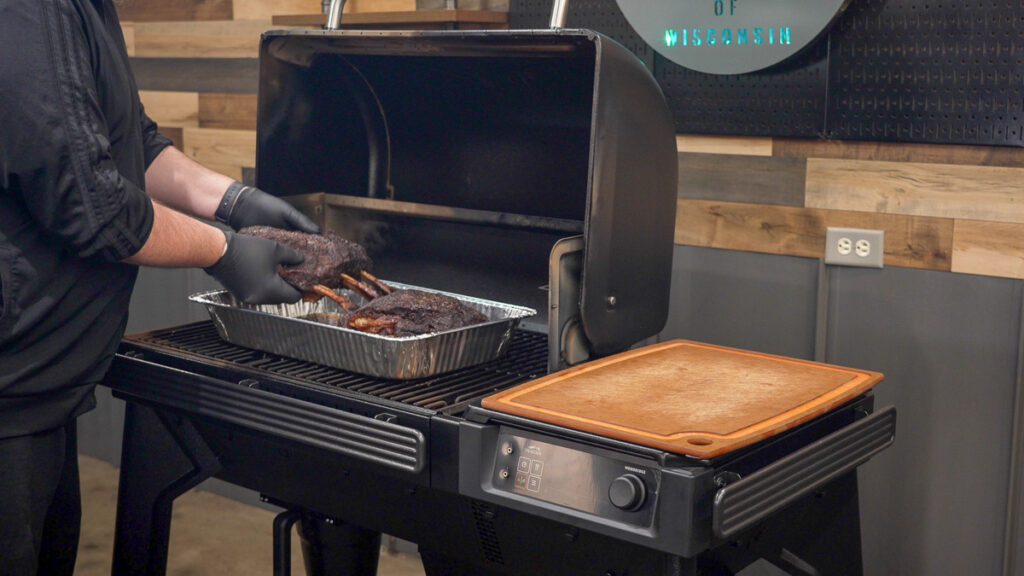
In a direct comparison, this one isn’t close. The Woodridge gives you 860 square inches of cooking space to the Ledge’s 443, and the two grills are close in price.
In the past, Traeger’s numbers were boosted by its warming rack, which you’d often have to pull out for bigger cooks like a ham or a full brisket. That doesn’t save the Ledge anymore. The Woodridge’s main grate alone is bigger than the Ledge’s entire cooking area.
The Ledge is still more customizable, thanks to GMG’s RACKT system, which lets you add racks and set them at different heights. It’s a nice touch, but it won’t close the gap.
Temperature range
GMG wins this one, though the difference is fairly small.
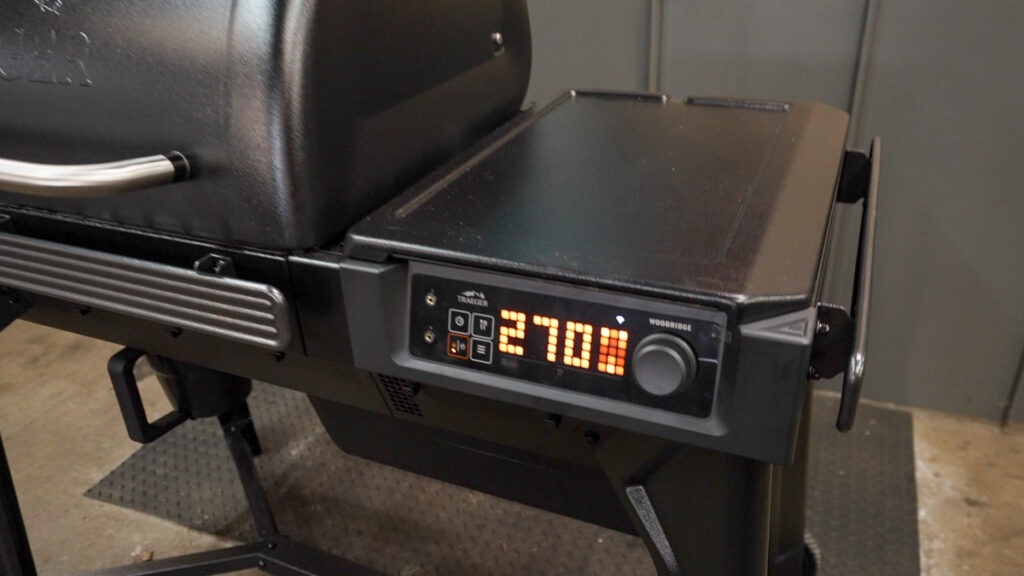
You can set the Ledge anywhere from 150°F to 550°F, while the Woodridge runs from 180°F to 500°F. That gives the GMG a bit more room at both ends: lower for gentle smoking and hotter for finishing.
The extra heat matters more than it sounds. In our testing, the Woodridge struggled to get hot enough for a proper sear. The Ledge also works with the sideBURN attachment, an infrared side burner similar to Camp Chef’s SideKick, which gives you a real searing option the Traeger doesn’t have.
App experience
Both brands offer WiFi with app control on all their grills (with the exception of the portable Tailgater).
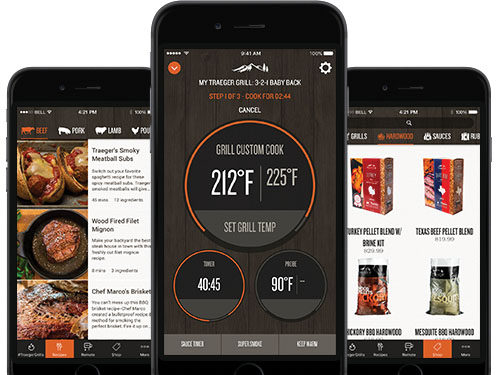
App experience is subjective, so I like to compare the average rating on the Apple and Google Play stores.
Green Mountain Grills average app rating:
- Apple Store – 2.6/5 from 494 ratings
- Google Play – 2.3 from 931 ratings
Traeger average app rating:
- Apple Store – 4.8/5 from 312,000 ratings
- Google Play – 4.7 from 29,200 ratings
Traeger wins this one easily. Its app is rated close to 5 stars on both stores from hundreds of thousands of ratings, while GMG’s sits below 3.
That matches our experience. Traeger’s app is the best we’ve used on any pellet grill, and it was one of the standout features in our Woodridge testing. GMG owners, on the other hand, regularly complain about dropped WiFi connections and an app that’s frustrating to use.
If you plan to control your grill from your phone, this alone is a good reason to go with Traeger.
Storage
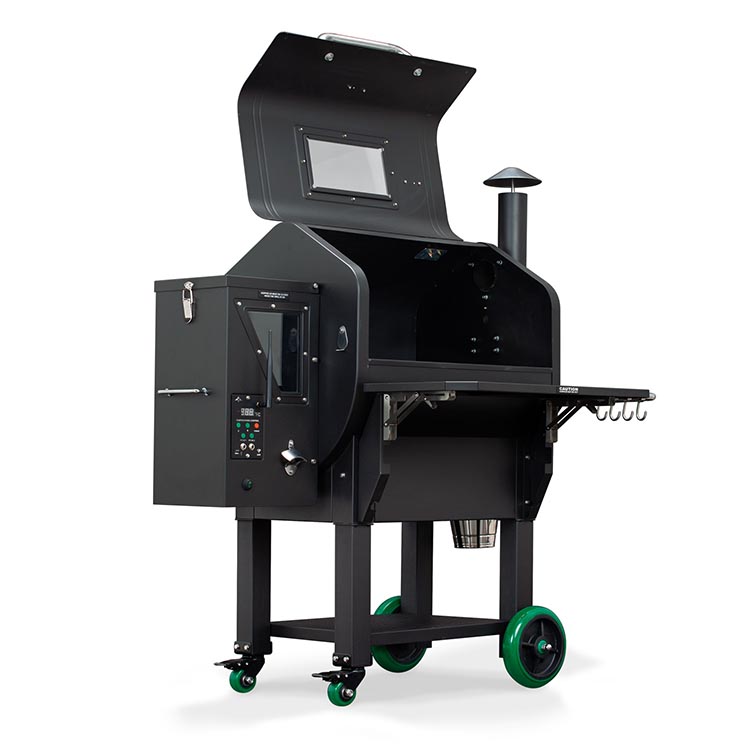
GMG wins this one. The Ledge comes with a fold-down front shelf, a side shelf with hooks for your tools, and a lower shelf on the cart that’s handy for keeping a few bags of pellets off the ground.
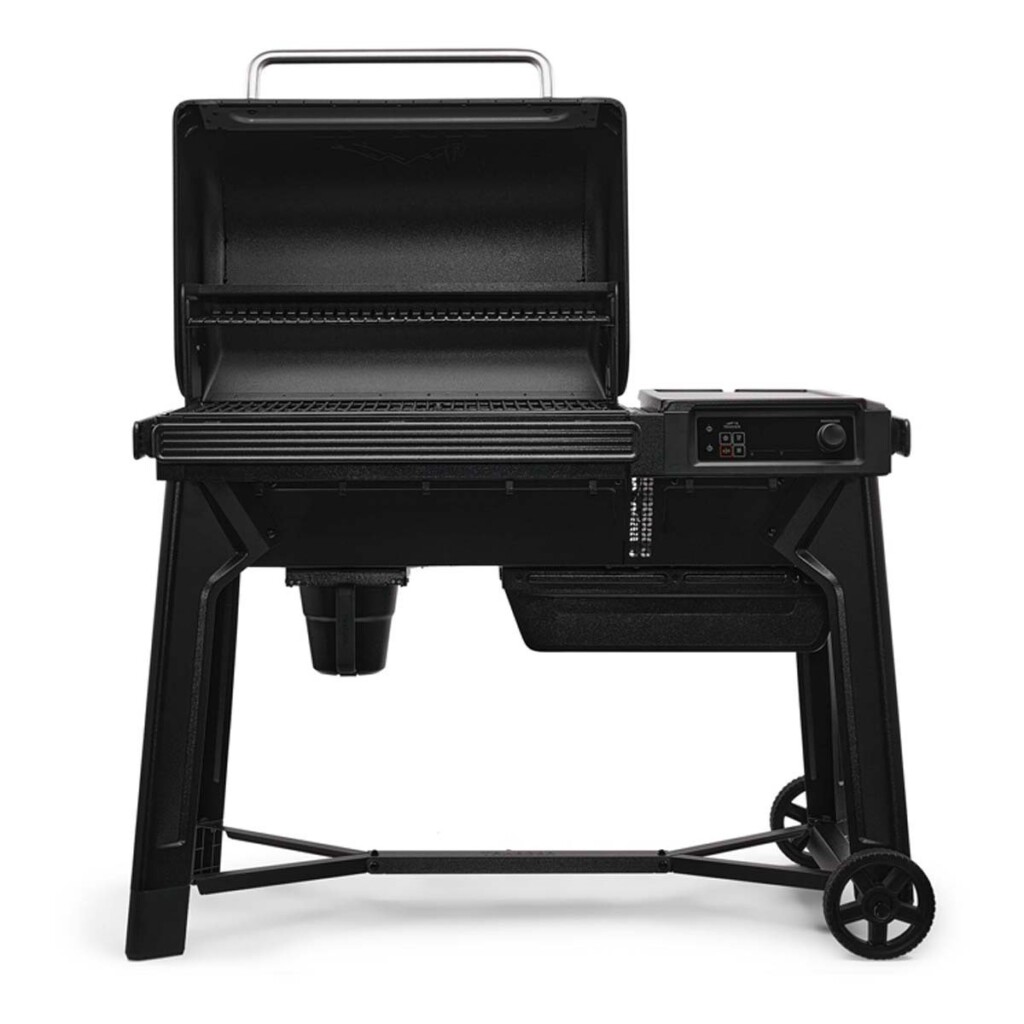
The base Woodridge is much more bare-bones out of the box. You get the P.A.L. accessory rail, so you can add a front shelf, hooks and storage bins, but you’ll need to buy them separately. If you want a side shelf and storage cabinet built in, you’ll need to step up to the Woodridge Pro.
Design
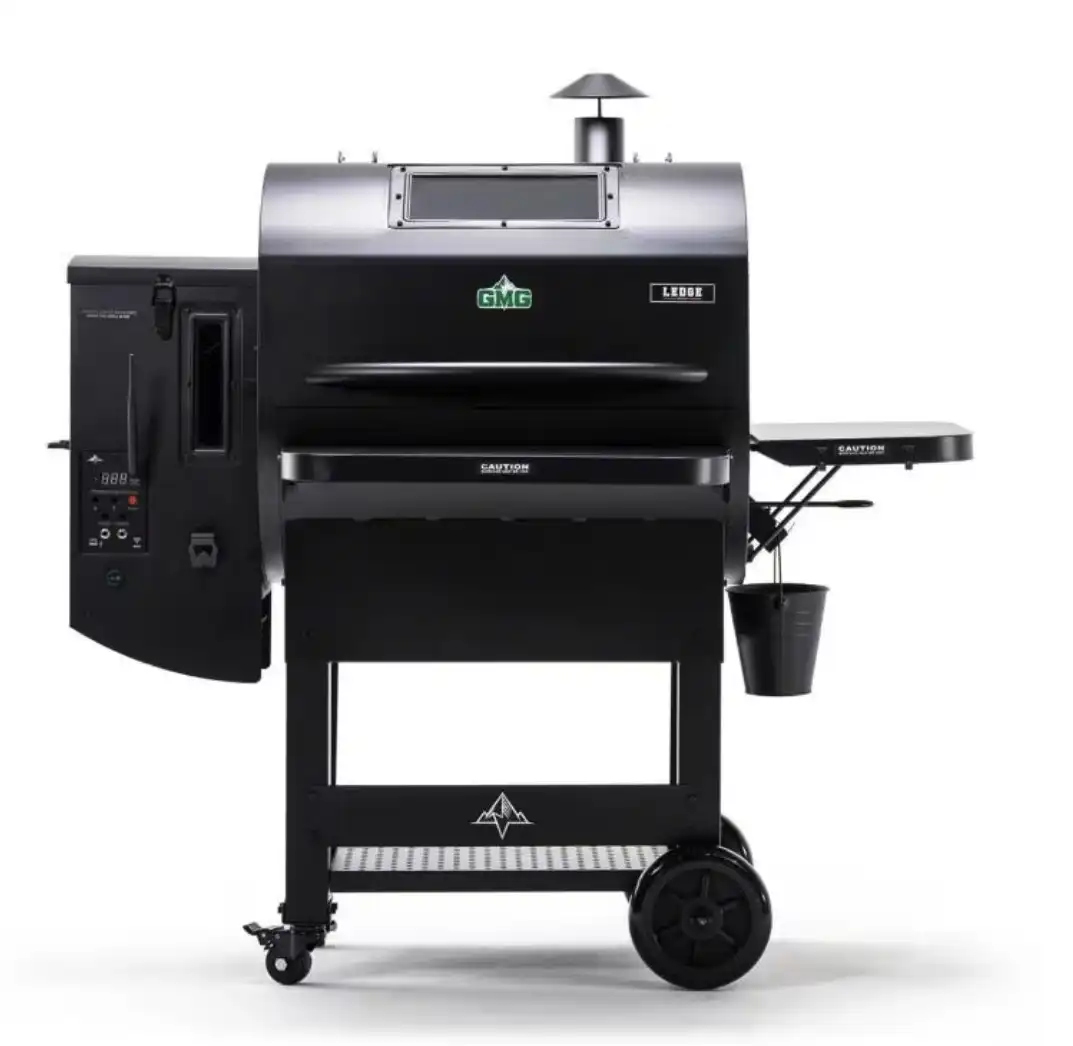
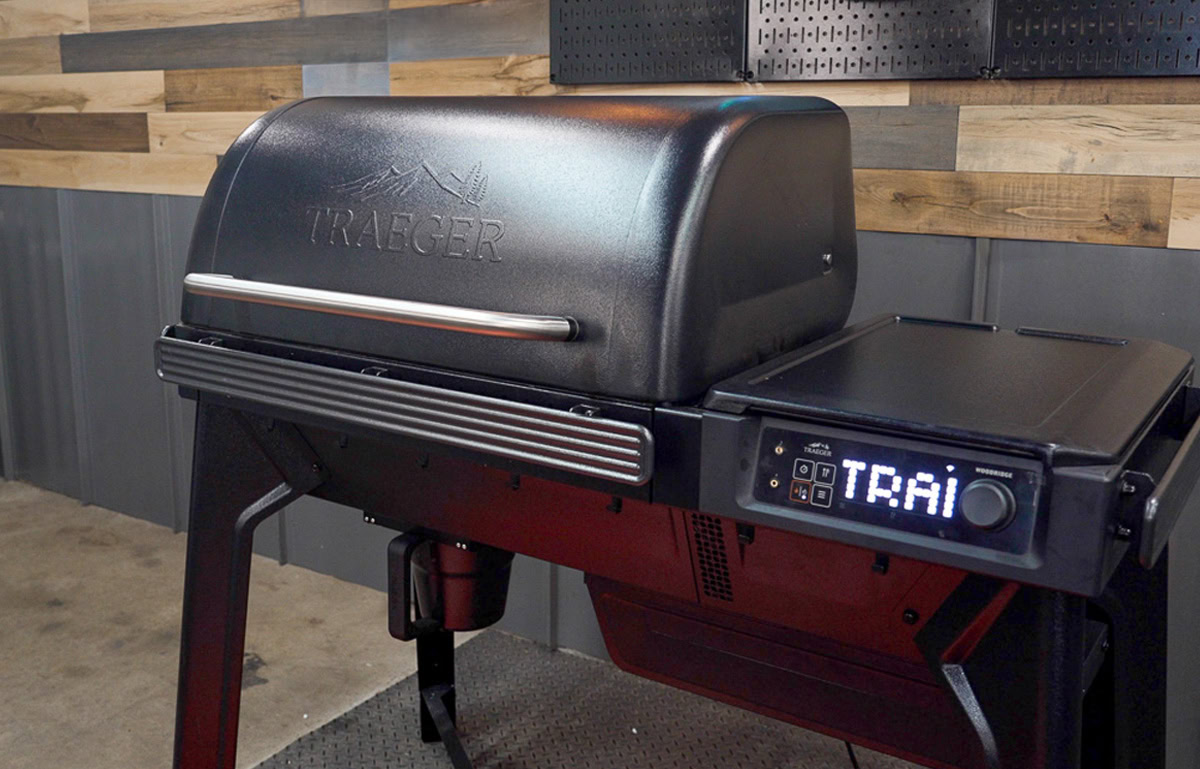
I like the peaked lid on the GMG, which gives you extra headroom for taller cuts like a whole chicken or a pork butt. The Woodridge has a more traditional Traeger look, but the full-color display gives it a more modern feel than older Traeger models.
The GMG also has windows on both the lid and the pellet hopper, so you can check your food and pellet levels without opening anything. The base Woodridge has neither, and no pellet sensor either. You’ll need to step up to the Woodridge Pro for low-pellet alerts in the app.
The Woodridge doesn’t have casters, so it’s not the easiest grill to move around the patio.
Brand History
Overview of Green Mountain Grills
Green Mountain Grills (GMG for short) have been in business since 2008, but it wasn’t until they lowered their prices in 2014 that they became a true contender.
GMG is at least partially responsible for the widespread adaption of WiFi capability in pellet grills.
While Traeger now includes WiFi on all their grills (excluding the portable ones), GMG has always given you the option on their main grills.
GMG has decided to focus on its dealer network, so they are not very easy to find for sale online although you can now get the full range at BBQGuys.com.
Overview of Traeger
Traeger was the original inventor of the pellet grill concept.
The company was formed in the 1980s when Joe Traeger developed the concept from his experience with pellet-burning stoves.
The new company quickly patented their invention, which gave them a monopoly market for the next twenty years.
Throughout that time Traeger remained a small family company. When their patent ended in 2006 a rush of new competitors entered the market and started putting pressure on the company.
The brand really exploded in popularity when a private equity group bought the company.
Today, Traeger is the largest and most well-known manufacturer of pellet grills by far.
Traeger vs Green Mountain Grills: the patent dispute
For several years, Traeger and Green Mountain Grills were locked in a legal battle over WiFi technology in pellet grills.
Traeger filed two patents in 2016 covering the use of cloud and mobile apps to control an outdoor grill. In 2018, it sent cease and desist letters to Rec Tec, Memphis Grills and Green Mountain Grills, telling them to stop selling Wi-Fi-connected pellet grills. GMG challenged the patents, and Traeger hit back with a patent infringement lawsuit.
The dispute finally ended in early 2024, when GMG’s appeal was dropped, and the two companies settled. The terms weren’t made public, but there’s been no sign of further legal action between them. Derrick Riches has a good write-up of the whole saga if you want to dig deeper.
I was never a fan of how this played out. WiFi pellet grills had been around since 2012, well before Traeger filed its patents, and it felt like a big company trying to squeeze out a smaller one.
So what does this mean for you as a buyer? Nothing. GMG still sells WiFi grills, and the lawsuit is no longer a risk to its warranties or customer service.
Top Green Mountain Grill Models
Green Mountain Grills has updated its lineup with two ranges and new product names.
If you are looking at reviews, you might see the old names, and some of the older models are still being sold by third parties, so this is definitely something to look out for.
The main range is called “Prime”. All grills come with WiFi smart controls, and then Prime Plus gives you a few upgrades, including a collapsible front shelf and interior grill light.
- Trek – Used to be the Davy Crockett
- Ledge – Used to be the Daniel Boone
- Peak – Used to be the Jim Bowie
The Choice lineup of pellet grills refers to the original lineup and seems to be getting phased out.
1. Trek Prime WiFi Pellet Grill
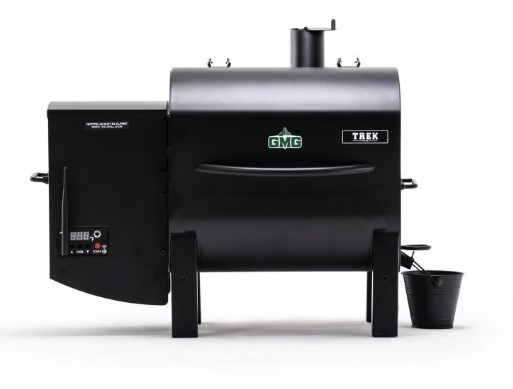
If you want a portable pellet grill, there simply aren’t a lot of great options on the market.
The Trek is definitely one of the best, though. GMG markets this as a grill for tailgaters, campers, and people with RVs who want to cook anywhere.
GMG has replaced the foldable legs, which were the one part of the Davy Crockett design we didn’t like.
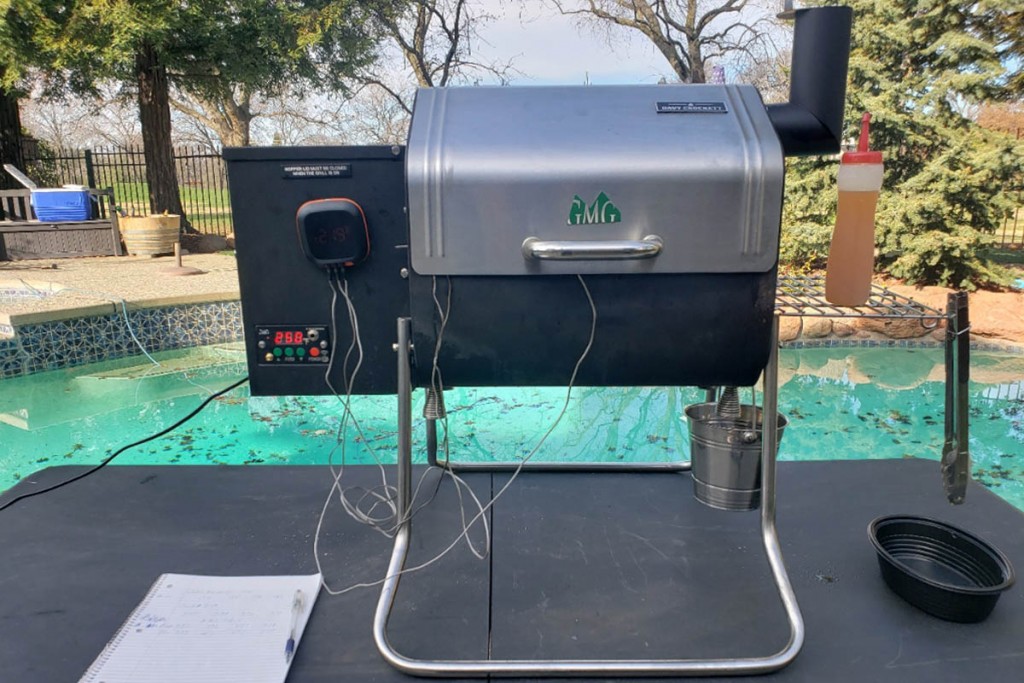
Now you get four sturdy legs that are screwed on and make the grill more stable, although slightly less portable.
The build quality is excellent and the materials are heavy and made to last.
The grill ships with a few accessories to help you power the grill from a variety of sources.
You get excellent temperature control thanks to a digital thermostatic controller which lets you dial in the temperature in 5°F increments.
The combination of features and build quality at a highly competitive price led us to pick the Trek for our favorite budget portable pellet grill in our round-up of the best portable pellet grills.
The portable features are great, but the Trek can perform as a decent small-sized grill even if you never plan to travel with it. There’s a Trek cart you can buy separately that turns this into more of a full-sized grill.
2. Ledge Prime 2.0 WiFi Pellet Grill
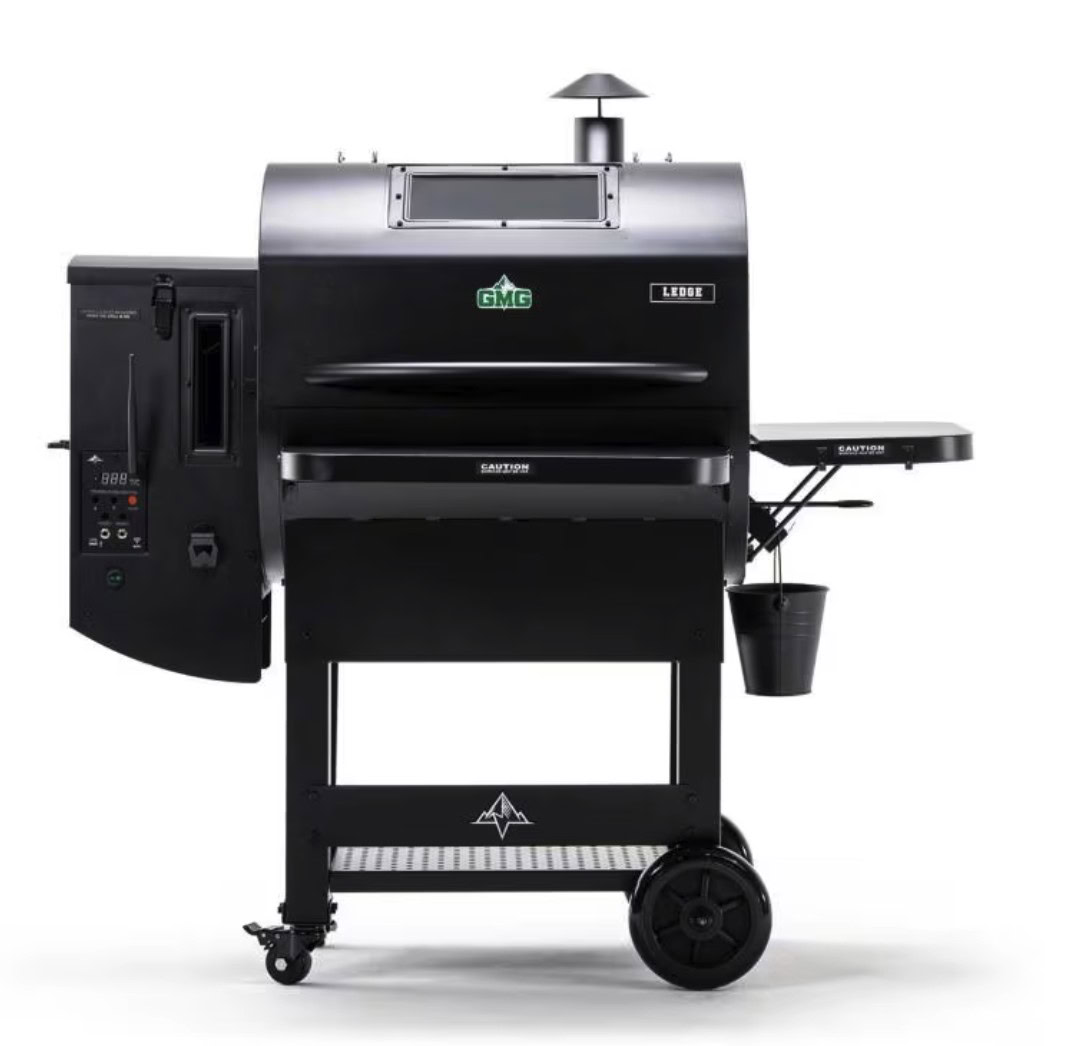
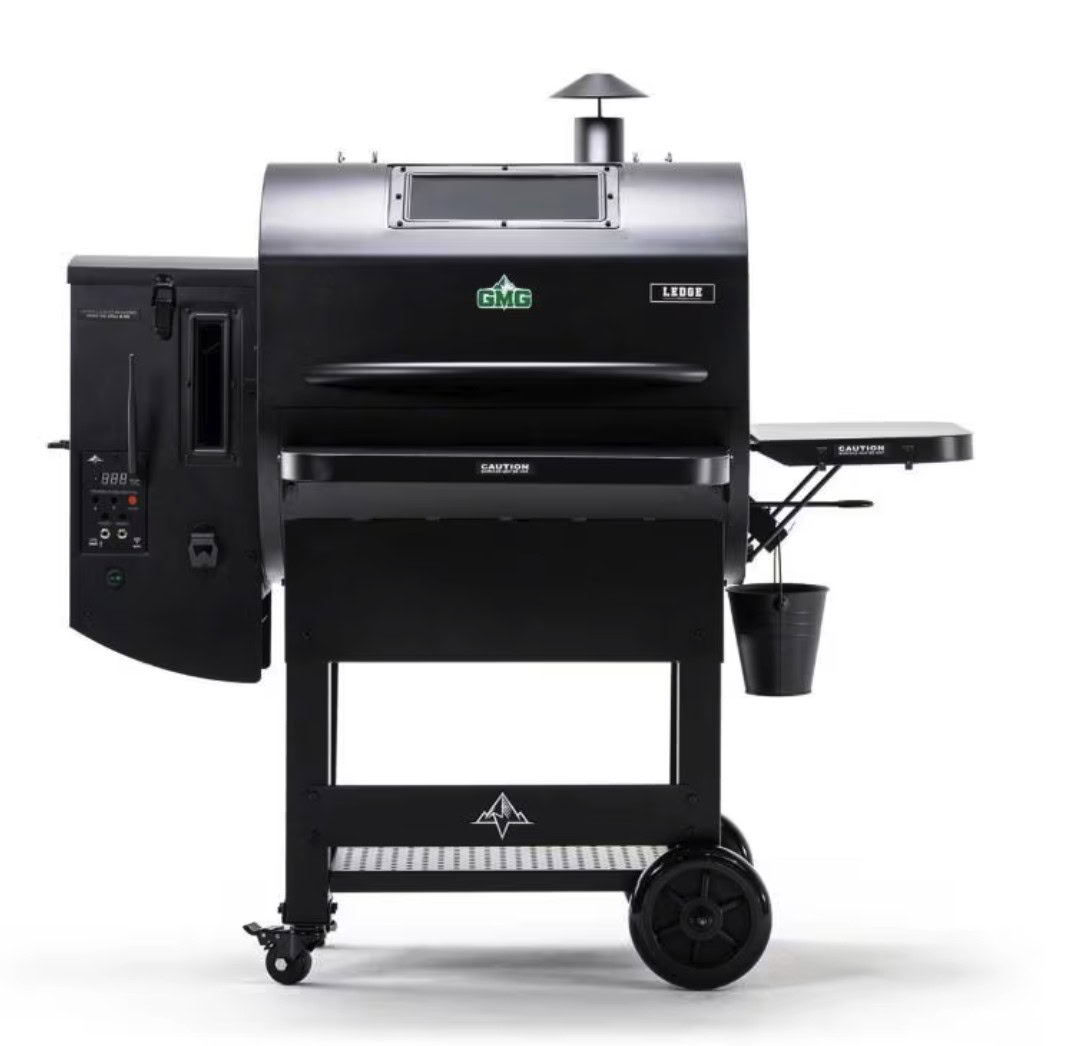
The Ledge replaces the Daniel Boone as the mid-range option in the GMG lineup.
At first glance, it looks very similar but you now get a collapsible front shelf, interior grill light, stronger grates, and a peaked lid with a window.
The peaked lid is a nice touch, as it gives you 13.5 inches of headroom, which is plenty of space to stand up a chicken or cook a turkey.
You get 443 square inches of cooking space all on one large grill rack. The manufacturer claims this is enough to fit 7 racks of ribs.
The pellet hopper capacity is 18 pounds and there’s a window on the front and a pellet door on the back for removing unused pellets between cooks.
The digital controller has been improved and allows you to set the temperature anywhere between 150° – 550°F.
Green Mountain Grills Ledge Prime Plus Pellet Grill
Check BBQ Guys Price
Pros:
- Includes front and side shelves
- Peaked lid gives you extra headroom
- Lid and hopper window
- Useful accessories
Cons:
- App experience not the best
3. Peak Prime WiFI Grill
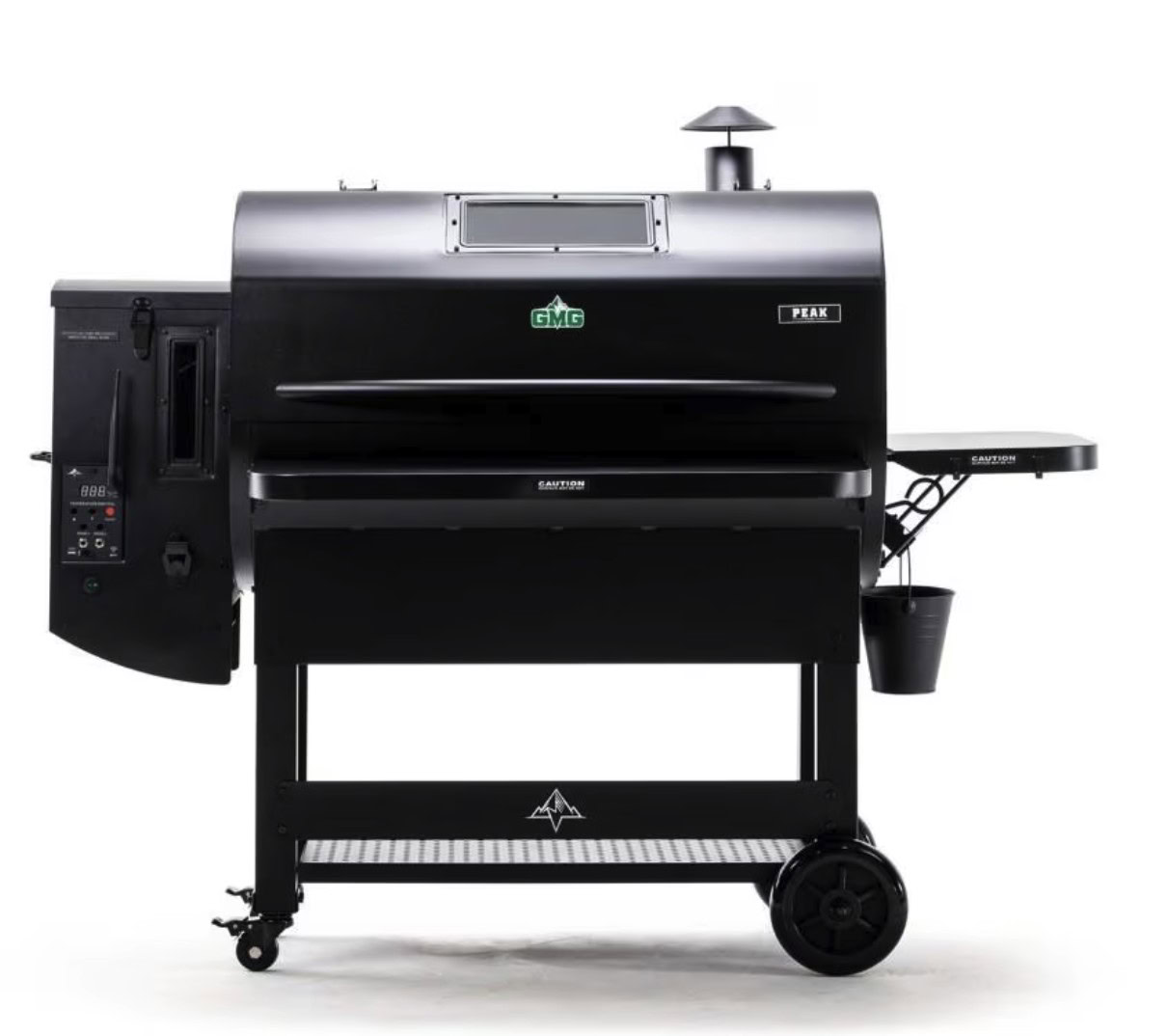
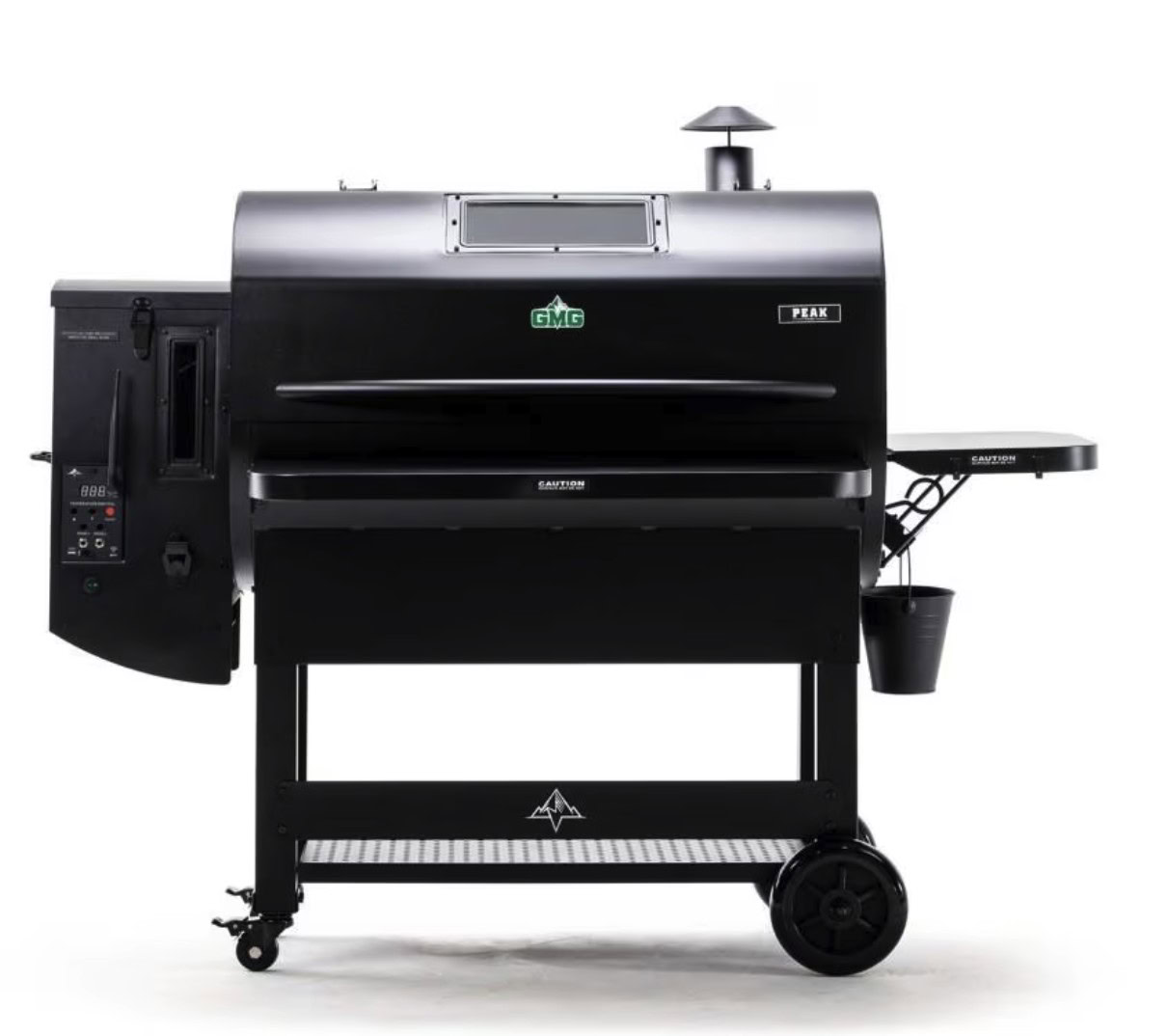
The Peak (formerly Jim Bowie) is the big daddy of the Green Mountain Grill family.
It looks exactly like the Ledge, only stretched out so now you get 658 square inches of cooking space.
This doesn’t make it a huge grill by any standards. To give you some perspective, the most expensive Traeger Timberline comes with 1320 square inches of cooking space (with a much higher price tag).
You have to be careful making the comparison, though, because it all comes down to how much “usable space” you get. A lot of the extra space on the Traeger comes from the additional warming rack. If you want to cook any large items, you’ll want to remove this, bringing your actual real estate down.
Top Traeger Grills
- Traeger Woodridge – This sits one step above the entry-level Westwood. It comes in three versions (Woodridge, Woodridge Pro, and Woodridge Elite), and every model has WiFi. The base Woodridge is a close price match for the GMG Ledge, but gives you nearly twice the cooking space.
- Traeger Ironwood – The Ironwood offers larger sizes along with new features such as DownDraft Exhaust and TRU convection. You also get Super Smoke mode, the option to push a button and ramp up the smoke produced.
- Traeger Timberline – The largest and most expensive option comes with all the features of the Ironwood plus futuristic pellet sensing technology that lets you monitor your pellet levels on the app.
You’ve also got the Traeger Tailgater, which competes directly with the Trek, with 300 sq inches and a lot less tech.
If you want to learn more about the various models of Traeger, I suggest checking out our post on Traeger Grill Reviews.
Other brands to consider
If you still haven’t decided between a Traeger or Green Mountain Grills, you might find one of the many other manufacturers more suitable.
Let’s quickly go through
If you want better searing options, look at Weber
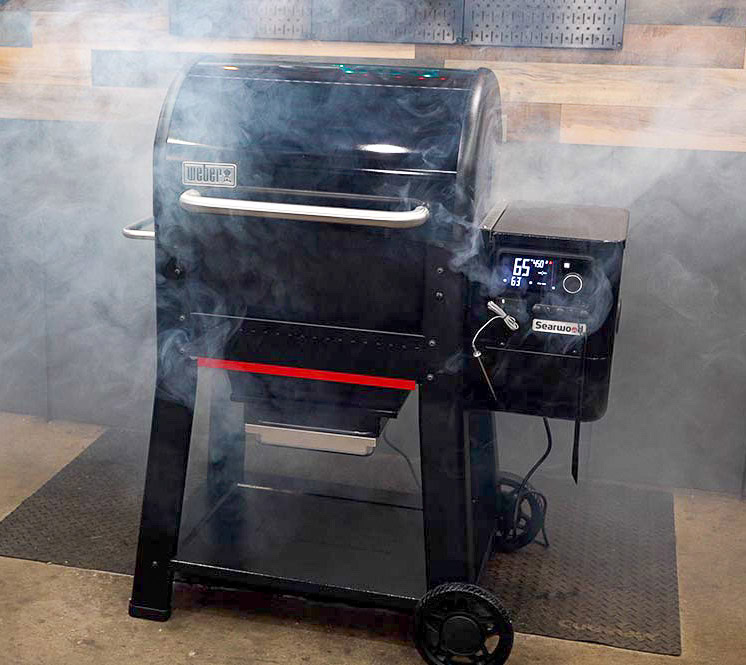
Weber has turned into a serious player in pellet grills, and the Searwood has the best searing setup we’ve seen on a pellet grill at this level.
Rather than relying on an add-on burner, the Searwood lets you sear with direct flame across the entire grate. It hit 600°F in 13 minutes in our testing, and as long as you rotate your meat, you’ll get an edge-to-edge char on steaks and chops. That’s 100°F hotter than the Woodridge and 50°F hotter than the Ledge.
It’s also a great smoker. You get adjustable smoke levels, a Rapid React PID controller that recovers fast after you open the lid, and a grease and ash system that cuts down on cleanouts. We called it the most versatile pellet grill we’ve tested.
If you need more space, the Searwood XL gives you 972 square inches, compared to 648 on the standard 600.
Weber Searwood 600 Pellet Grill
CHECK LOWE'S PRICE
CHECK BBQ GUYS PRICE
4.5
Pros:
- Direct flame searing across the entire grates
- Open lid grilling mode
- Adjustable smoke levels
- Option to add griddle and rotisserie attachments
Cons:
- Some hot and cold zones
- Front and side shelves not included
If you want to save money, look at Pit Boss
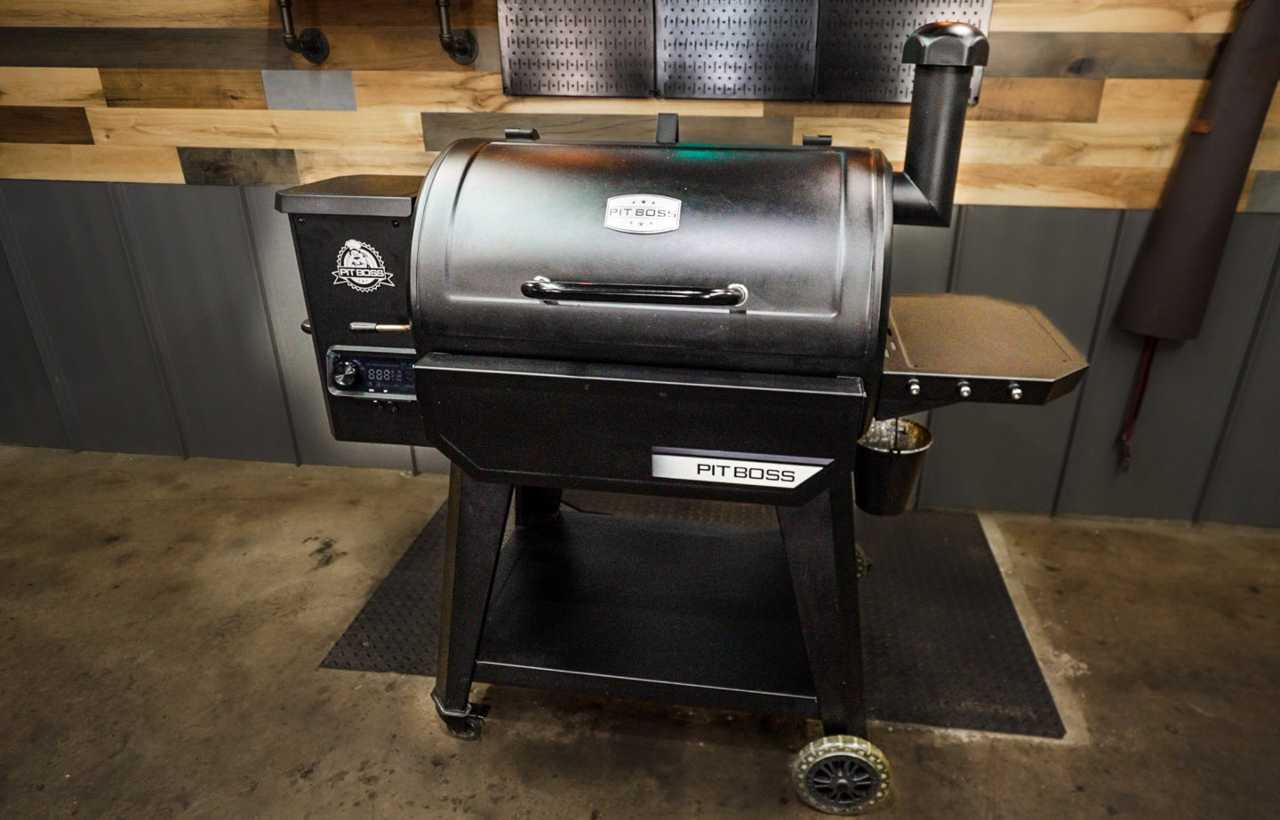
If you want the best grill for your money, the
It also comes with side, front and bottom shelves, plus a five-year warranty, and it’s only available at Lowe’s.
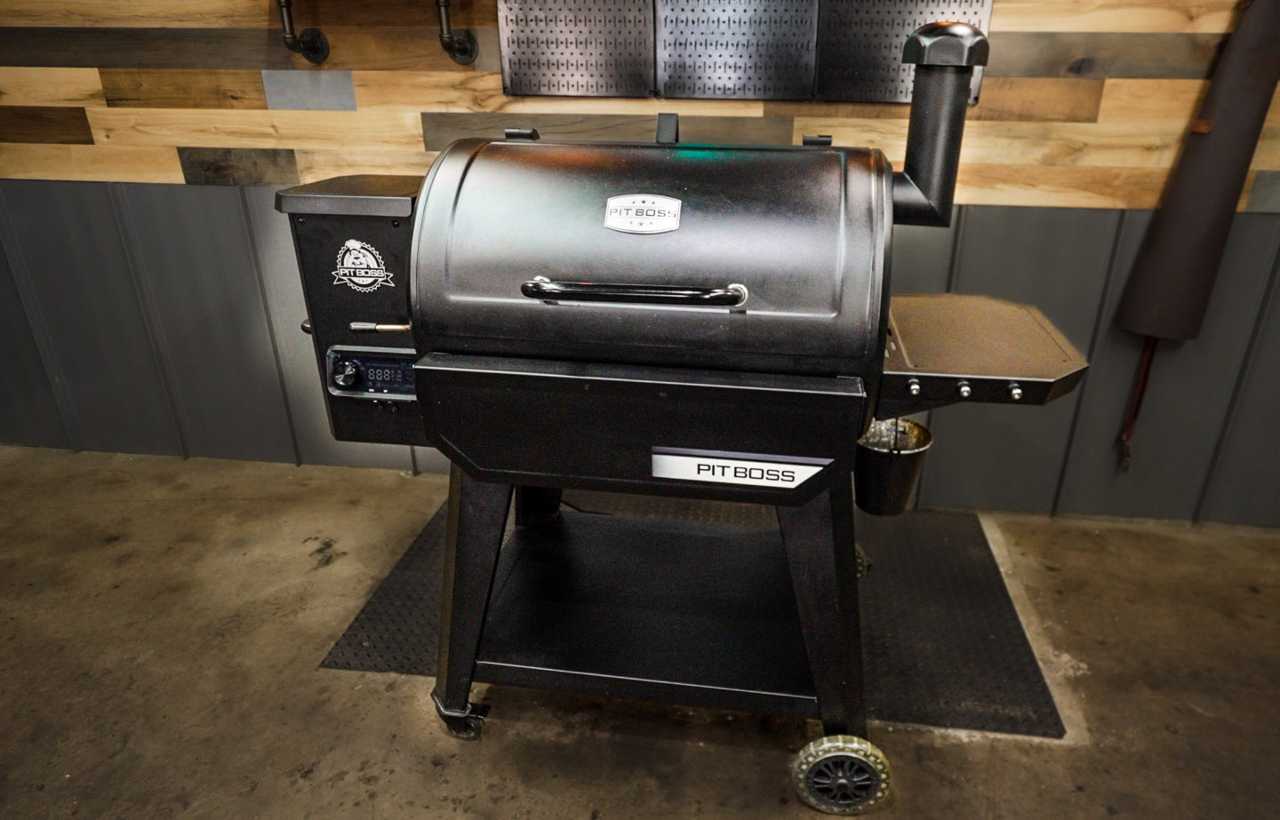
Pit Boss 850 DX Pellet Grill
CHECK LOWE'S PRICE
Our Verdict: The 850 DX delivers serious value. It’s easy to use, cooks consistently, and includes features you don’t usually get at this price. The app and cleanup could be better, but for most people, it’s one of the best pellet grills you can buy for the price.
Pros:
- Excellent value for the price
- Useful Keep Warm feature with probe
- WiFi controller with solid temp control
Cons:
- Direct-flame searing makes cleanup take longer
- App setup can be slow initially
Wrapping it up
A few years ago, GMG was the easy pick if you wanted more features for less money. That’s no longer the case.
For close to the same money, the Traeger Woodridge gives you nearly twice the cooking space, a much better app and a longer warranty. GMG still has the edge on temperature range and storage, but the Ledge has barely changed while Traeger refreshed its whole lineup.
If searing matters to you, look past both and go for the Weber Searwood. It’s the most versatile pellet grill we’ve tested.
GMG’s best case now is the portable category, where the Trek still gives you WiFi that the Traeger Tailgater doesn’t. For a full-size backyard grill, we’d go Traeger or
Did you miss our previous article...
https://manstuffnews.com/backyard-grilling/indirect-smoked-brisket-recipe