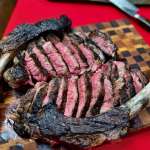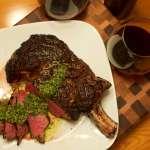

We take a picanha roast aka sirloin cap roast aka rump roast aka coulotte roast (actually 2 of them), and carve a criss cross pattern in the fat cap, season with SPG (salt pepper garlic seasoning) and smoke via indirect grilling on a charcoal grill until they reach about 110F. Then, the grilled picanha roast is seared, to crisp up the fat cap and brown the bottom, before being sliced and slathered in an easy, fresh chimichurri sauce. Basically, another reverse sear session, picaña steak edition.
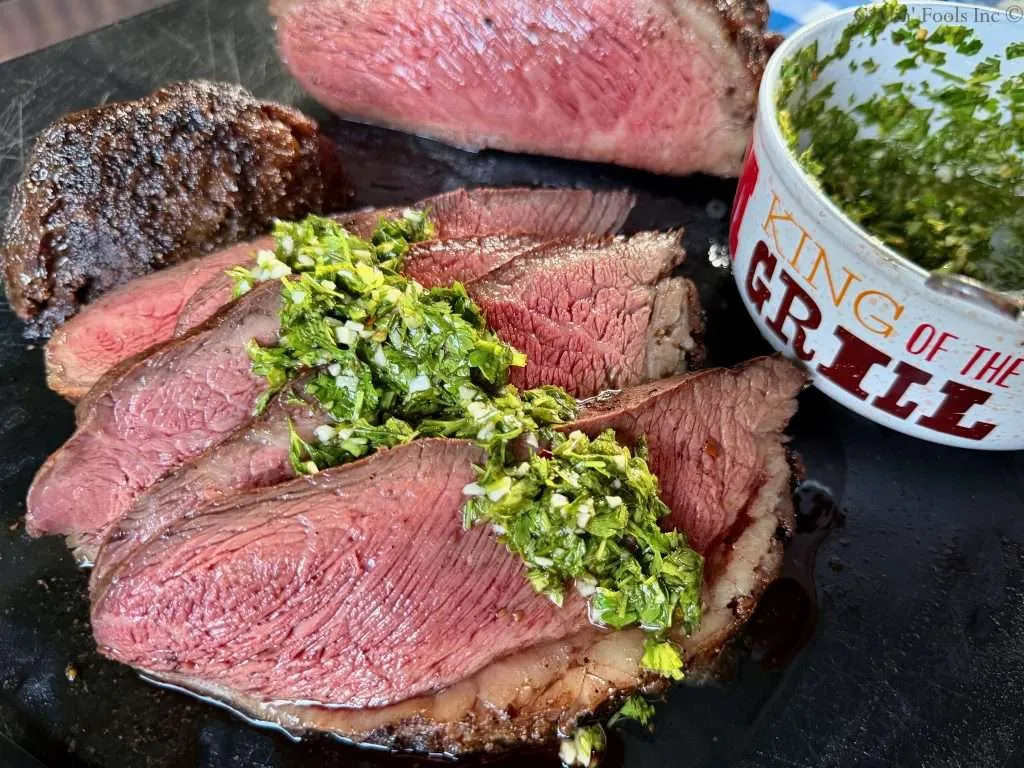
Picanha (or Picaña – I will use both for SEO purposes) roast comes from the top of the sirloin primal which is along the upper part of the rear of the cow which means it can also be called rump roast. The kids will find that funny. Mine did.
Leaving the fat cap on means this is a picanha roast, but if I remove the fat, it’s a coulotte roast. I learned the difference from the fine folks at Korte Meats in Highland Illinois. Leave the fat cap on to go for a South American vibe, or remove the fat cap and go with a more traditional sirloin steak. I went with the former, furthermore, I took it to another level by adding this easy chimichurri sauce on top.
Chimichurri takes about 2 minutes to make. Make it fresh, unless you have a bottle of the stuff my buddy Al Frugoni makes. I don’t know what sort of voodoo, wizardry he did to make this stuff, but it’s amazing. And I normally use his stuff, but I ran out so I made this chimi. Fresh is super easy to make, so you are set either way. Or skip it and eat the picaña roast without the sauce.
Before we move to far along here, it occurs to me, you might be crawling down that rabbit hole of steak alternatives to the big three (ribeye, strip and filet). So let me help.
- The bottom of the sirloin primal has the tri tip which we are huge fans. This reverse seared tri tip is a good primer for this cut.
- If you have a Santa Maria cooker, or an Ugly Drum Smoker (UDS) you could do a traditional Santa Maria tri tip.
- The flat iron steak is amazing and so easy to prepare.
- And while Teres Major sounds more like a star in a constellation in the sky, it’s actually a fantastic steak.
- And the Denver steak could be the best of the bunch.
Alright, back to the picanha roast.
Picanha Roast Ingredients
- 2 Picaña roasts
- SPG seasoning (salt pepper garlic)
- Chimichurri sauce
That’s it. This beef is so fantastic that it just doesn’t need much.
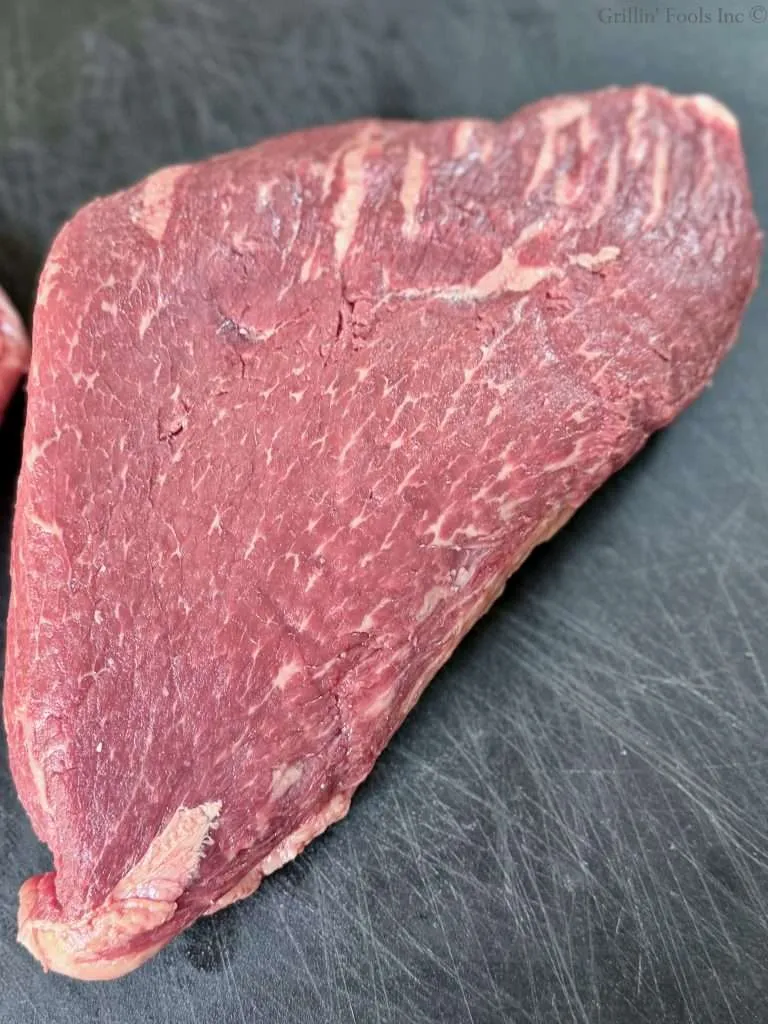
Here’s one of the picaña roasts:
My first step here is to carve a criss cross pattern on the fat cap side:
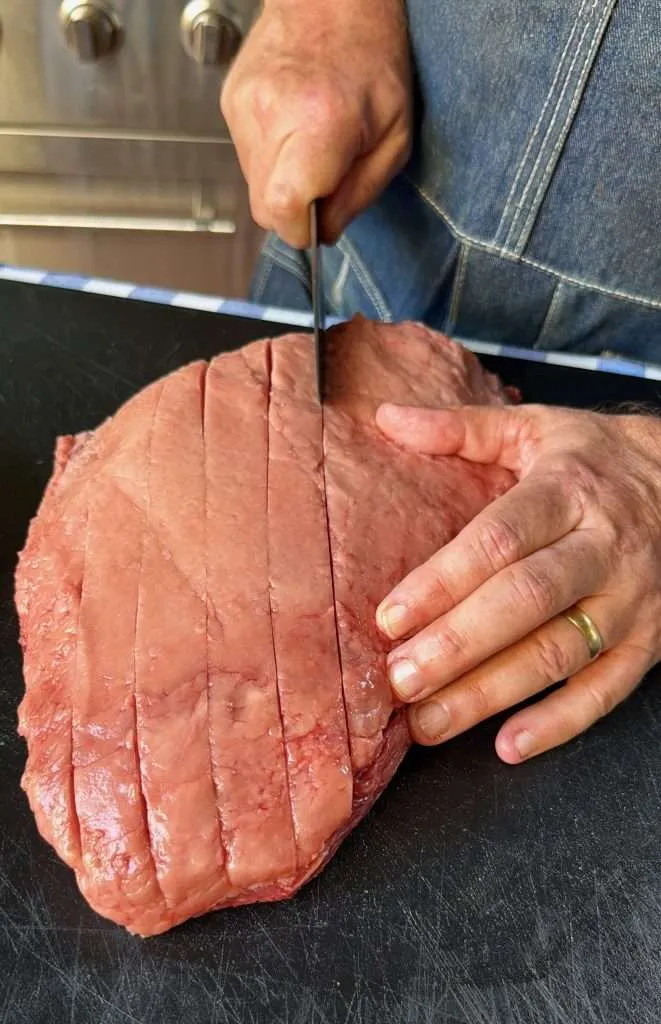
Then rotate and complete the criss cross cuts:
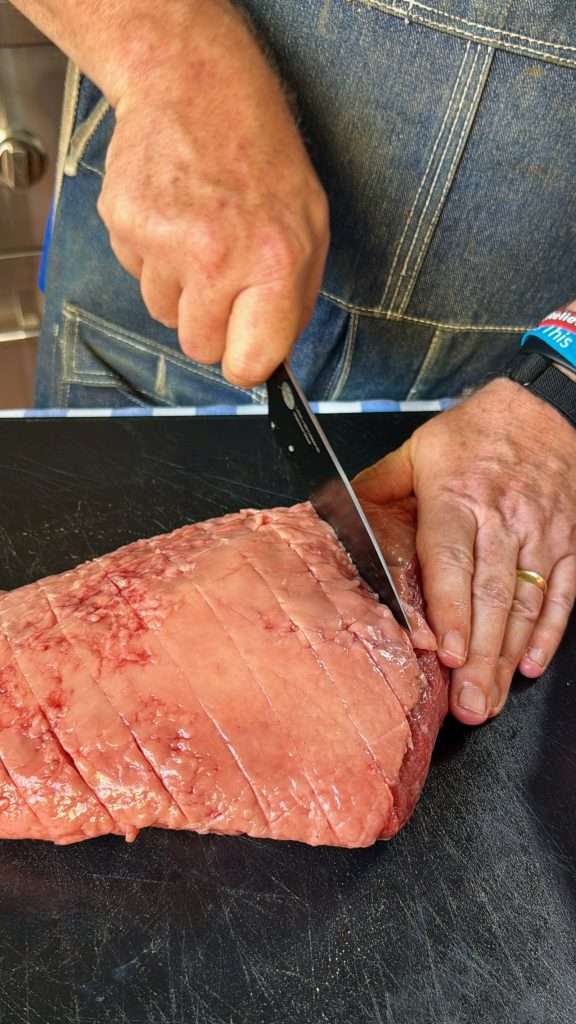
The criss cross pattern is not really cosmetic. It’s more to allow that seasoning to penetrate deeper into the meat. See, none of that seasoning will penetrate the fat to actually season the meat. Season well on all sides and work that SPG seasoning into the meat and the grooves in the fat:
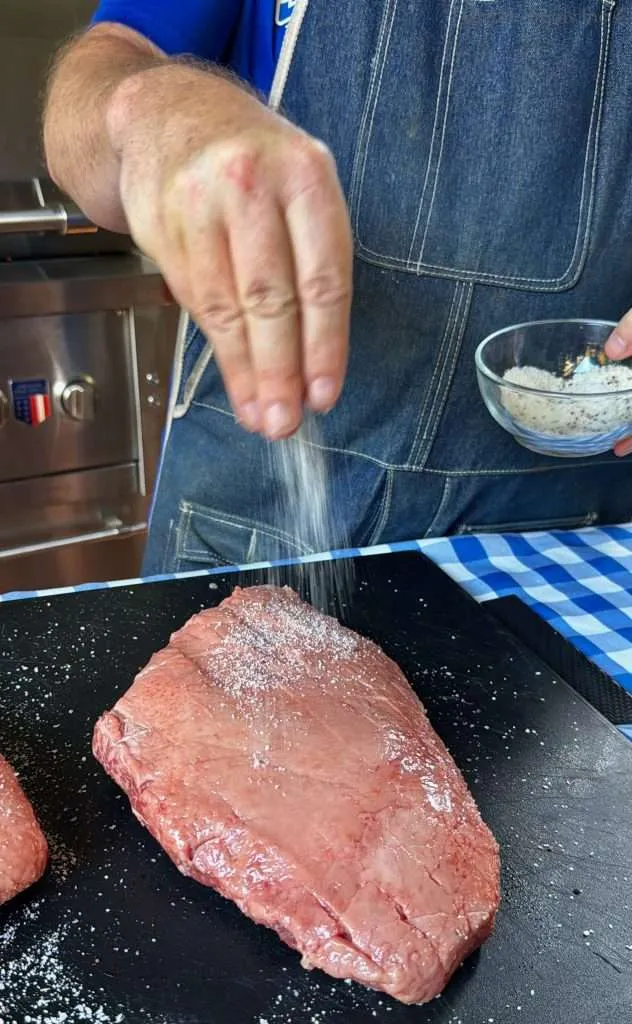
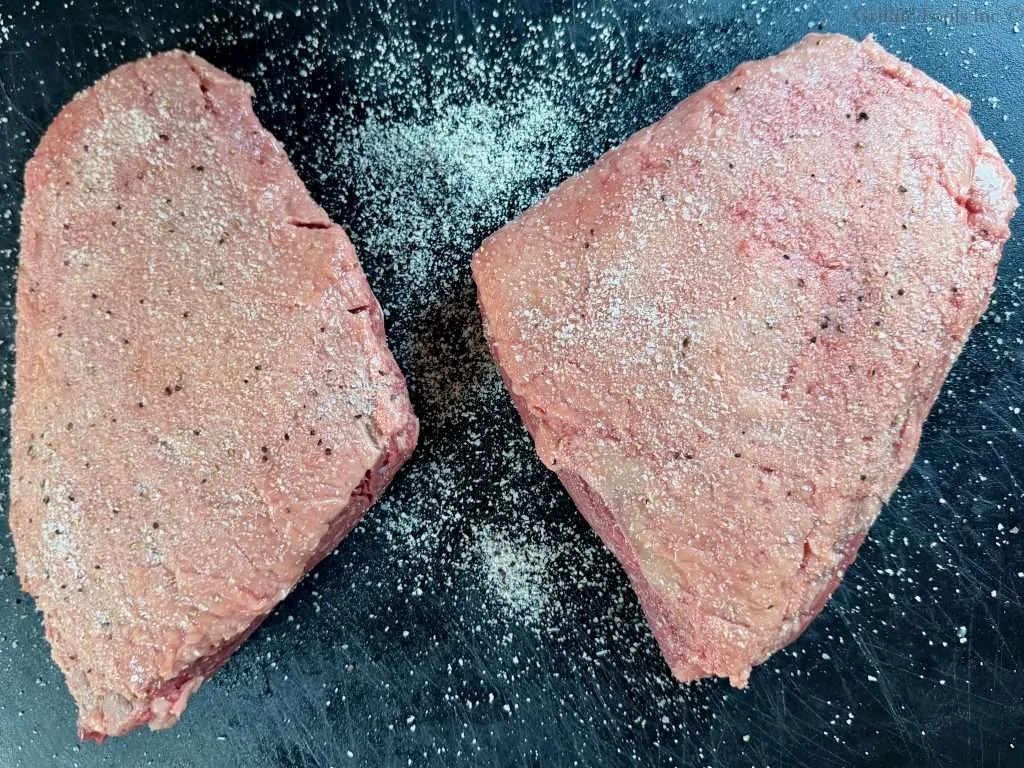
Then do the meat side:
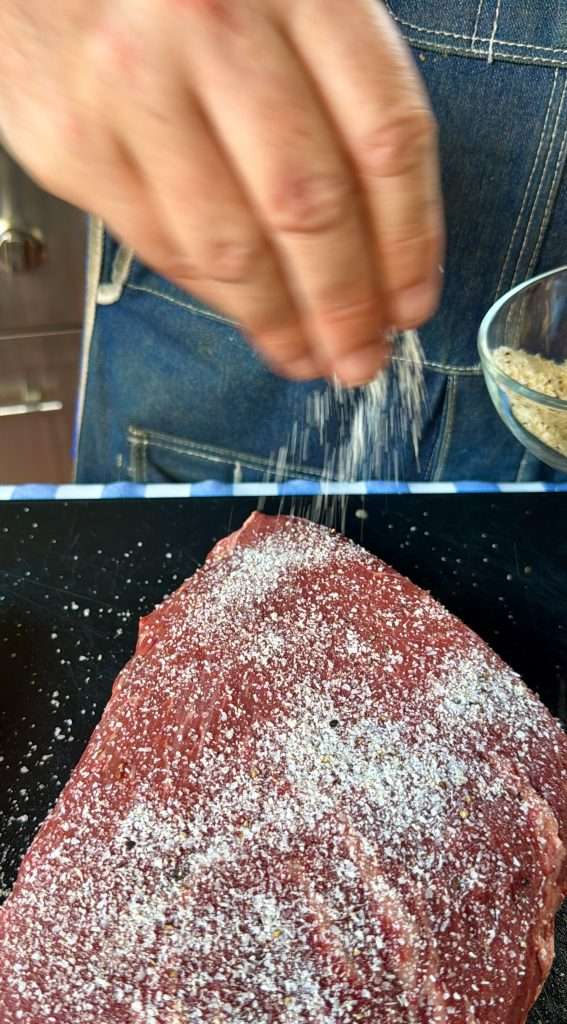
Don’t forget to season this side:
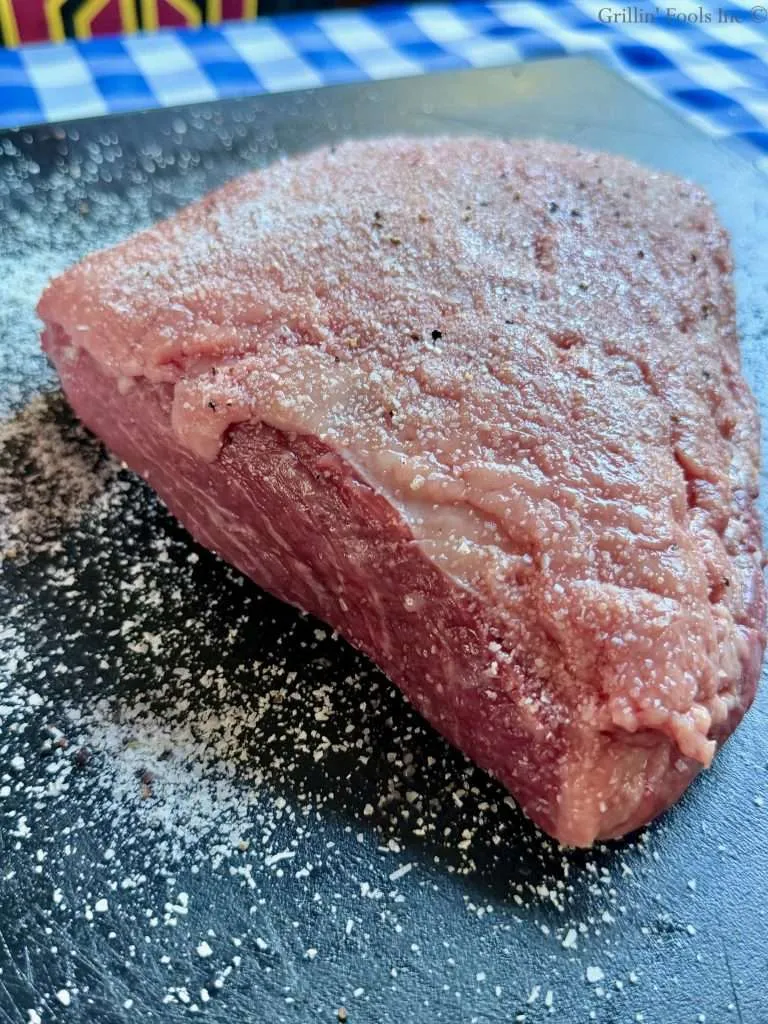
See that excess seasoning on the cutting board in the above pic? Just tab that skinny, flat side in that:
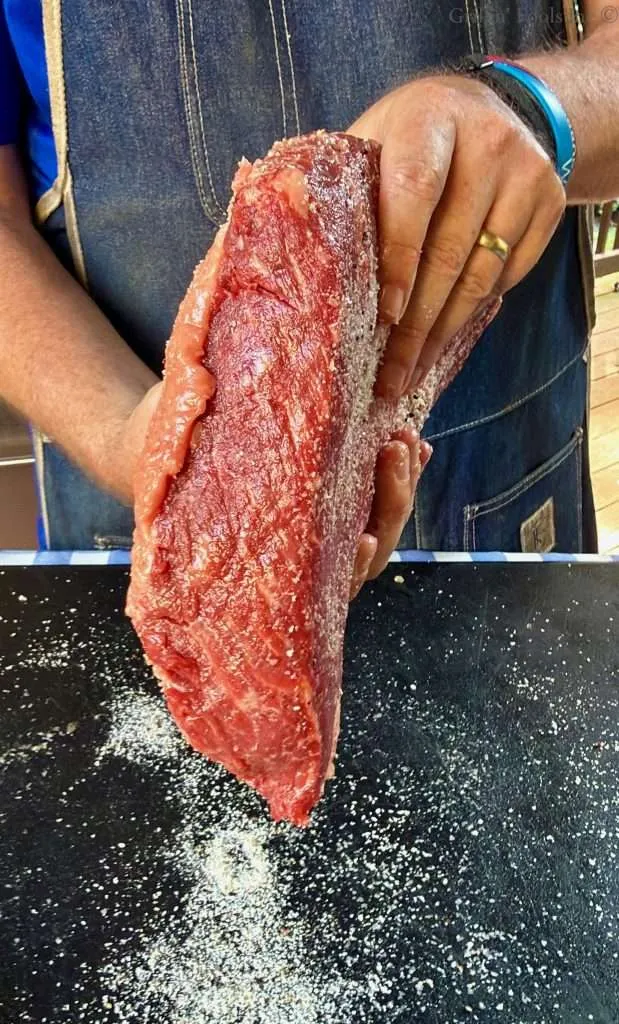
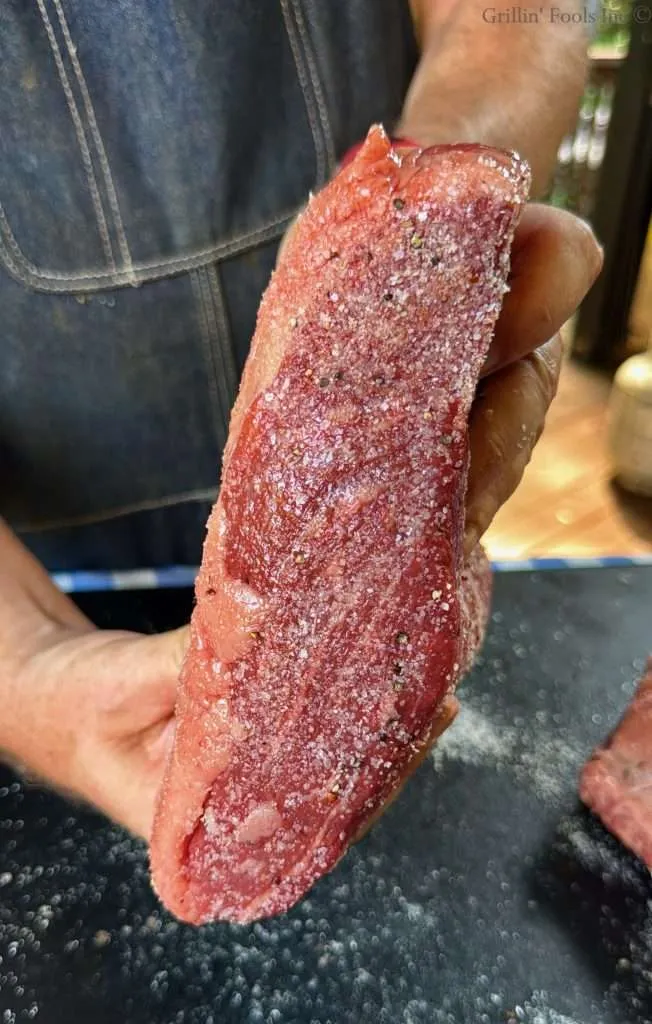
For this cook, I’m using my American Made Grills, Hybrid Ovation Grill
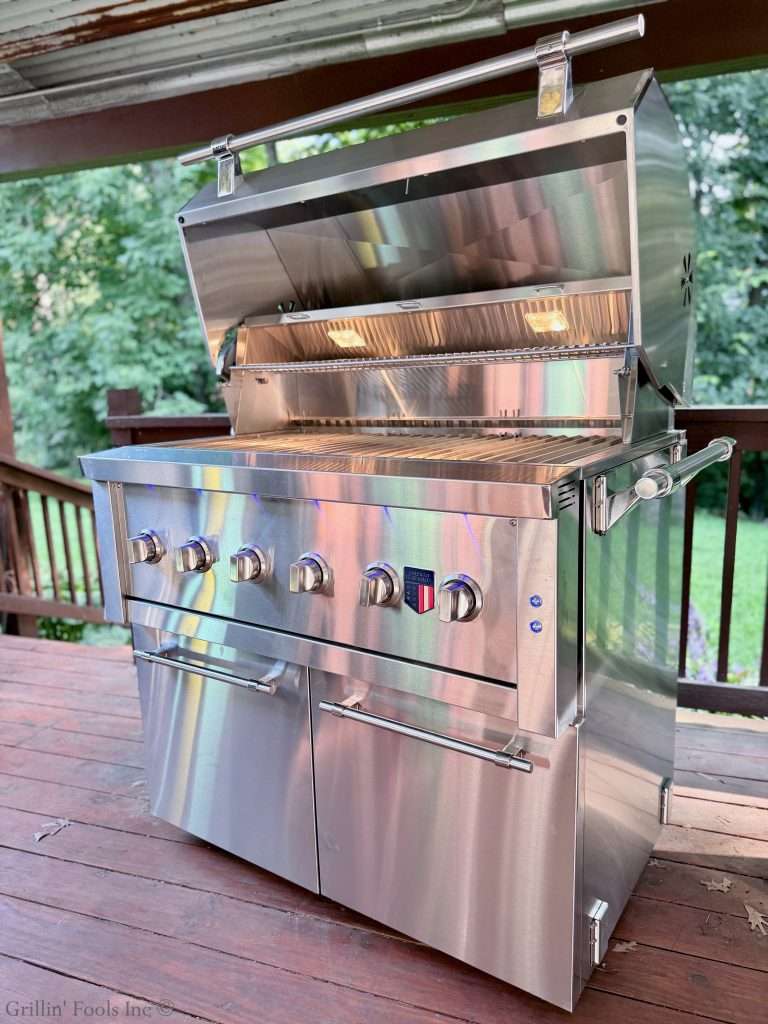
I set up the Ovation with the two zone grilling (or indirect grilling) method. I have coals on the right side and a chunk of smoke wood on grill grates above the coals:
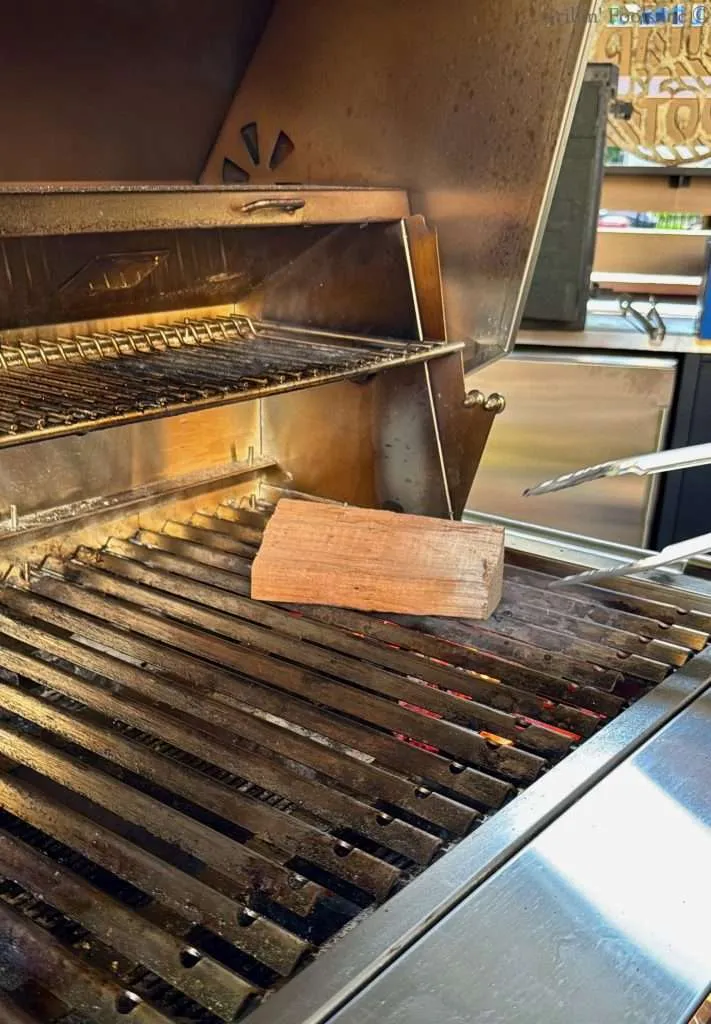
It won’t take long for the wood to start to smolder:
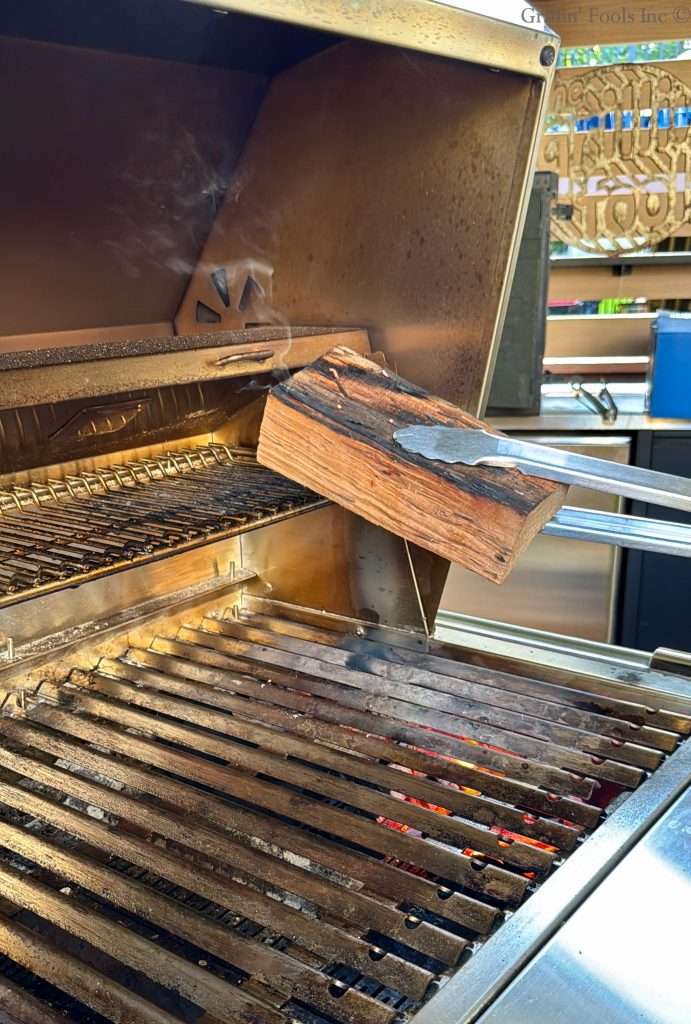
If it takes too much time, and you have a plumbers torch, say to do a proper treatment to blow torch baby back ribs or to melt and brown the cheese on an epic pork tenderloin sando, then just give it a quick blast of fire to kick start the smolder.
Once the charcoal grill reaches a temp anywhere between 225F-300F, set the picanha roasts just off the edge of the coals. My temp was sitting at 225F and I had the picaña fairly close to the coals, but not directly over the charcoal:
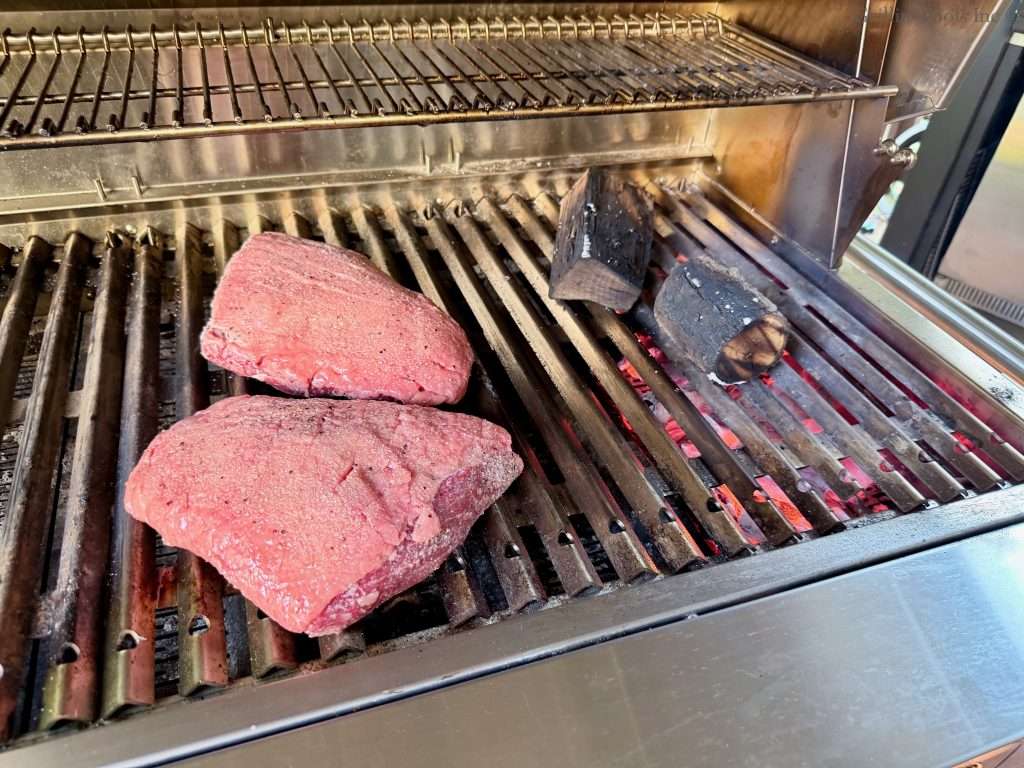
Here’s a close up of the smoke:
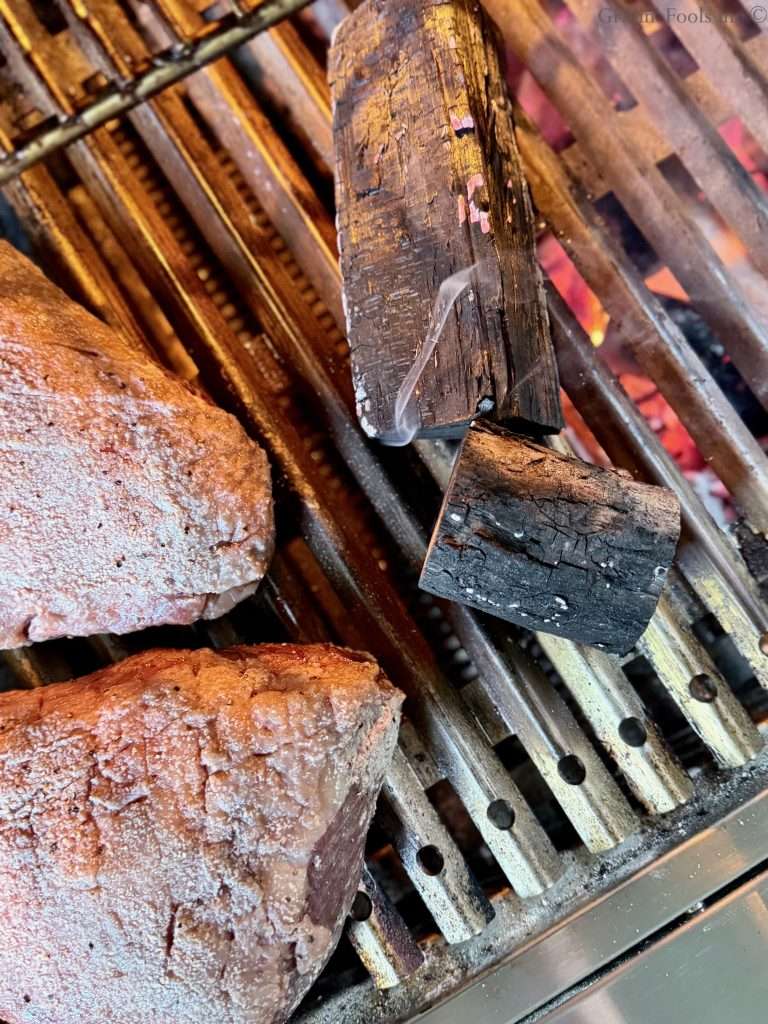
It doesn’t take much smoke. Once the lid is closed, the smoke will build up in the chamber.
I closed the lid and let the smoke and fire work their magic. I’m looking for a target temp around 110F for the roasts before we sear. This is called the reverse sear method.
What is the Reverse Sear Method?
Instead of browning some meat over a hot fire and then placing it off to the side of the coals and then close the lid to bake the meat to the desired doneness, we bring the internal temp up slowly. The meat is imbued with some smoke and the internal temp is brought up gradually. Then about 10F-20F degrees below the desired doneness, the meat is seared hot and fast to give us a lovely flavor crust and bring the meat up those final 10F-20F degrees. This ensures even cooking and coast to coast, constant color gradation inside the meat.
Essentially, it’s a red-neck sous vide. Instead of bringing the temp up slowly by immersing the meat (in a plastic bag) in gradually warmer water, we bring the temp up with smoke. Both methods sear at the end to finish the dish.
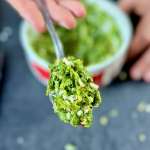
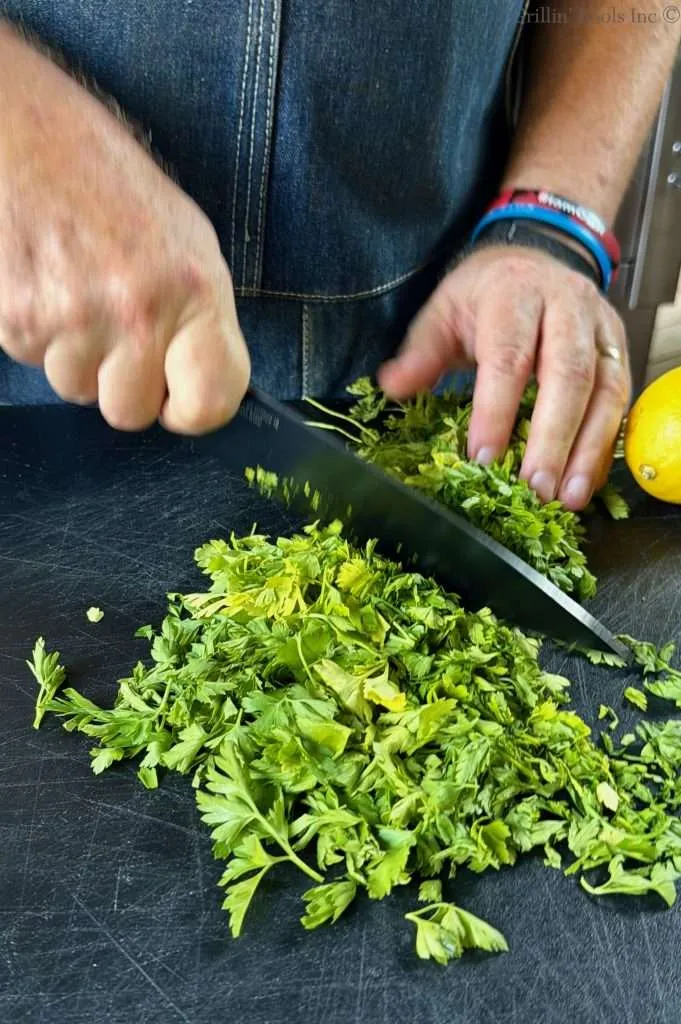
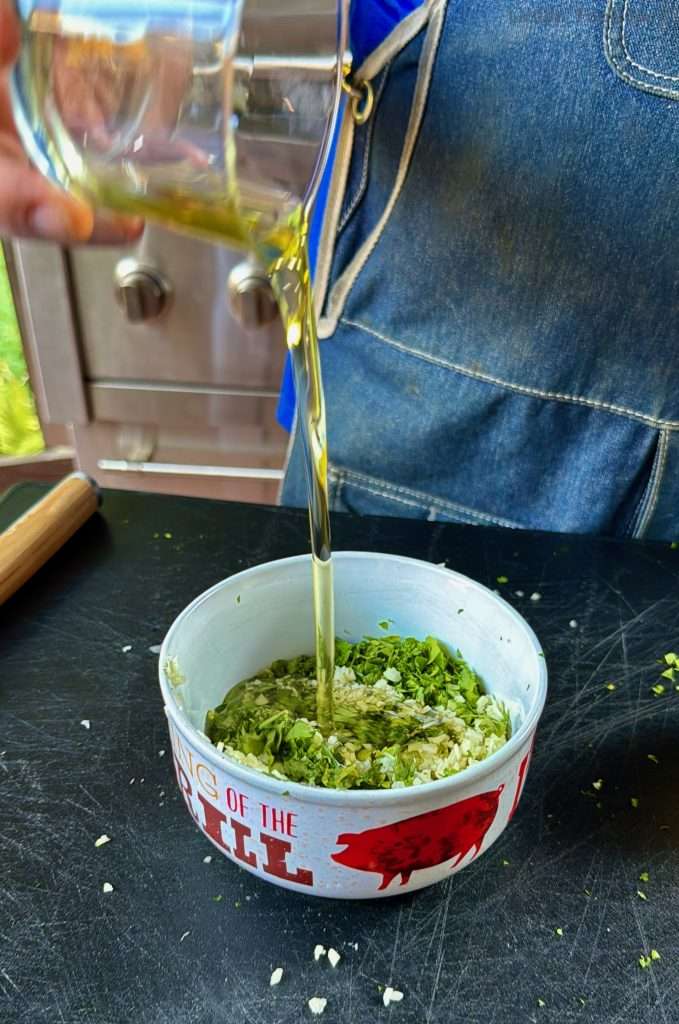
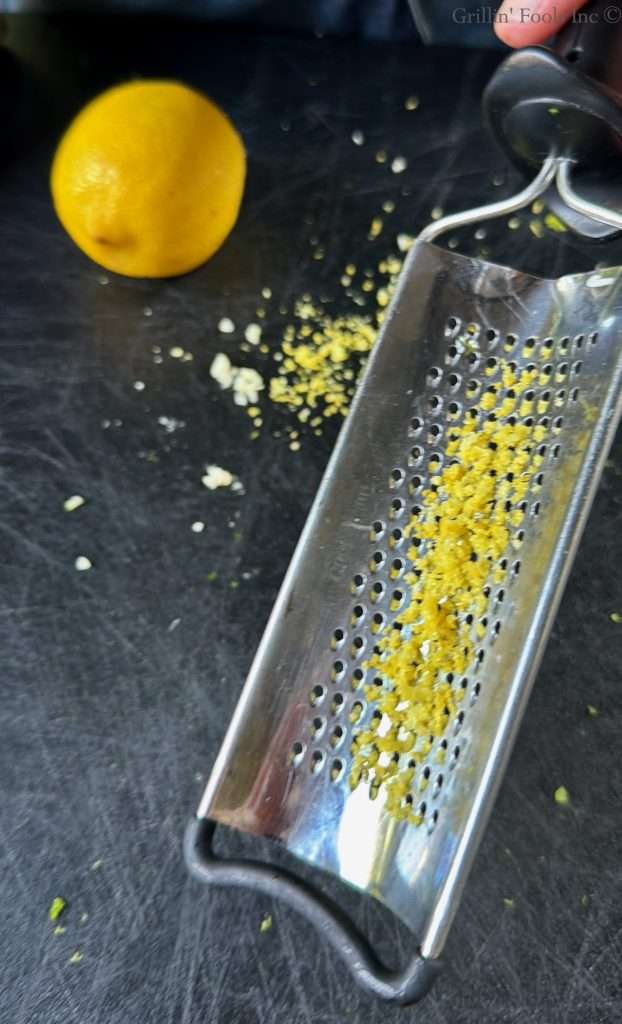
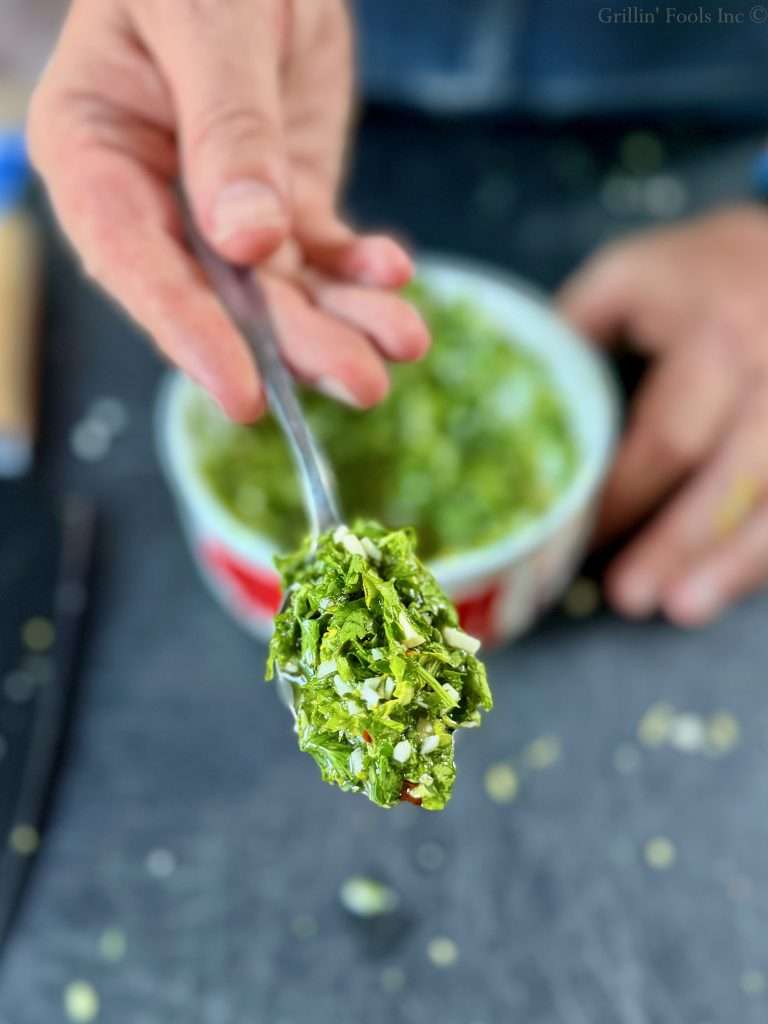
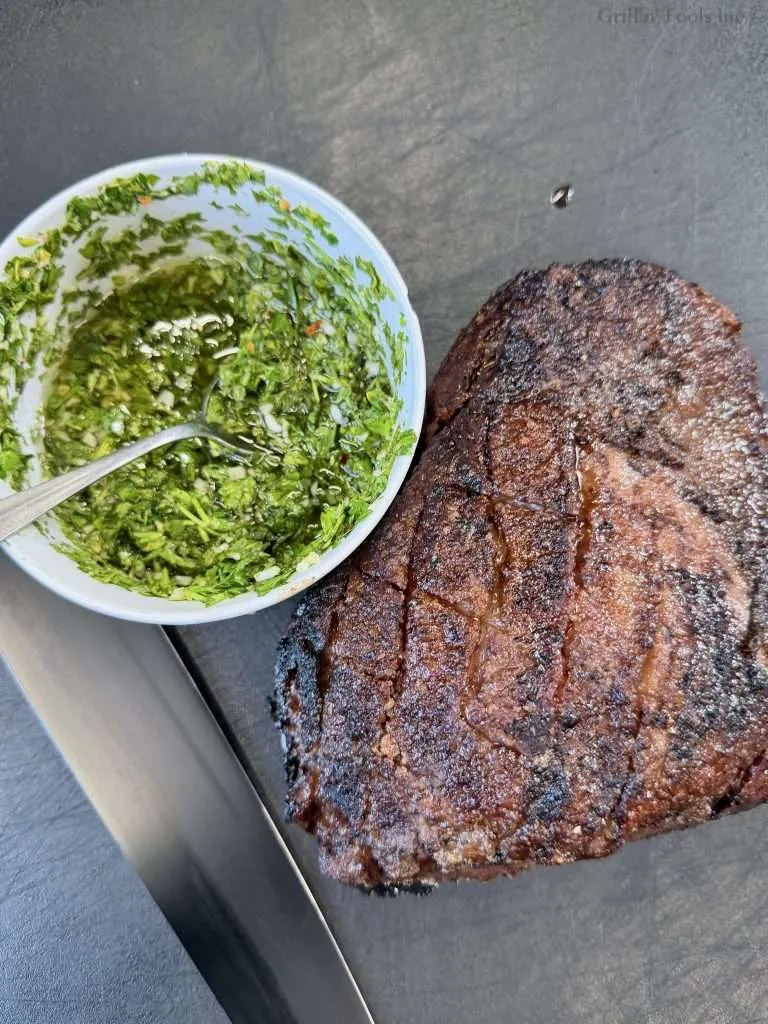
While the picaña roasts smoke and take a slow climb to 110F, make the chimi. The full recipe for our Easy Chimichurri Sauce is here.
Here are a couple tease pics:
OK, back to the picanha roasts.
The temps in my grill jumped to over 300F as my charcoal got hot. This caused my picanha to get a little toasty on the side that faced the fire:
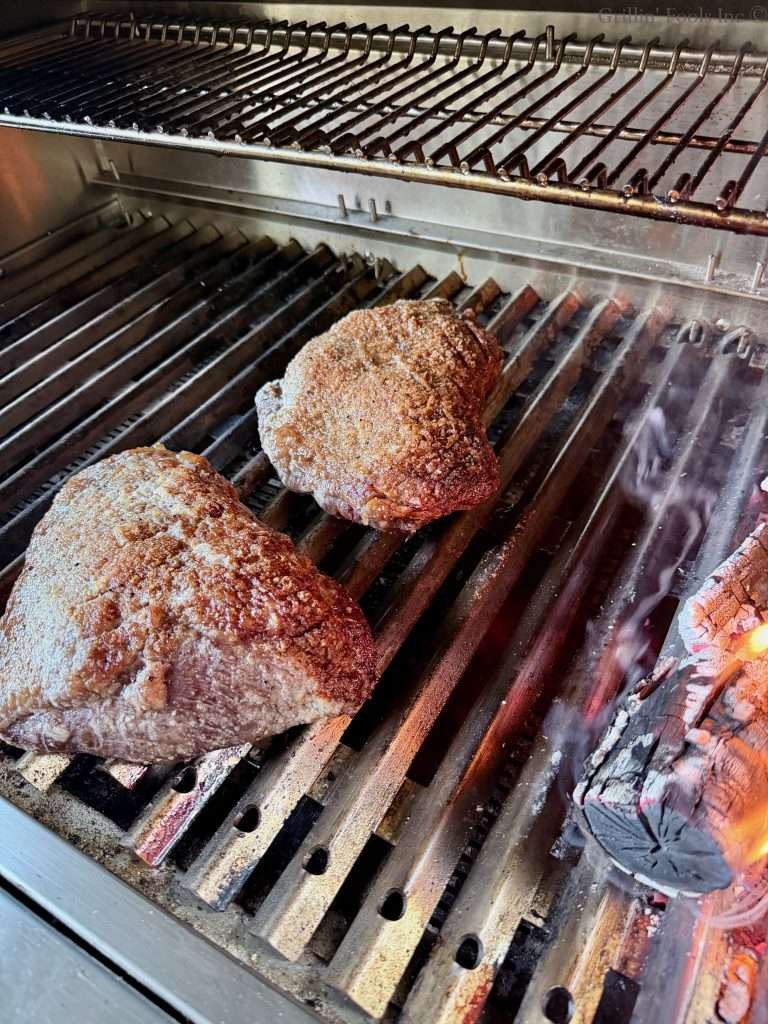
Simple enough problem to resolve; I just rotated the picaña 180 degrees.
The left side of that picanha was rotated to face the fire.
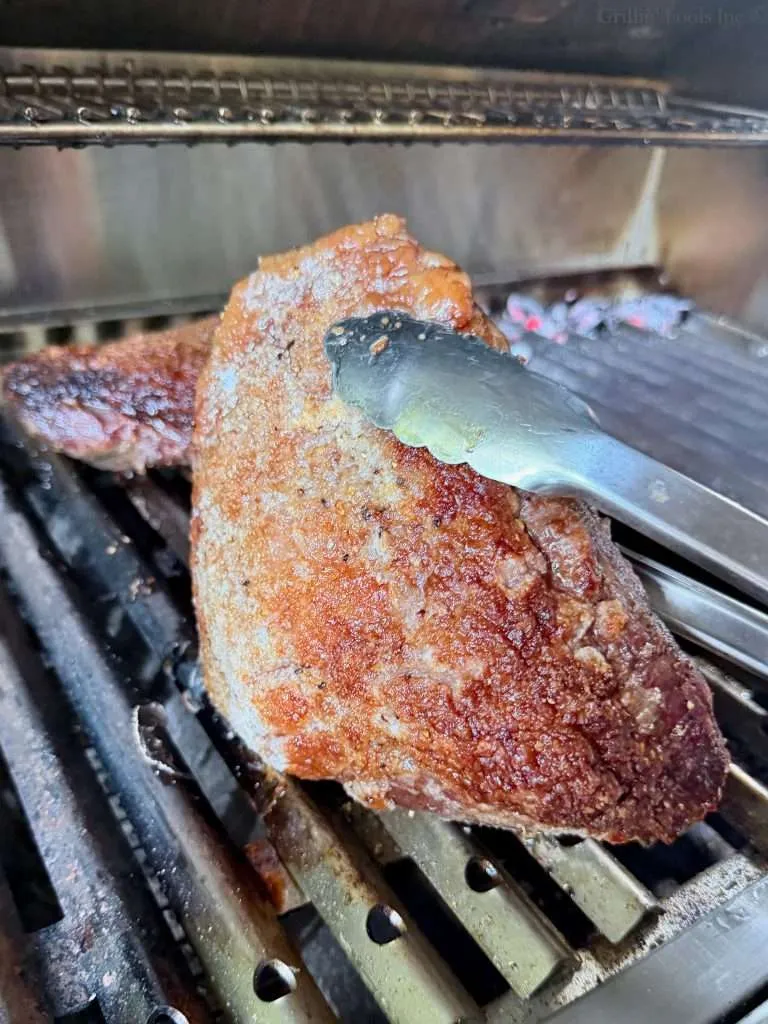
It wasn’t long after I rotated the picanha roasts that they reached the 110F internal temp I was shooting for.
Time to Sear
One side of the picanha was a little more browned than the other side, so I put the less browned part right over the coals and left the more browned side of the roast off the edge of the direct heat:
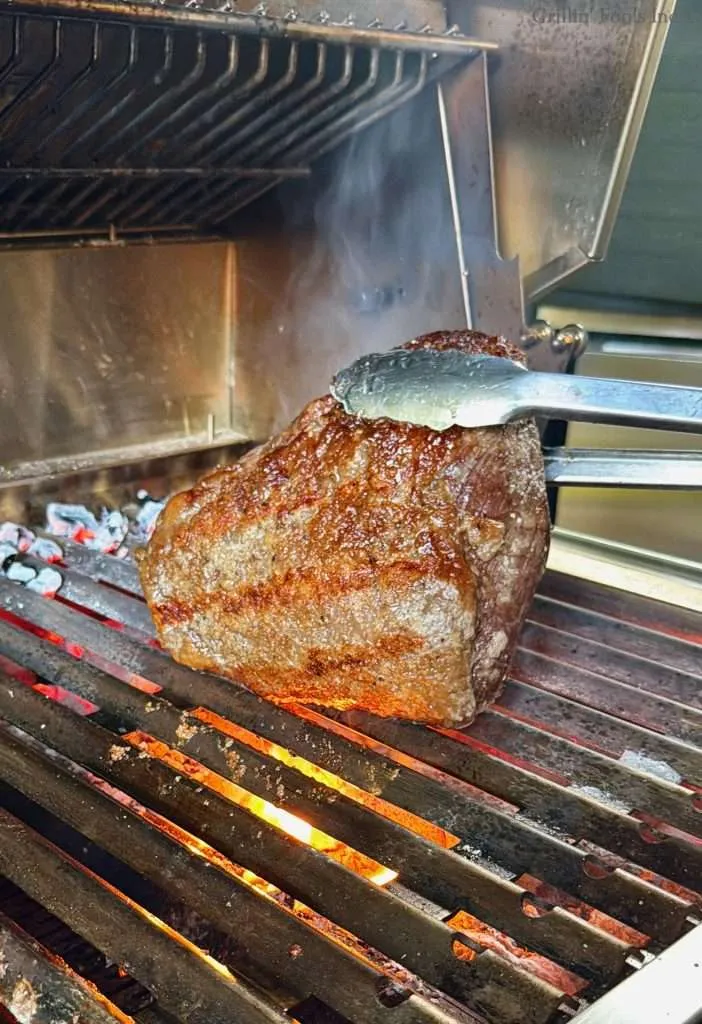
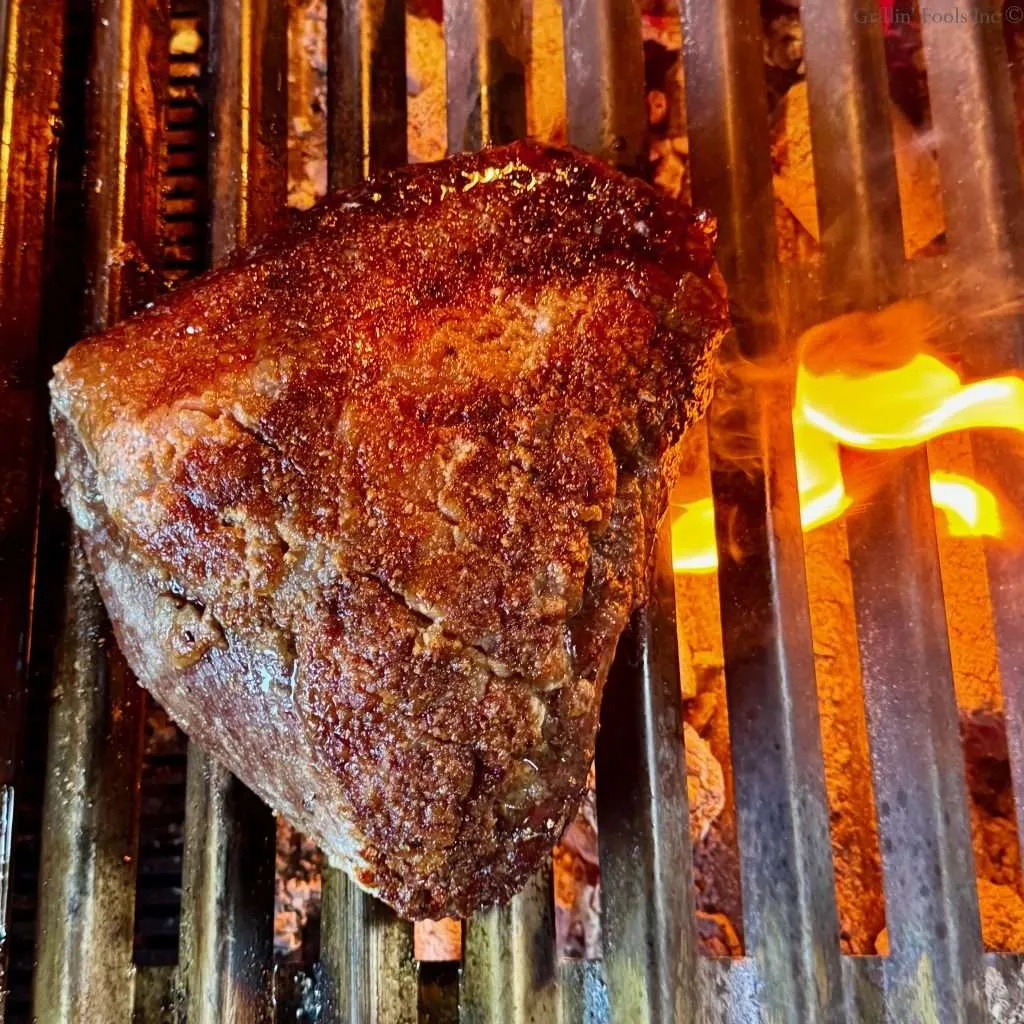
After I browned the fat nicely, I charred the meat side as well.
Stay close.
The fat rendering out of that fat cap is highly flammable:
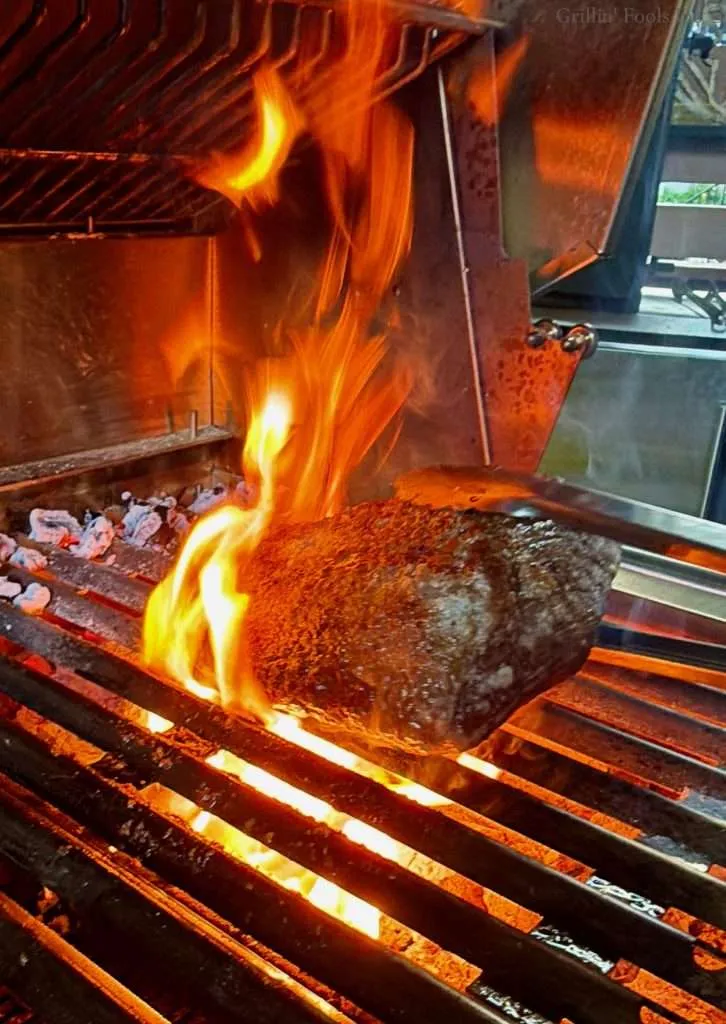
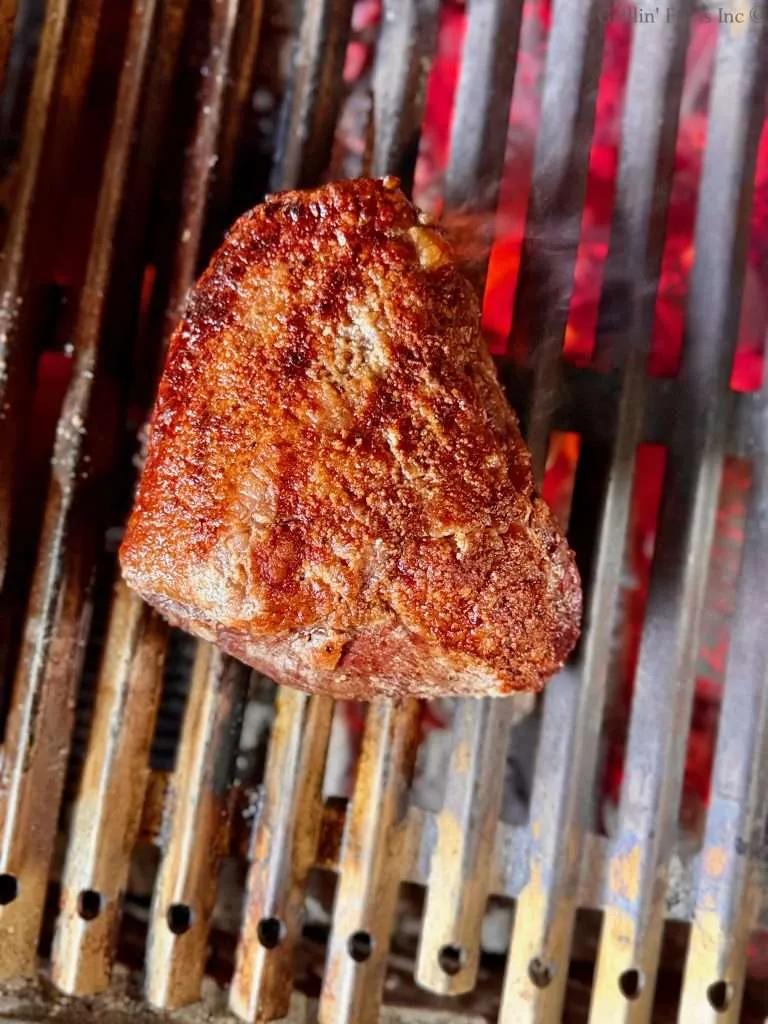
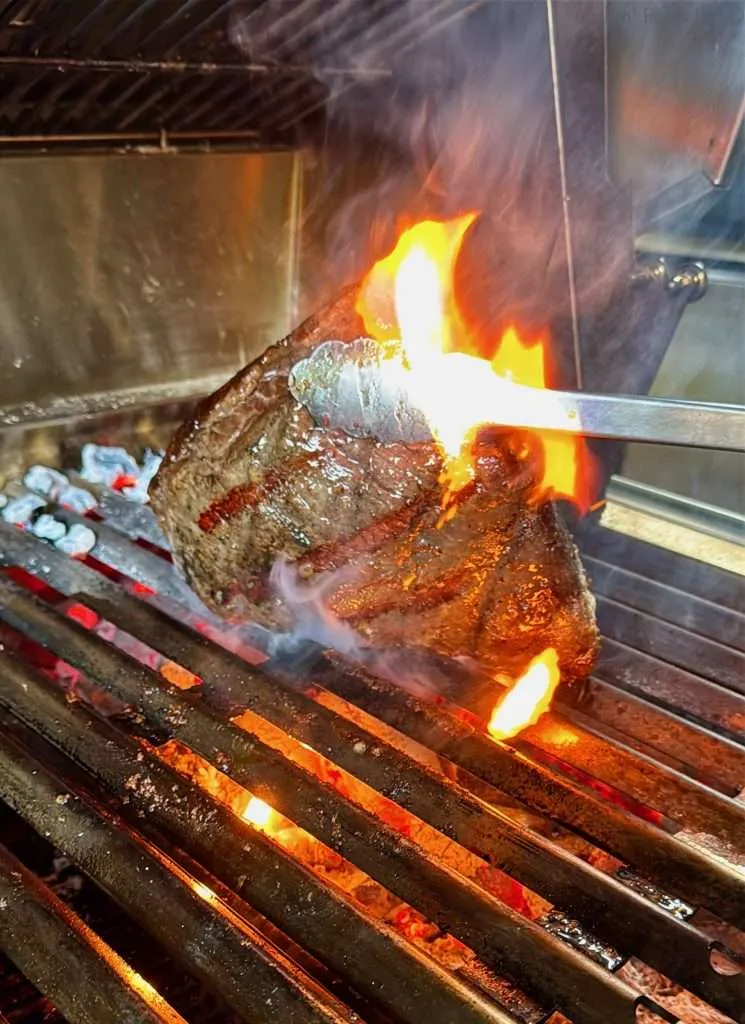
Once the roast is browned all the way around, pull it off to the side of the grill with no heat and allow it to rest but still stay warm and go to work on that other roast:
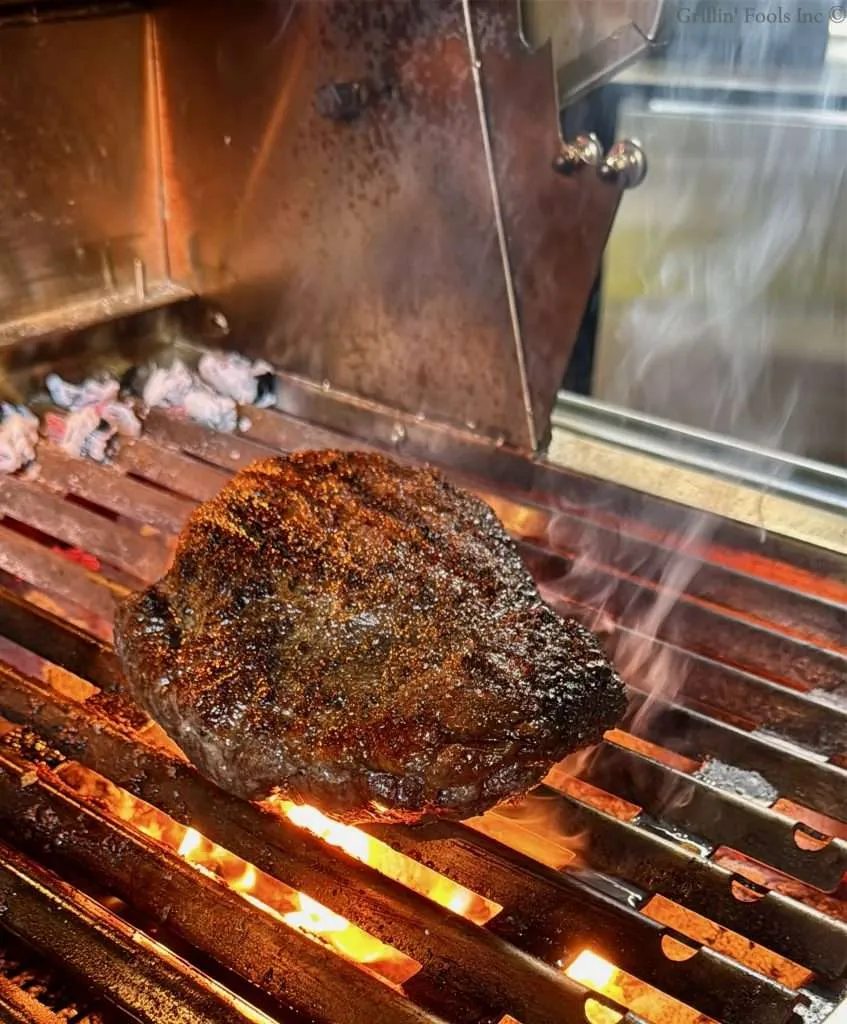
Remember those flare-ups from the last roast? That’s why I only work with one of these at a time over the direct heat.
Once both of my picanha roasts are browned top and bottom, they go to the side with no direct heat.
The beef should be in the 120F-125F internal range at this point.
Pro Tip ~ If you would like them done more, keep cooking them indirect until they are 10F-20F short of your desired doneness and then sear.
For example, if you want your steak at 150F when done, then cook indirect till it hits 130F-140F before searing.
Here’s a handy guide for steak temps:
Steak Temperature Guide:
-
Rare Steak Temp: 120F-125F
-
Medium Rare Steak Temp: 130F-135F
-
Medium Steak Temp: 140F-145F
-
Med. Well Steak Temp: 150F-155F
-
Well Done Steak Temp: 160F or more, but seriously, just order the chicken
Once the picaña is to your desired doneness, remove from the grill and allow the meat to rest for a few minutes so the juices, in an excited state from the heat of the fire, will calm down and redistribute throughout the meat.
Notice how the roast has thickened up. This is that skinny flat side that we dabbed on the cutting board to season. It has to be at least twice as thick, if not 2.5 times:
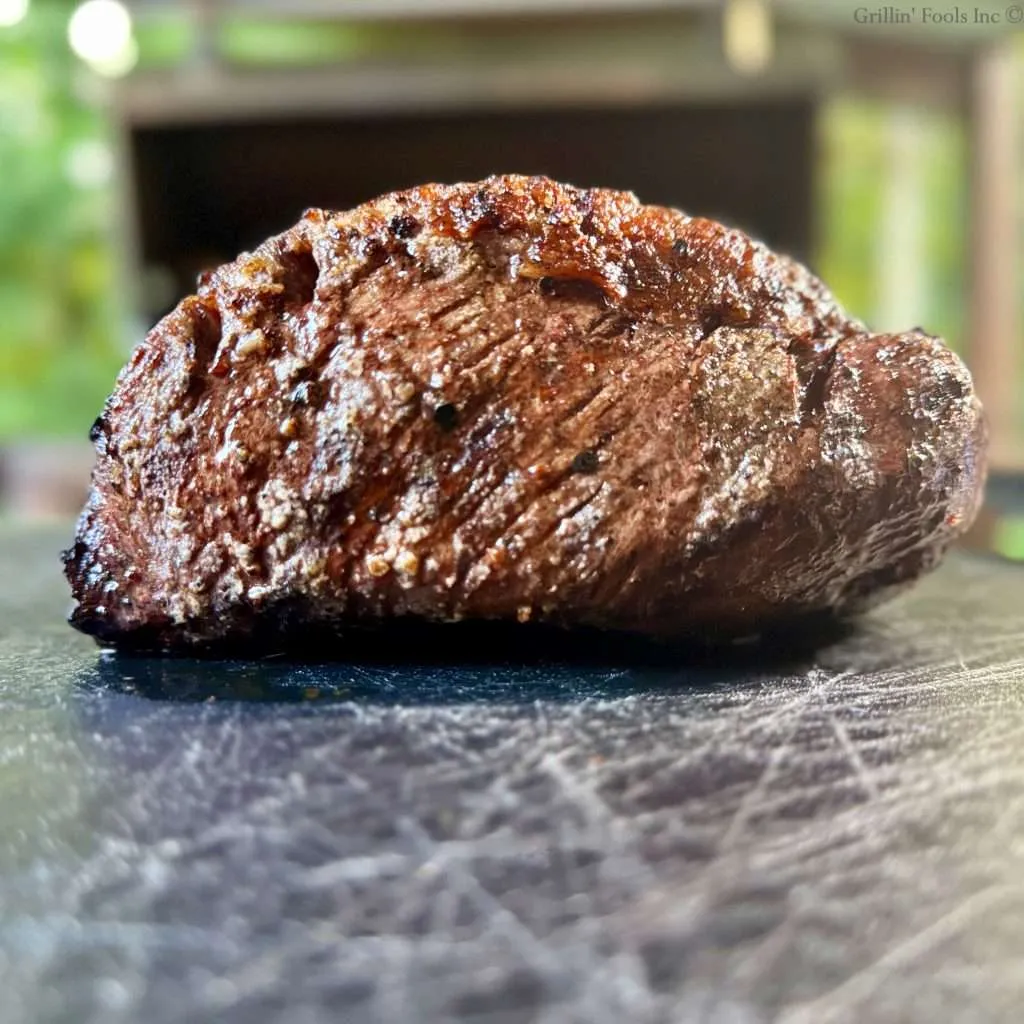
You can also, char this side if you wanted to. I was going fairly rare with these, pulling them around 120F, so I skipped it.
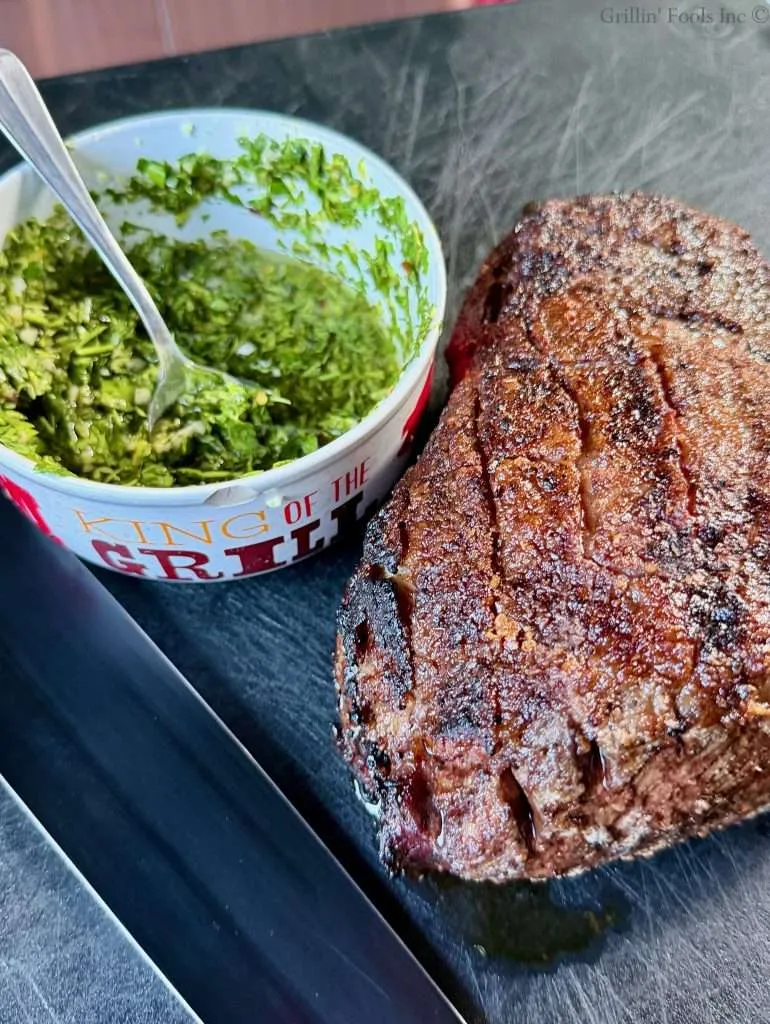
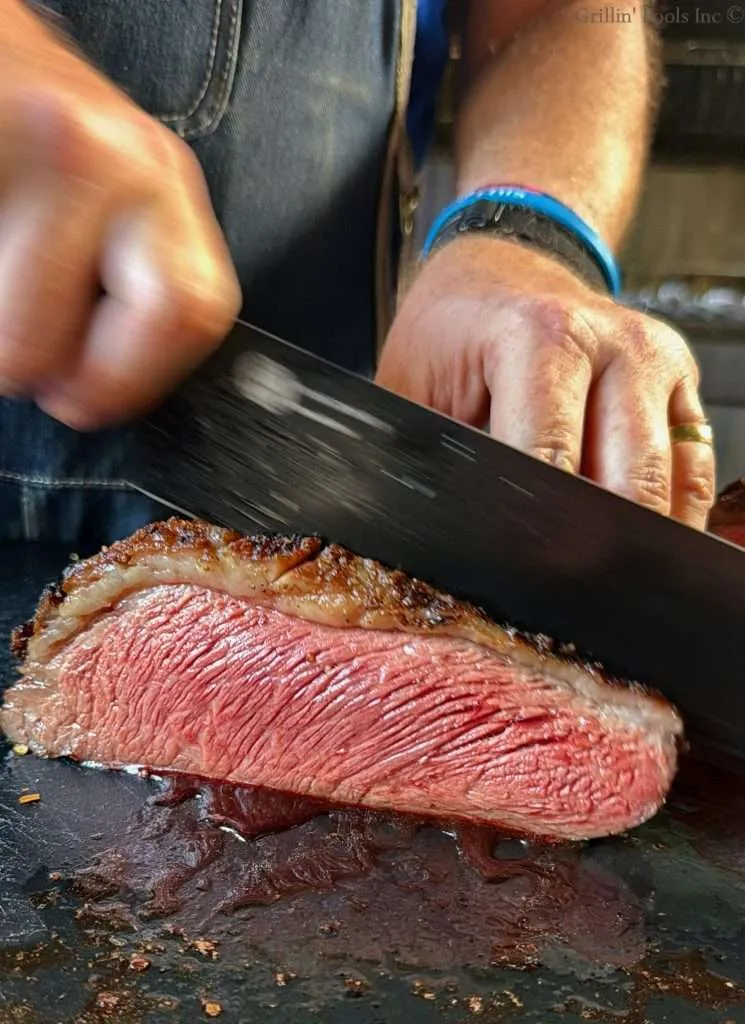
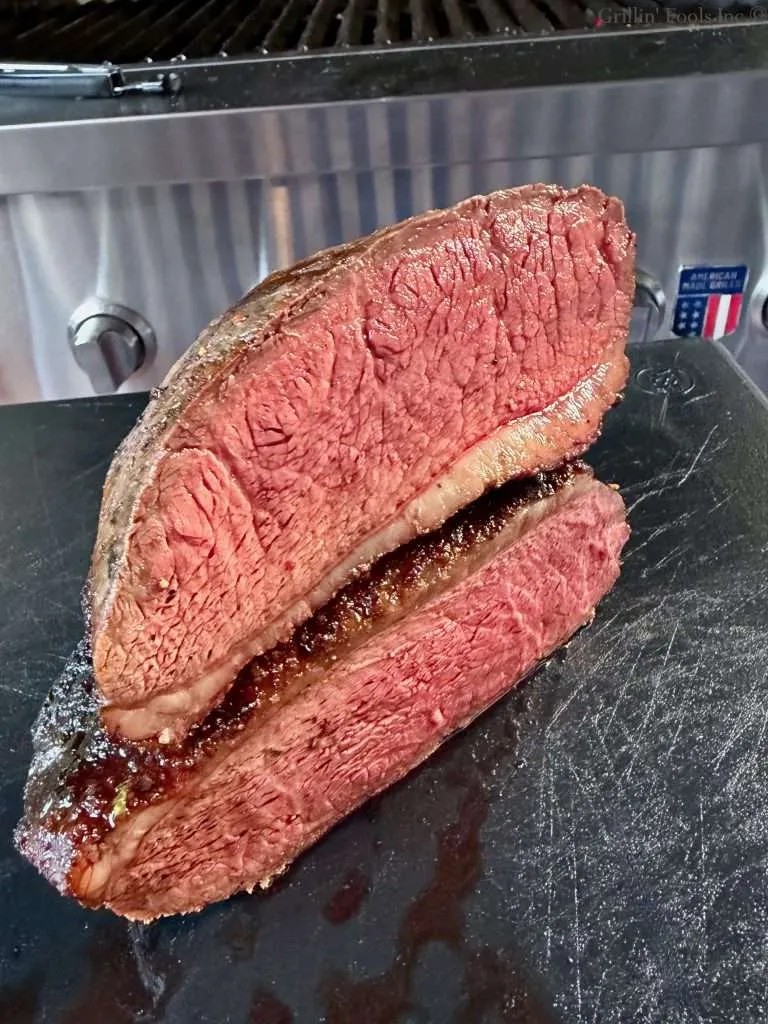
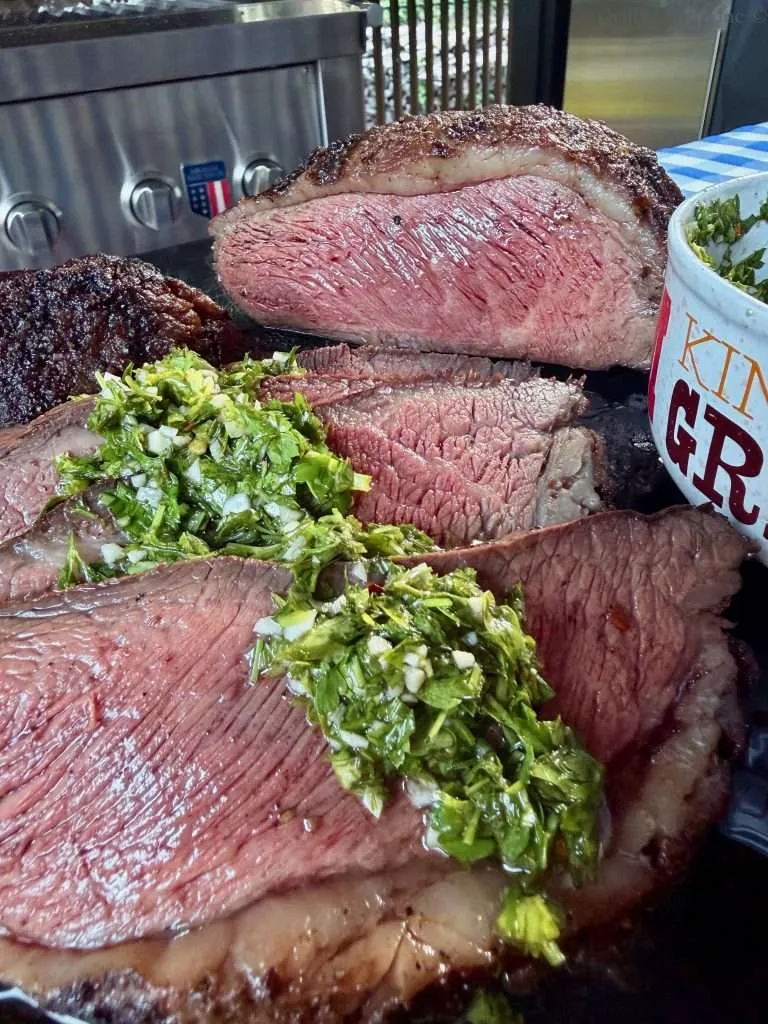
I’m going to add a bunch of pics here and a few more below the recipe card, because the sliced shots of this glorious piece of beef are beyond impressive:
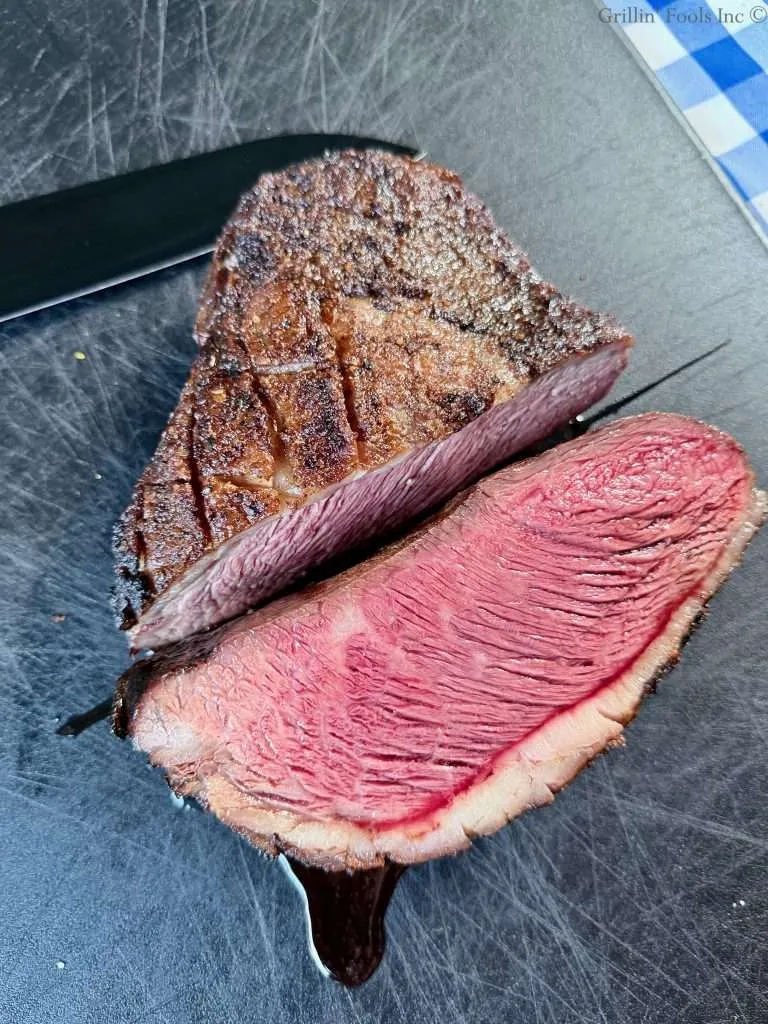
And here’s the other roast:
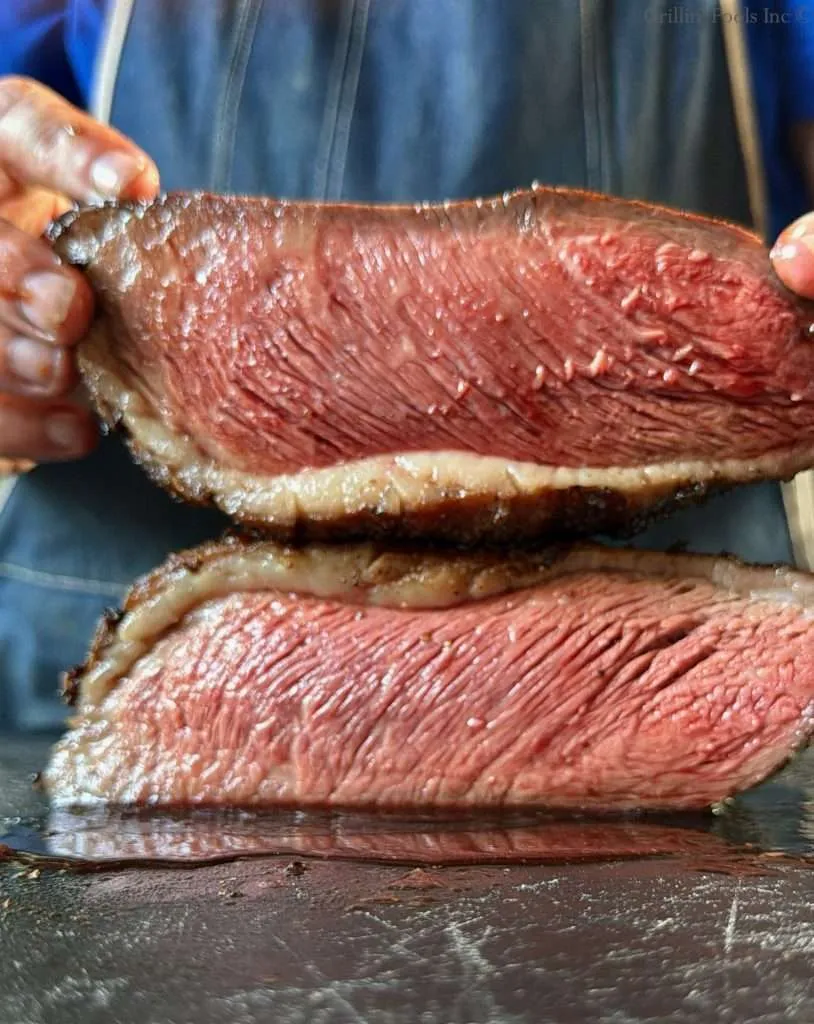
I’m not sure I’ve ever been happier with a final result than I was with this. To me, that’s positively perfect:
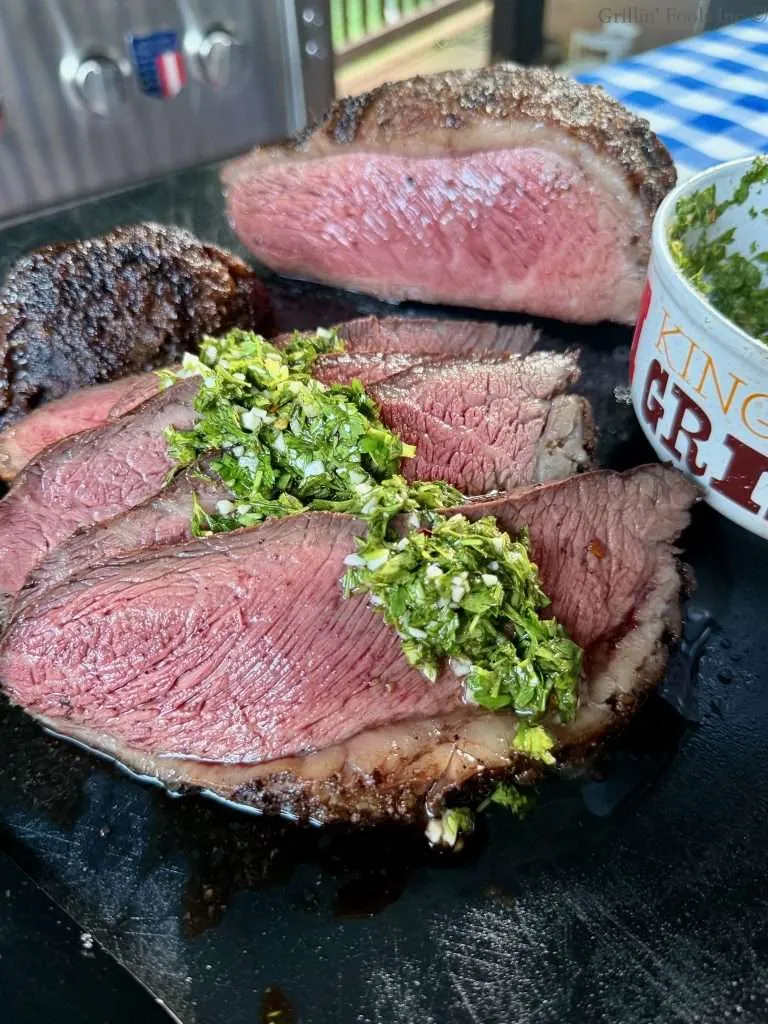
Grilled Picanha Recap
This was beyond good. My youngest son said he never had to have a ribeye or strip again. That this was as good or better. I don’t know if I’m ready to say I’m done with ribeyes or strips, but it was a stellar steak. It is such a simple recipe and just unbelievably delicious. I can’t recommend this recipe enough.
If you have any questions or comments, feel free to leave them below or send me an email.
Also, if you could leave us a great review with lots of stars ⭐️⭐️⭐️⭐️⭐️ that would be most appreciated!
Additionally, you can follow us on our GrillinFools Facebook, Instagram, Pinterest, Twitter/X and YouTube feeds
Recipe Card
Grilled Picanha Roast with Chimichurri Sauce
We take a picanha, seasoned with SPG, smoke it indirect and then sear it before spooning chimi over the top to make grilled picanha roast with chimichurri sauce
Ingredients
- 2 Picanha Roasts Also called Sirloin Cap Roast, Rump Roast and Coulotte Roast
- SPG Seasoning Salt, Pepper, Garlic
- Chimichurri
Instructions
- Prepare the grill for two zone grilling (indirect grilling) with hot coals and smoke wood banked to one side of the charcoal grill. Target temp inside the grill is 250F (+/-50F)
- Carve a criss cross pattern through the fat fat cap on each picanha roast. Season liberally with SPG seasoning on the top, bottom and the skinny flat edge. Work the seasoning into the slits of the criss cross pattern in the fat cap.
- Place a chunk of smoke wood on the coals and the picaña roasts off the edge of the hot coals. Close enough to cook, but not too close as to burn. Close the lid and let the heat and smoke do their thing
- Make the chimichurri (see link in recipe)
- Rotate the picanha roasts if the side closer to the fire cooks more to even out the cooking.
- Once the roasts hit about 110F sear them over the hot side of the grill. Do not stray far from the grill. That fat cap will start leaking fat into a hot fire and that can turn your steak into charcoal quick. Brown and crisp the fat then flip over and sear the meat side. Fat will still be dripping so stay close.
- Once the roast is browned all the way around, move to the side with no direct heat and cook the other if you are doing these one at a time (I did).
- The steaks should be in the 120F-125F internal range at this point. If you would like them done more, keep cooking them indirect until they are 10F-20F short of your desired doneness and then sear. If you want your steak at 150F when done, then cook indirect till it hits 130F-140F before searing.
- Remove the roasts from the grill and allow to rest for about 10 minutes. Slice, top with chimi and serve.
Video
And a few more pics:
The post Grilled Picanha Roast with Chimichurri Sauce first appeared on GrillinFools.