
Weber’s Genesis lineup has more model numbers than a parts catalog, and a lot of buyers fall into a trap trying to save a few bucks.
We’ve cooked on earlier Genesis grills, and after putting the latest E-330 Stealth through its paces, from a toast test on low to ribeyes over a 750° sear zone, we think it hits the sweet spot.
This review covers what I found in testing, what those model numbers actually mean, and how the E-330 stacks up against the rest of the Genesis family. Plus the big one: is it worth the money?
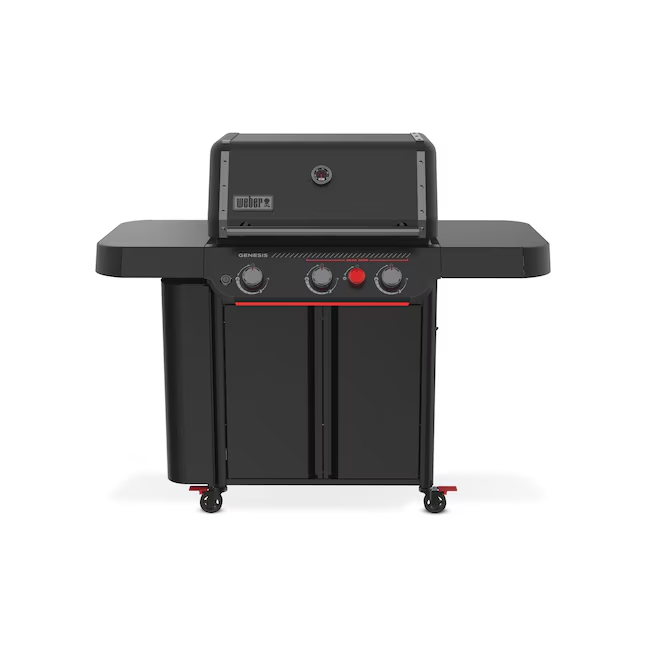
Weber Genesis E-330 Stealth 3-Burner Gas Grill
Check Latest Price
Pros:
- Sear burner pushes the grates past 750°
- Built to outlast a cheaper three-burner
- Matte black finish skips the stainless polishing
Cons:
- No interior or burner lighting
- Factory stickers leave adhesive behind
- Crafted accecssories can push your investment up
Lowe’s supplied this grill for free in return for my honest review. All thoughts and opinions are my own.
UPDATED OCT 28, 2026: Updated after testing the latest generation Genesis E-330
Weber Genesis overview and first impressions
The Genesis is
We tested the four-burner SPX-435 smart model when this generation launched in 2022, and went back and forth on which model to put through the wringer this time. We landed on the E-330 Stealth because it sits right where we think the lineup’s value is.
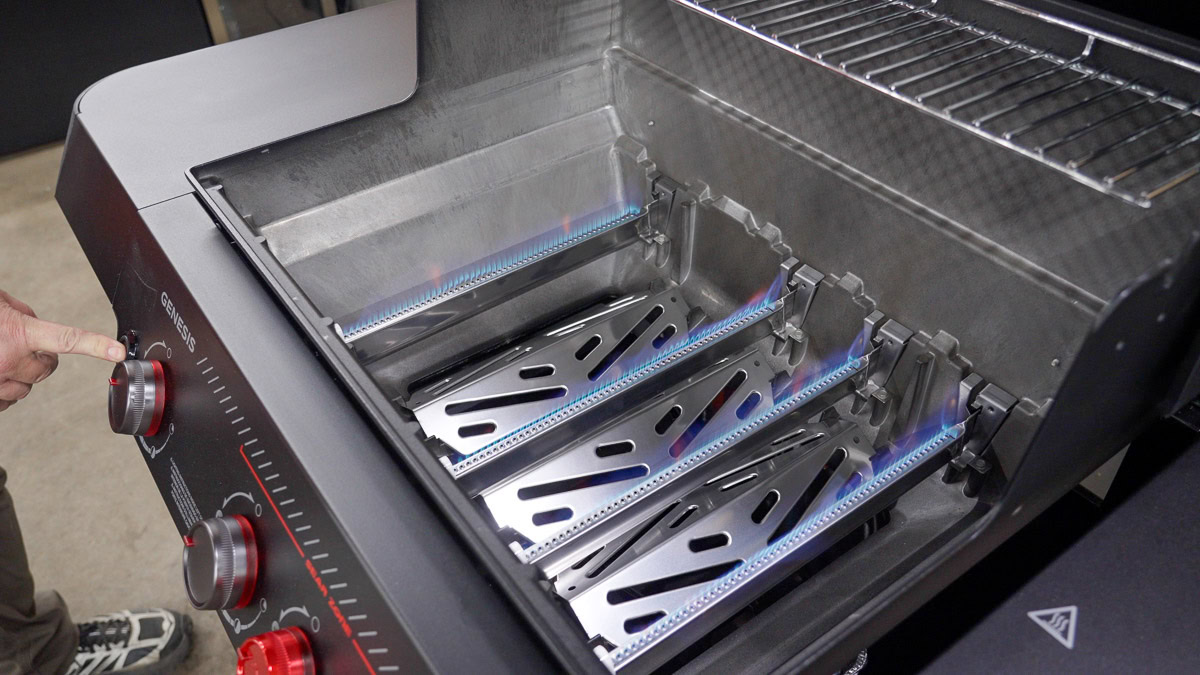
It’s a three-burner propane grill with a dedicated Sear Zone burner, the
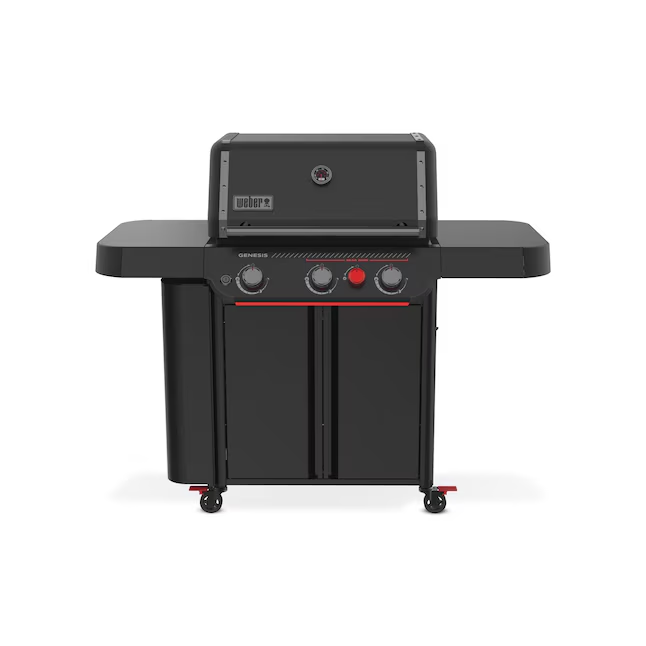
It stands about 48 inches tall with the lid down and 63 inches with it up, and it’s about 58 inches wide. It should fit on most patios and decks.
| Weber Genesis E-330 Stealth | |
|---|---|
| Burners | 3 main + 1 Sear Zone burner |
| Total BTUs | 52,000 (39,000 main + 13,000 sear) |
| Cooking area | 641 sq in (513 main + 127.5 warming rack) |
| Grates | Porcelain-enameled cast iron, reversible |
| Flavorizer bars | Stainless steel |
| Dimensions | 48.1″ H x 57.7″ W x 27″ D (lid closed); 63″ H x 30.6″ D (lid open) |
| Assembled weight | 168 lb |
| Fuel | Liquid propane (natural gas sold as a separate model) |
| Ignition | Electronic (battery powered) |
| Warranty | 12-year limited |
The first thing you notice is the look. The Stealth gets a matte black lid with black trim, side tables, handles, knobs, and wheels. It’s still kind of shiny, almost like smoked-out stainless, but with a matte finish that doesn’t need scrubbing every time you touch it.
I really love the Stealth look because it’s not stainless, and I don’t have to spend much time cleaning it. If you prefer the classic look, you can save around $50 and get the classic
What I liked
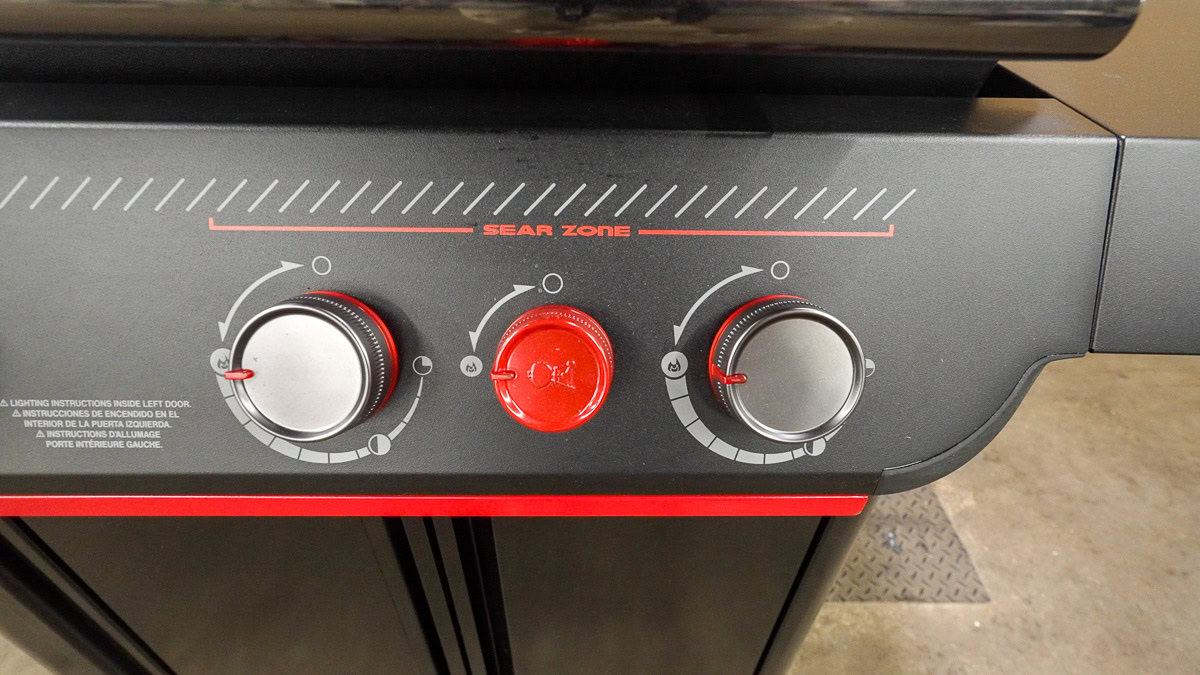
- Sear Zone burner – A separate 13,000 BTU burner with its own knob. It pushed the grates past 750° and gave my ribeyes one heck of a sear.
- Build quality – The cast aluminum cookbox and sturdy cart feel like they’ll last years, not seasons.
- Even heat – Toast came out pretty dang even, and my brats only needed one rotation.
- Easy cleanup – The drip pan pulls out from the front, and the grease tray takes a disposable liner.
- Stealth finish – Matte black looks great and doesn’t need constant wiping like stainless.
What I didn’t like
- Stickers – The labels on the lid and side shelf peel off easily but leave residue you need to clean.
- No Lighting – At this price point I would like to see some internal lighting or at least illuminated burners
- Accessory creep – There are so many Crafted accessories you’ll want that the price creeps up if you buy them all.
- Battery ignition – It works, but you need to keep spare batteries on hand.
Arrival and setup
I can’t tell you much about assembling this specific grill because I chose Lowe’s free assembly option, so they sent the grill to us pre-assembled. All I had to do was roll it into the studio, remove the stickers, and start cooking.
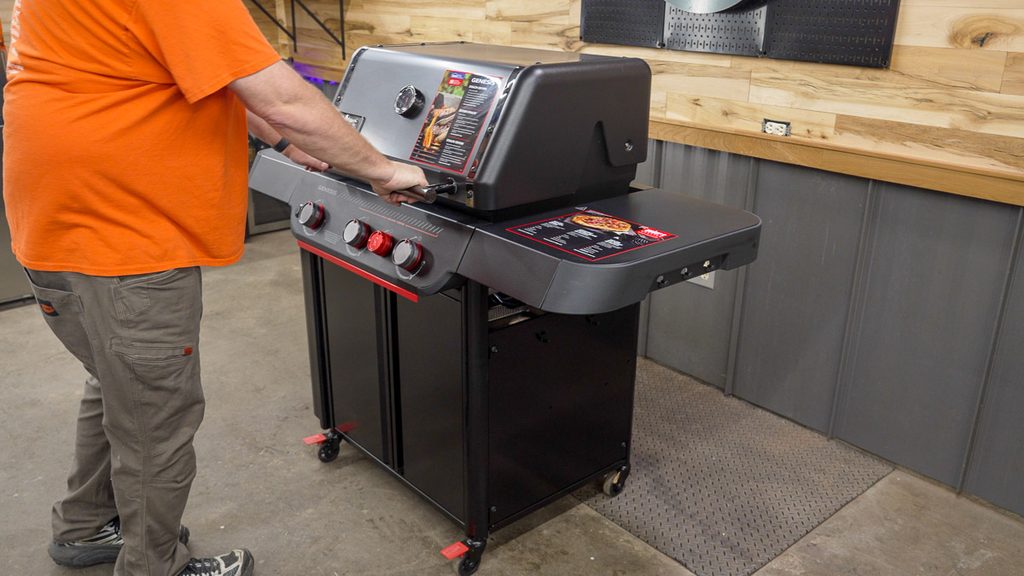
From experience assembling older Genesis and Spirit
Every new grill needs a burn-off. That just means burning out any debris or oil left over from manufacturing.
Gas grills usually don’t have much machining oil, and with a
Design and build quality of the Weber Genesis
This grill is built nice and sturdy. It’s not flimsy, it doesn’t wiggle, and you can’t feel the metal flexing when you lean on it.
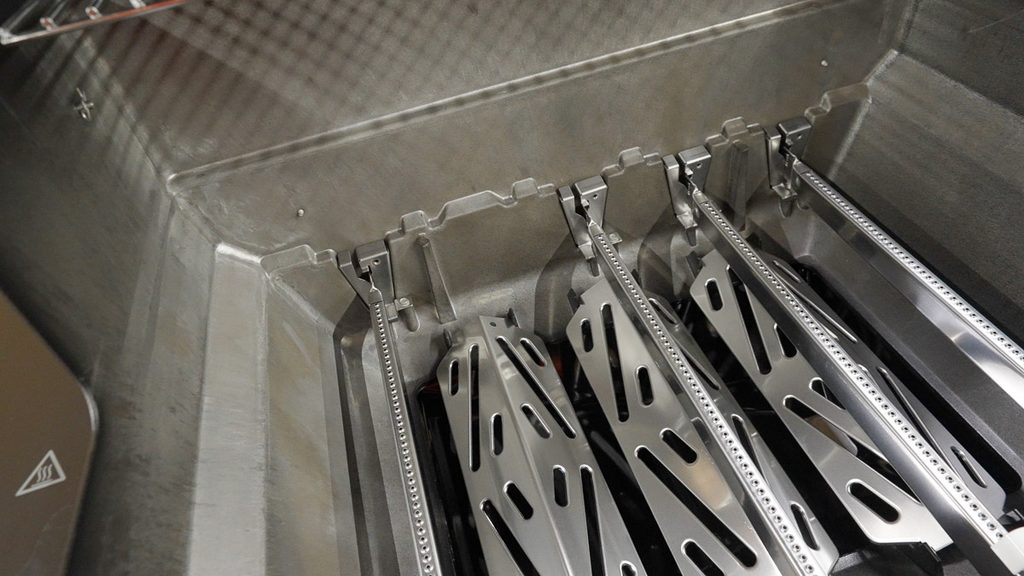
The cookbox is cast aluminum, and that’s one huge bonus with a
Depending on how well you maintain it, you might need to replace a burner somewhere between 5 and 10 years in. But you won’t be chopping it up and hiding it in a garbage bag in your recycling bin because it’s junk. Even the control valves feel sturdier than those on many other brands.
The smaller details are well thought out:
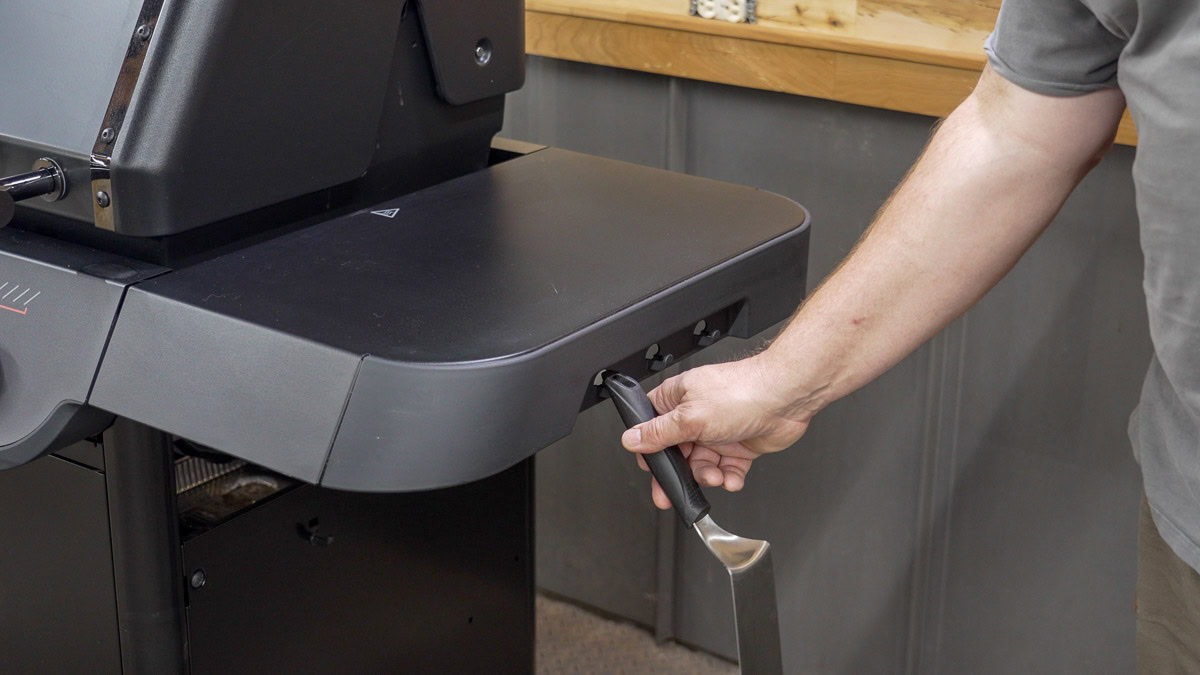
- Three tool hooks on each side shelf for your utensils
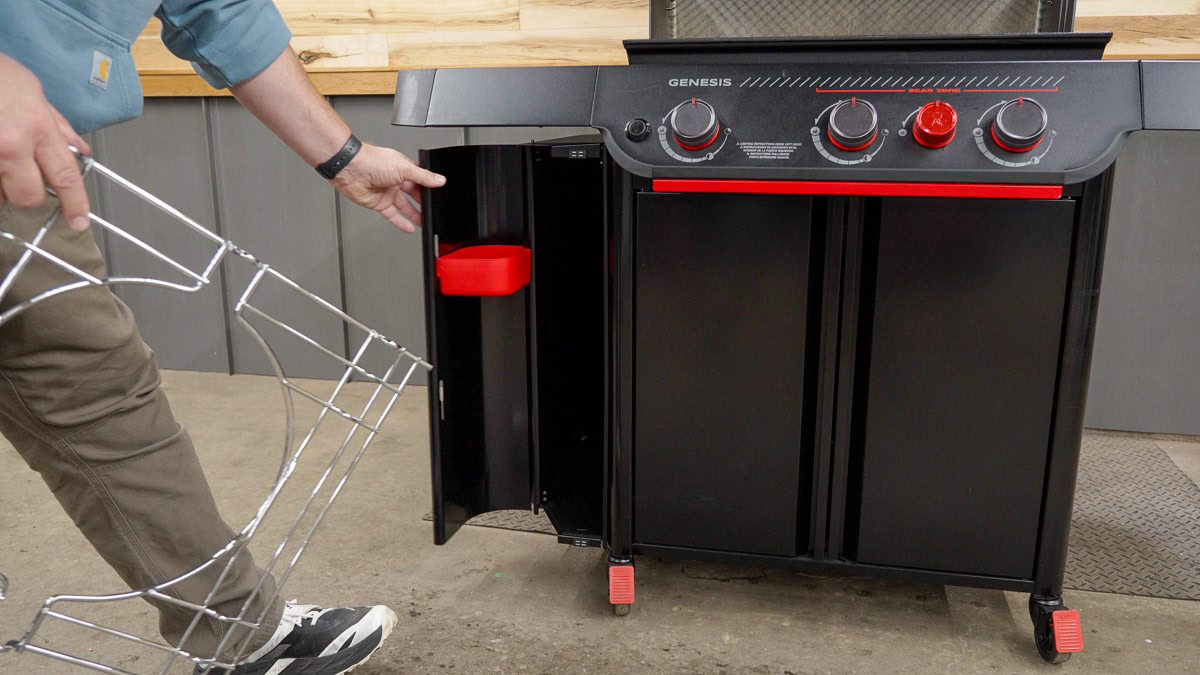
- Hooks on the side to hang your grate while you’re using a Crafted accessory, so it isn’t leaning on the grill or lying on the ground
- A side storage locker that holds the Crafted frame, plus a little spice cup
- A storage cabinet underneath for accessories, grilling supplies, and your LP tank, with a hook so the tank hangs instead of flopping around on the cart floor
- A lid thermometer that read close to my IR thermometer (more on that below)
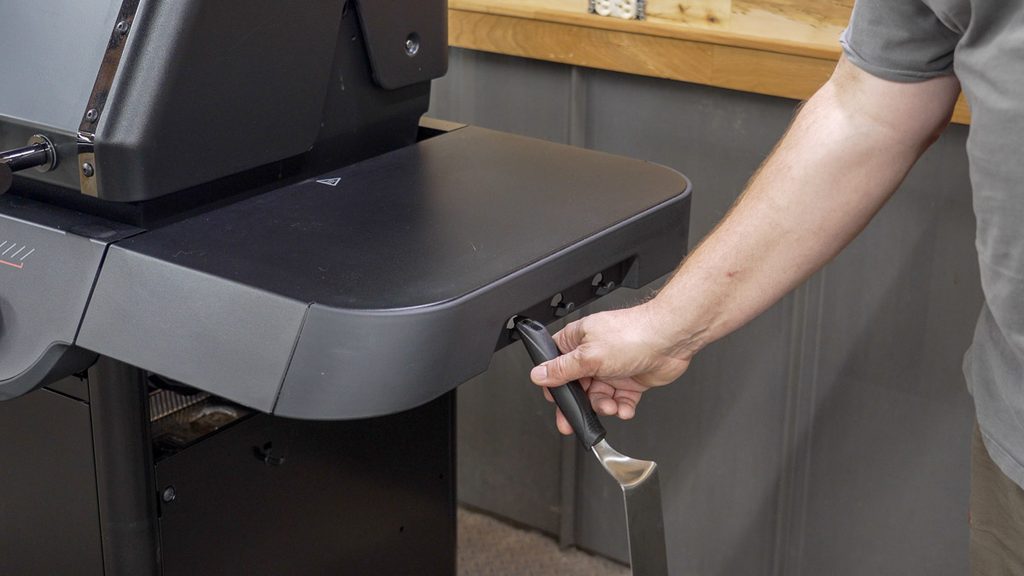
If you’ve followed me for a while, you know I’m particular about casters. I like how these work. There are four casters that swivel, and the two in front lock. For the most part, they’re easy to lock in.
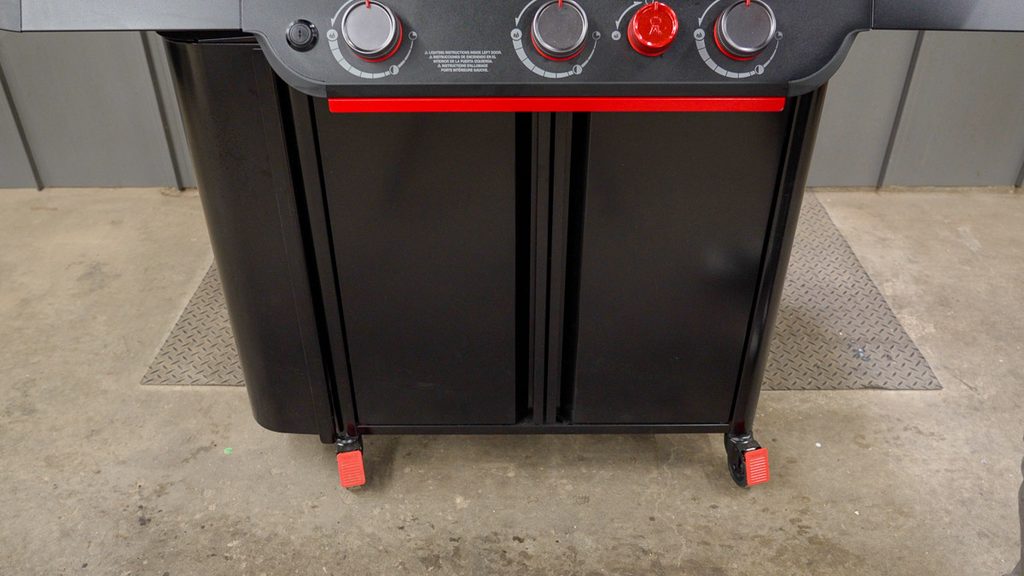
The electronic ignition is convenient, but you do need to keep spare batteries around.
Temperature performance
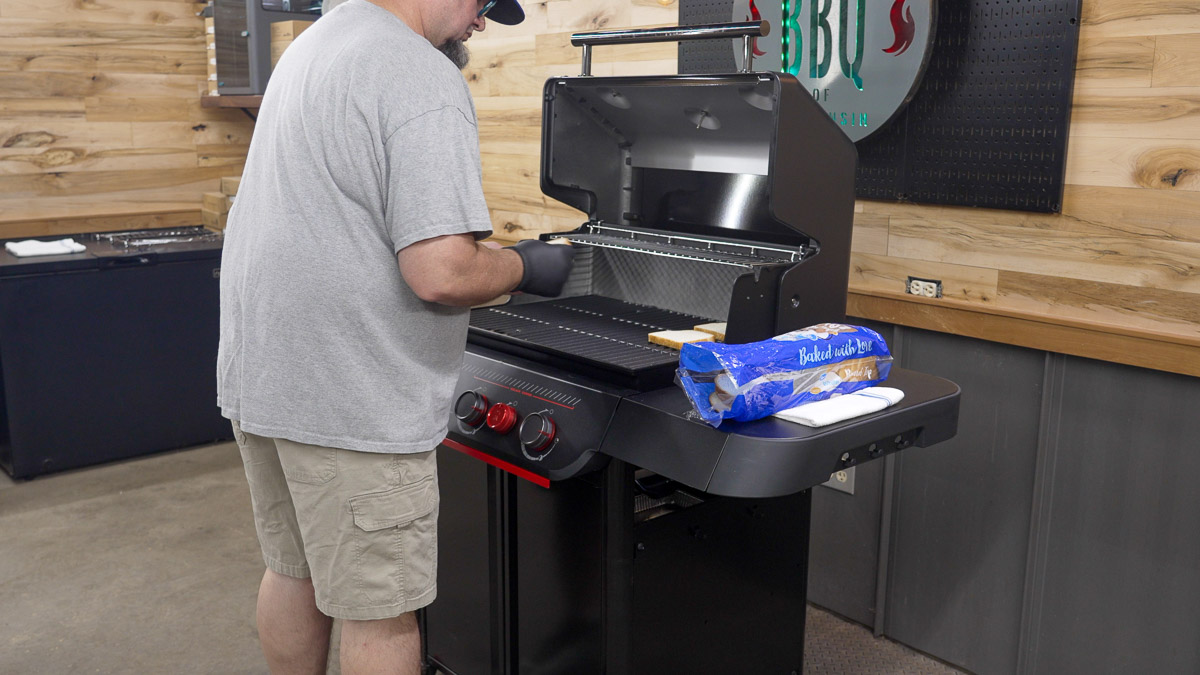
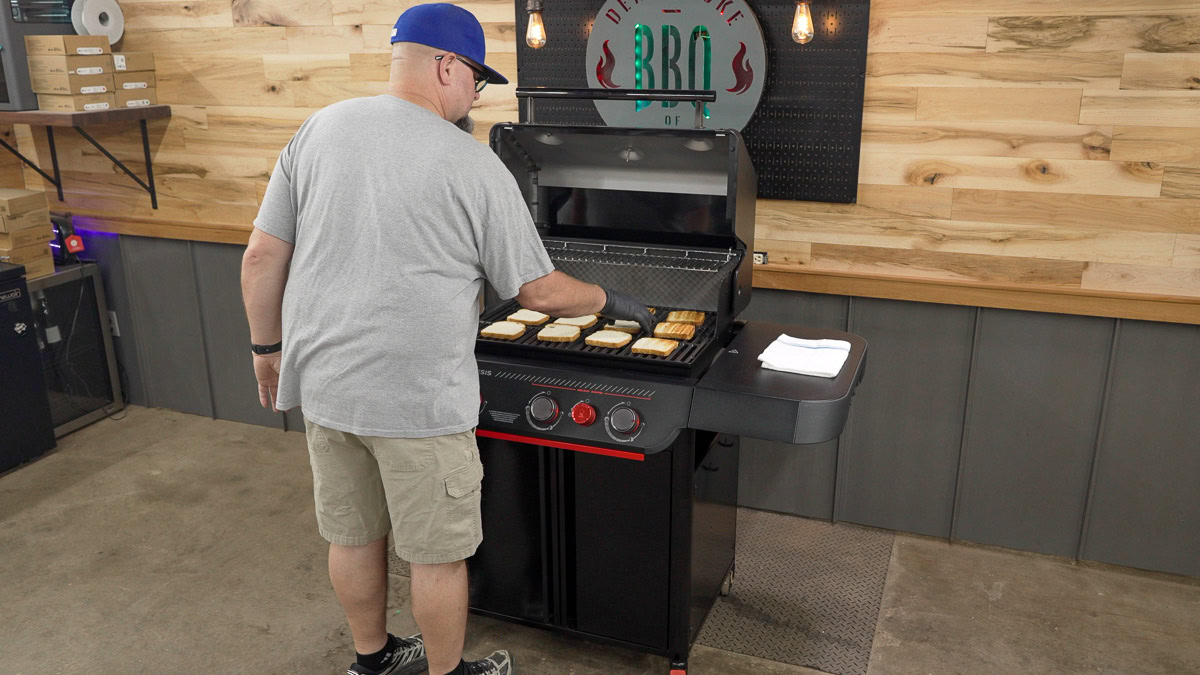
Before I put anything expensive on a new grill, I want to know where the hot and cool spots are. So my first test was a toast test.
I turned all the valves down to low, and the lid thermometer read about 350°. Then I laid bread across the grates to see how evenly it toasted across the whole cooking area.
For the most part, it was pretty dang even. Only one piece was a little lighter, toward the front edge.
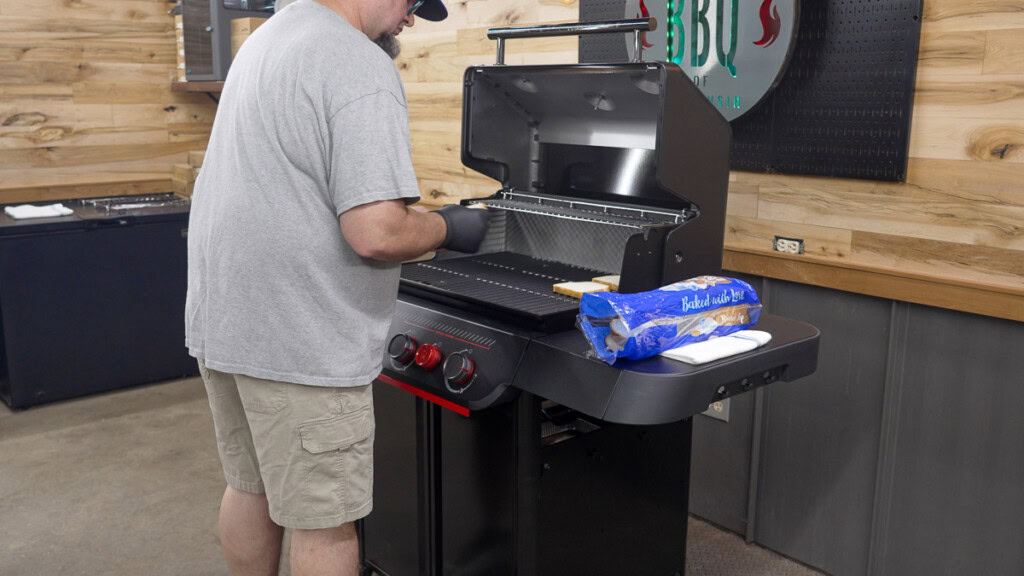
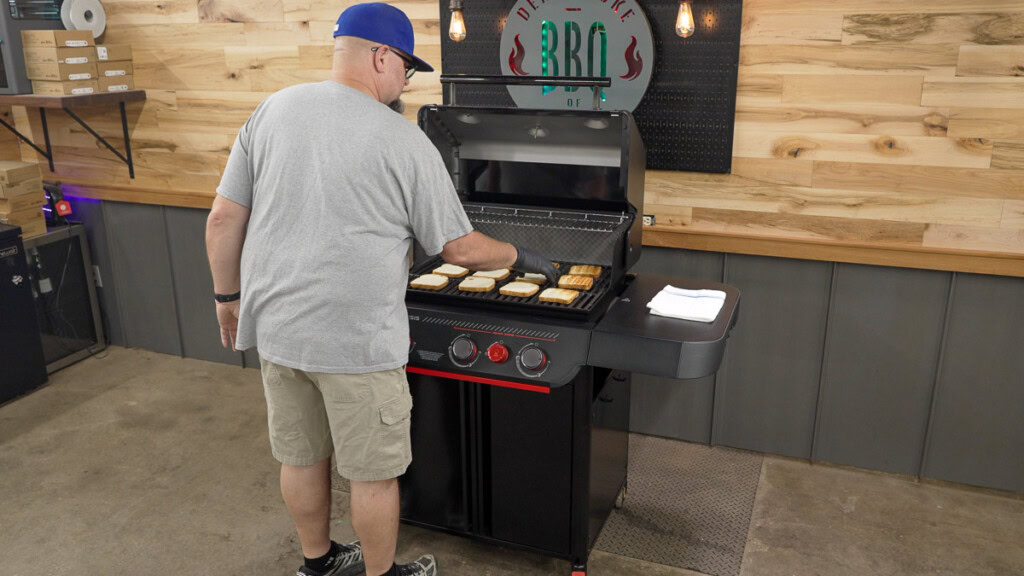
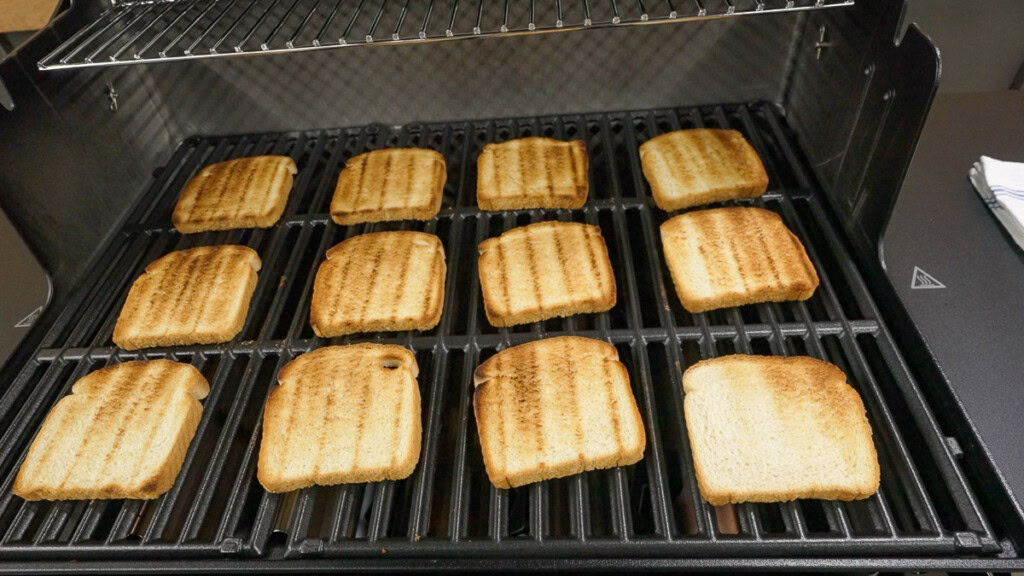
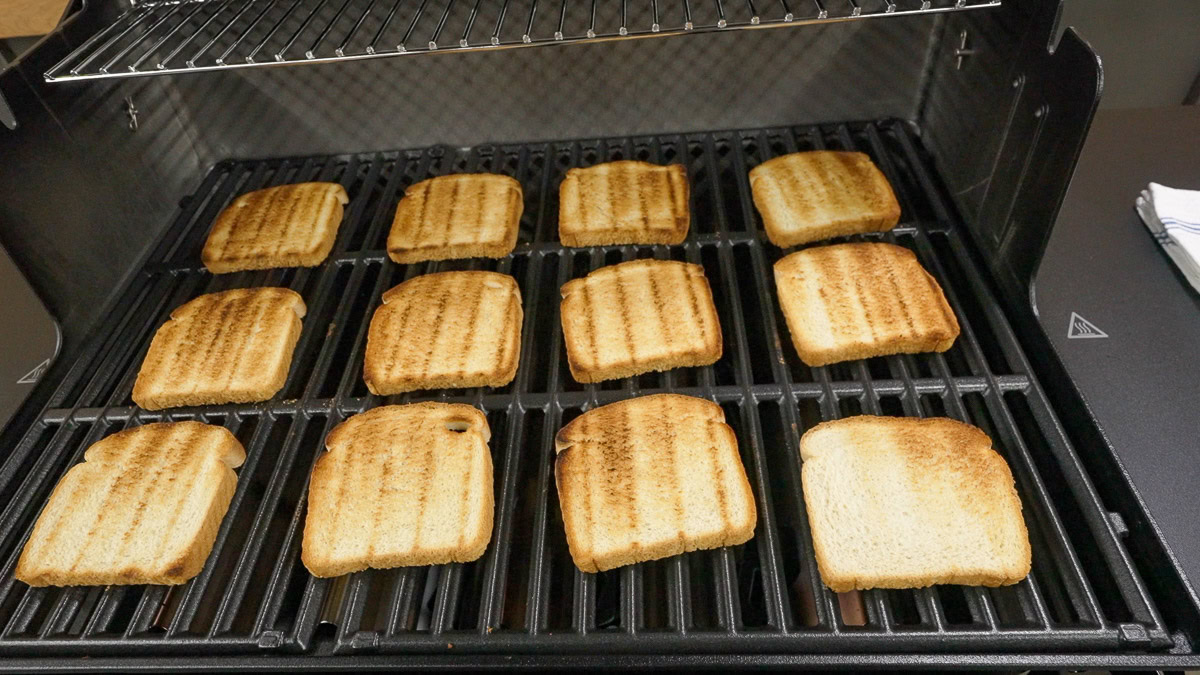
Tip: Toast test any new gas grill on low before your first real cook. It takes a few minutes and tells you which parts of the grate run cooler, so you know where to rotate food.
I also checked the lid thermometer during the ribeye cook. With the Sear Zone at full blast, the lid read 750°, and my IR reader showed about 750 to 790° on the grate over the sear burner.
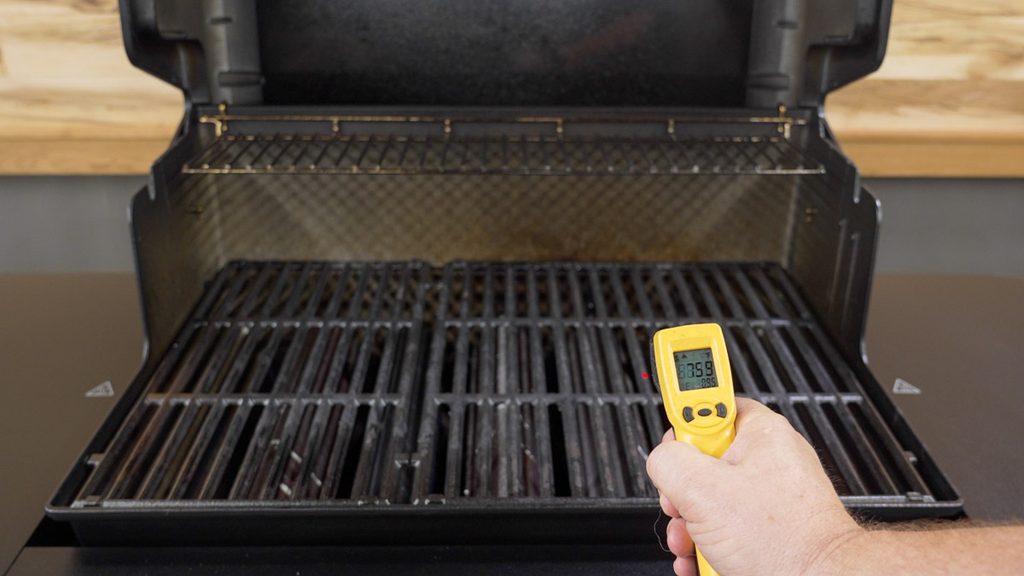
The far left burner wasn’t on max, so I think the chamber as a whole was running pretty true to 750°. The lid thermometer is close enough to trust.
My experience cooking on the Weber Genesis
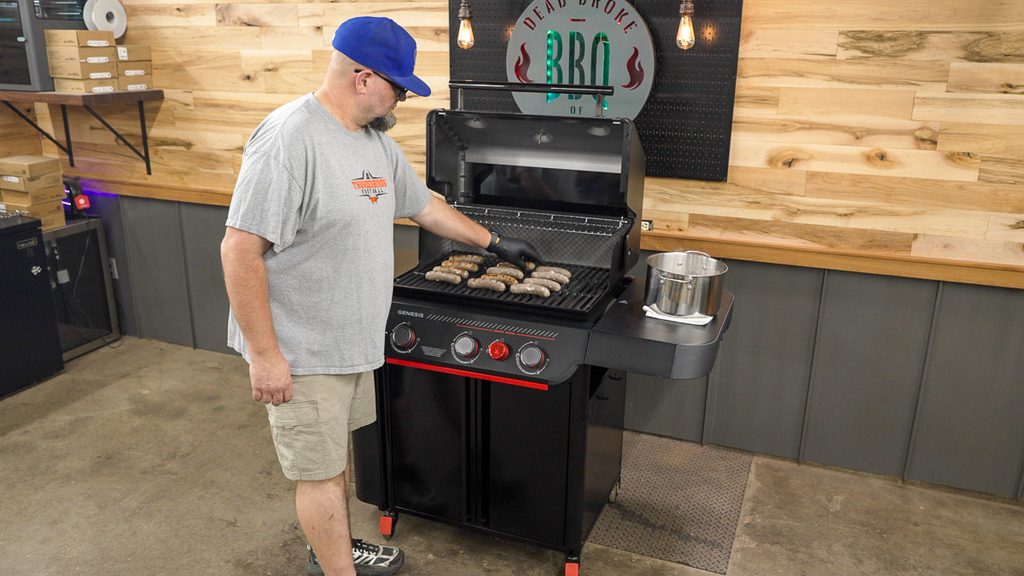
With the grill already preheated from the toast test, I started with brats at medium, right around 500°. They cooked very evenly. I only had to rotate the front one to the back, and I didn’t have to shuffle them all over the grill. Those brats tasted awesome.
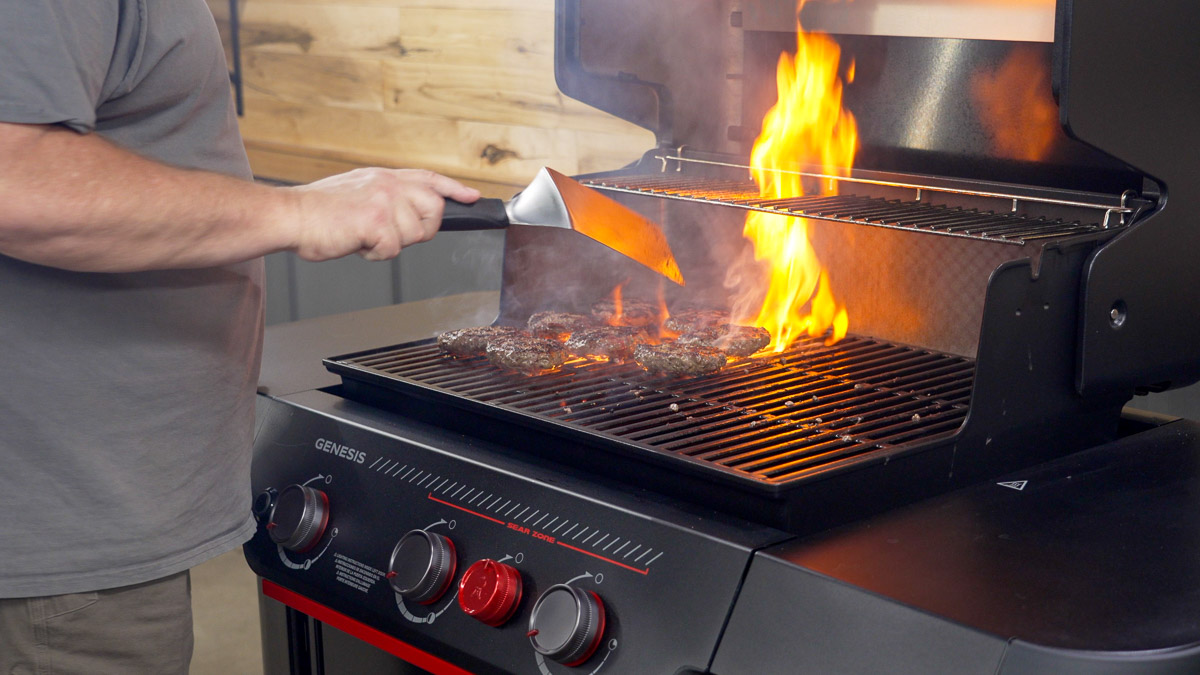
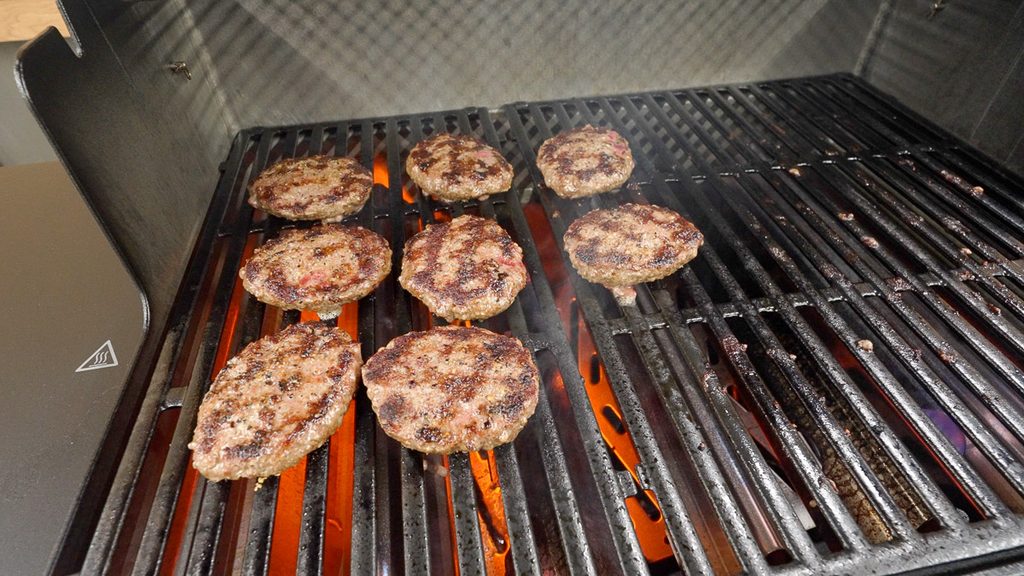
It’s a gas grill, so burgers were next. I flipped the reversible grates to the flat side for more contact with the meat. That gave me more sear and some beautiful-looking burgers. We’re a half cheeseburger, half hamburger family these days, so I did one of each. One heck of a bite.
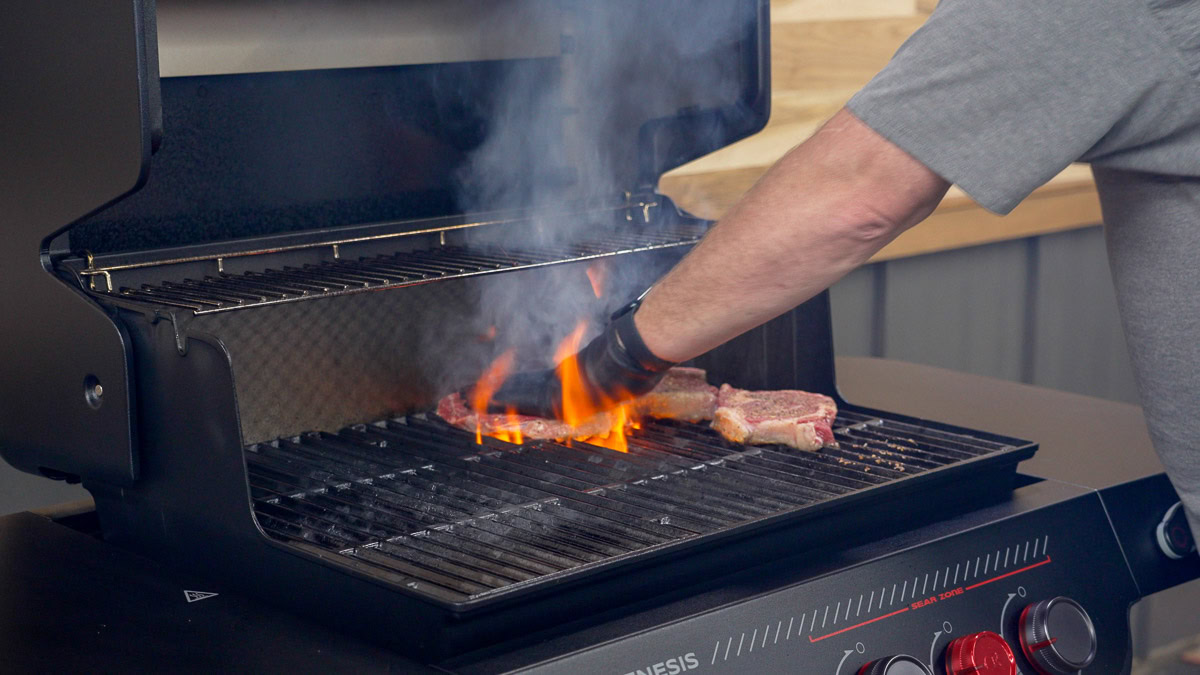
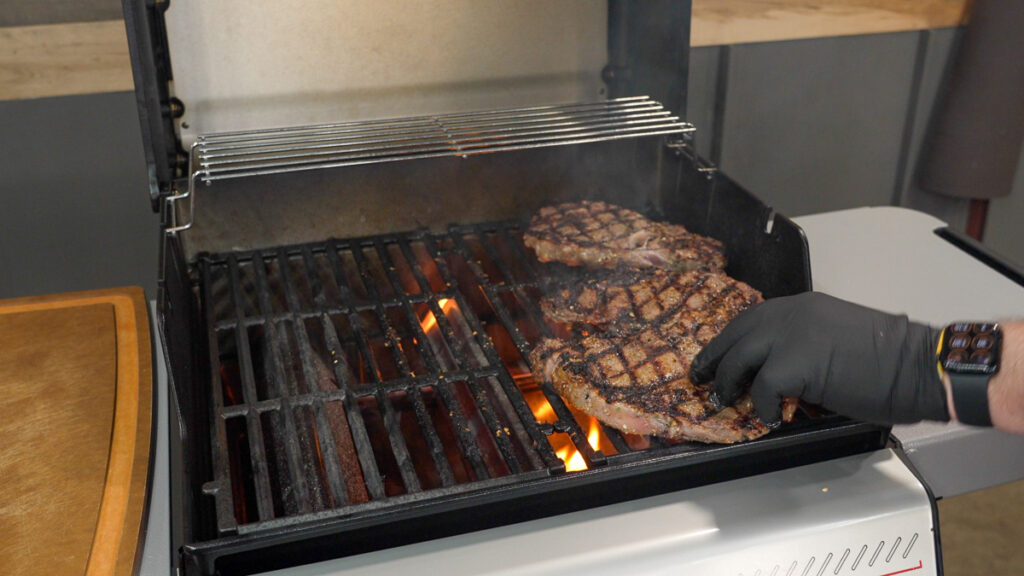
Then it was time for the Sear Zone, and I didn’t mess around. I cranked it to full blast and put on ribeyes. I usually cook steaks around 500 to 600°, so I overcooked them a tad at 750°. They were still really good, and the sear was outstanding.
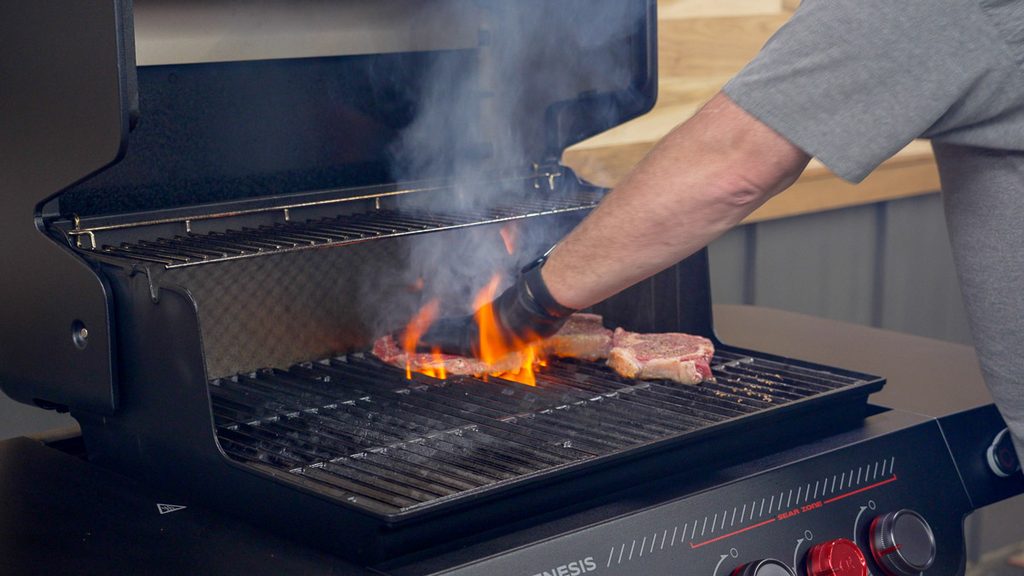
If you’re cooking steak on the Sear Zone at full blast, don’t do two minutes before the flip. Go about a minute and a half per side and you’ll get a good medium rare.
The last cook was barbecue chicken wings, because it’s football season. They took a little over 15 minutes and got the char we like, with marks on them but not burnt to a crisp.
I heated sauce on the warming rack, dipped the wings, then put them back on for a few minutes to caramelize. Crispy skin deliciousness. There’s always one wing that won’t come up to temp with the rest, so while I waited, I ate a couple more. Pitmaster privilege.
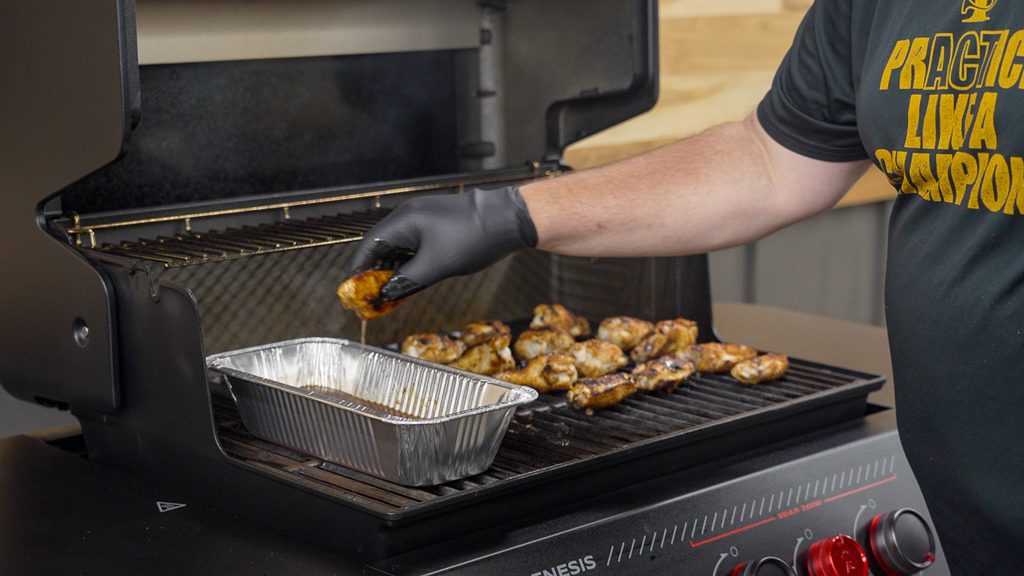
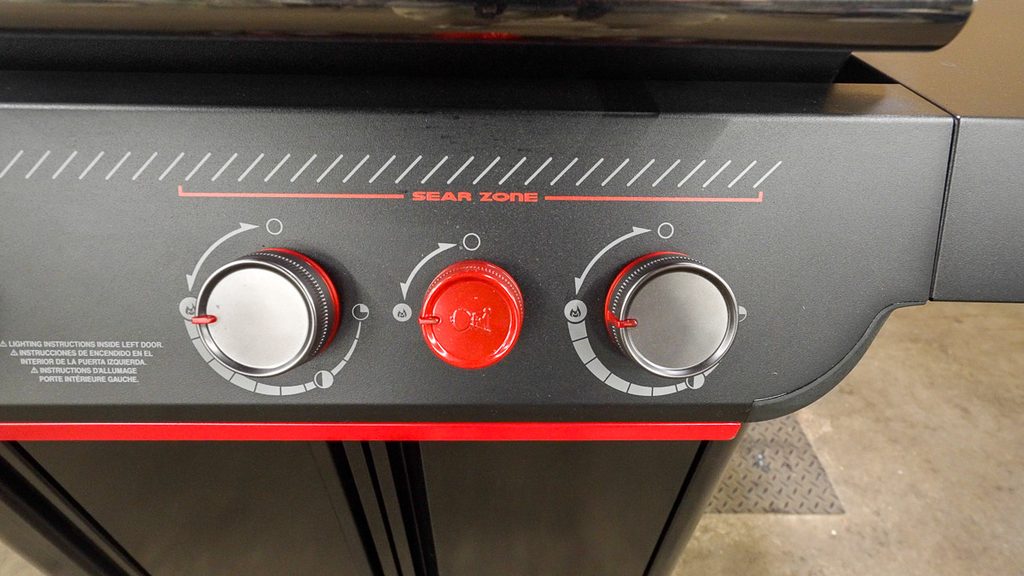
The Sear Zone is the real difference on this grill. You can leave that burner on full blast and run the rest of the grill lower, so you can sear a couple of steaks on one side while other food cooks gentler on the other.
Cleaning the grill
The drip pan pulls out from the front, so you don’t have to reach under the grill. Grab it, and it all slides out. After four cooks, mine definitely needed a cleaning.
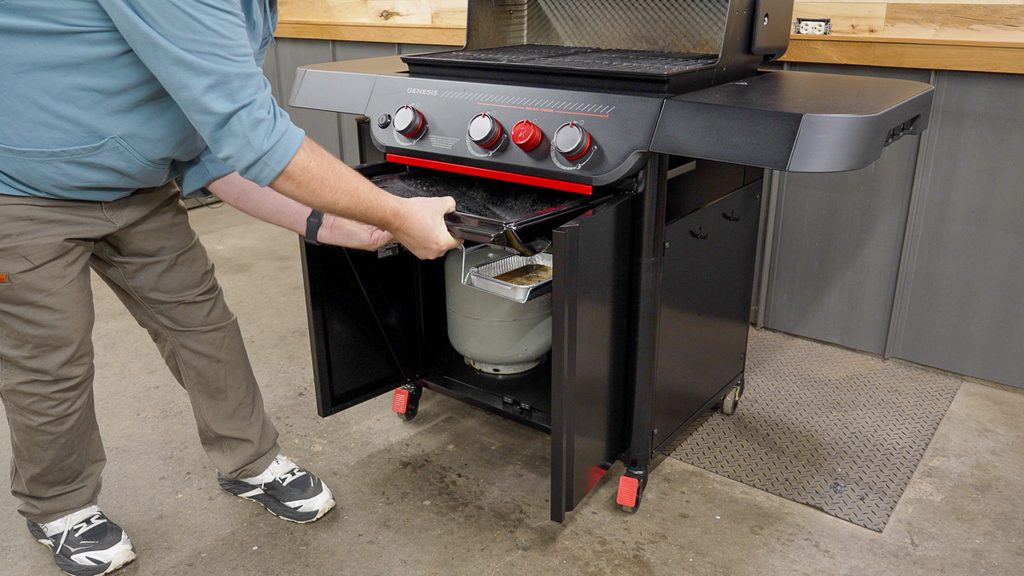
The grease tray hangs underneath, and like most gas grills these days, you can buy aluminum liners to drop in it. Or you can be a cheapskate like me: put on some rubber gloves, clean it out, and reuse it.
The labels came off, but the adhesive stayed. We did that on purpose to see if the residue would bake into the lid over four cooks. It didn’t, and it still came off with a little cleaner.
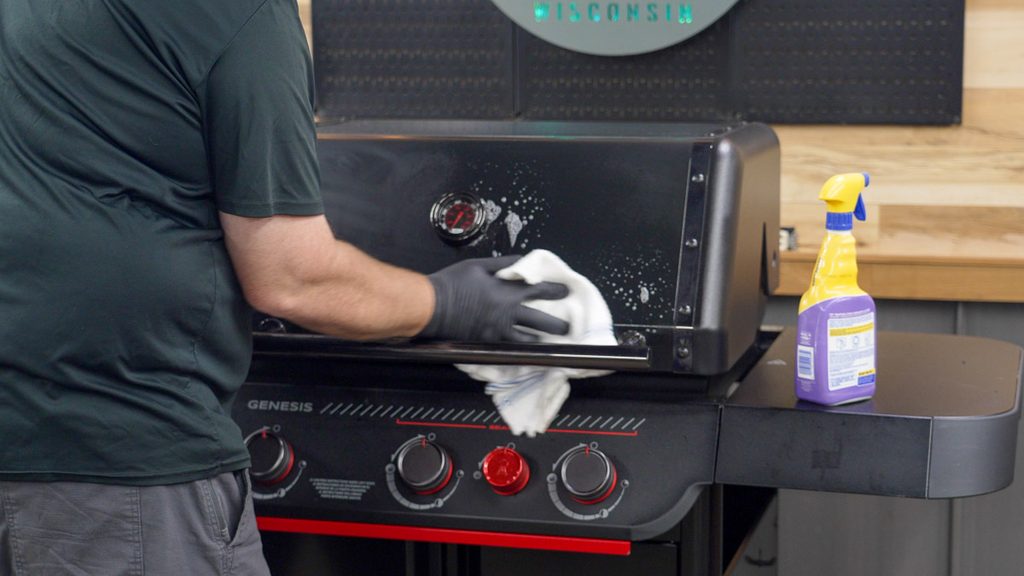
I still recommend cleaning it off right away. If the grill lives outside, I’m not sure the residue won’t bake in eventually. Nobody wants a darker square on their lid that your mother-in-law points out every time she comes over.
Genesis models explained: which configuration to buy
The Genesis model names look confusing, but there’s a pattern that makes it easier to understand when you’re shopping.
- First digit = main burners. The 330 has three main burners. A four-burner would be a 430.
- Last two digits = feature level. 15 is the base model. 25 adds a sear zone, but it works differently (more below). 30 adds a dedicated Sear Zone burner with its own knob. 35 adds a side burner.
- Letters = finish and tech. E means a porcelain-enameled lid, S means stainless, and X means
Weber Connect Wi-Fi. - Special Edditions – You have the Stealth and Titanium editions which are mostly cosmetic
Weber does change things from year to year, so check the spec sheet before you buy.
Here’s the trap we mentioned up top. The base E-315 is the cheapest way into a Genesis, so it’s tempting, and a lot of people buy it for the brand name, only to be disappointed.
It costs more than the top-spec E-435 four-burner Spirit, which has its own sear zone, and beyond the Genesis build, you don’t get any bells or whistles for that money. There’s no dedicated sear burner, and while the grates still take
If you’re going to spend Genesis money, we think the 330 is where it starts to make sense.
The difference between the 325 and 330 matters too. On the 25, the sear zone comes from double-rowed main burners, with no separate burner. If you turn them down to cook something else, you lose the sear heat. On the 30, the separate sear burner can stay on full blast while the rest of the grill runs lower.
An easy way to spot a true Sear Zone burner is its own separate knob.
For me, the 330 is the best value pick. I do a lot of braised brats, so a side burner is nice to have, but it’s not a must.
The E-330 includes the
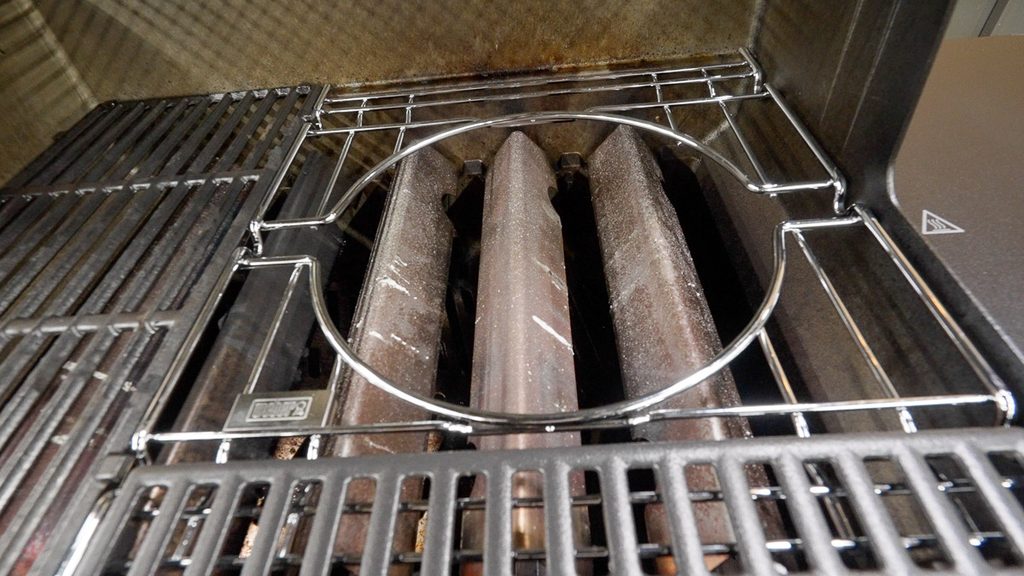
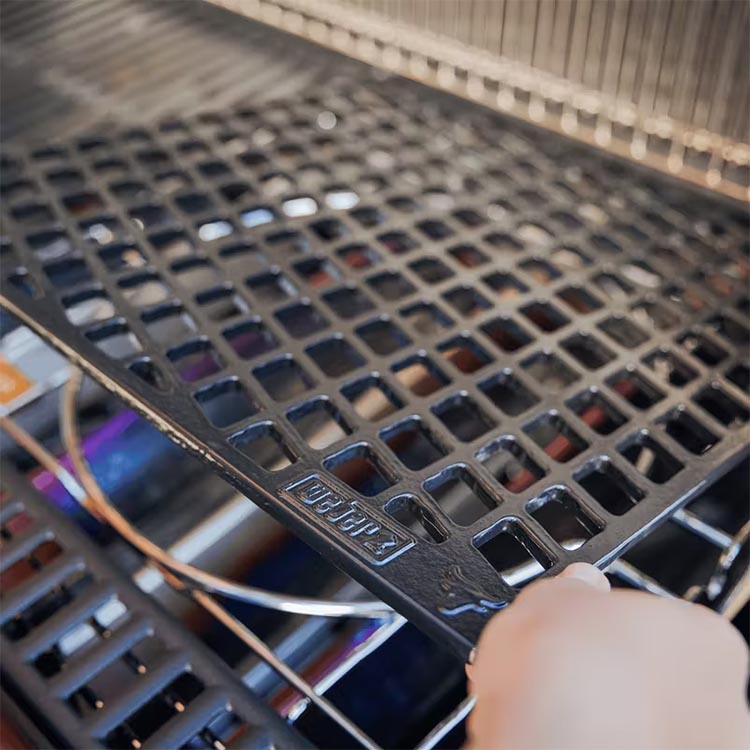
When we tested the SPX-435 back in 2022, we tried two Crafted accessories. The sear grate was the standout, leaving crisp crosshatch marks on steak, chicken, and even fish. The baking stone handled pizza fine, but it’s more of a nice-to-have, since an oven does the same job.
The Stealth also comes in a natural gas version that costs a little more. The propane model can’t be converted, so buy the fuel type you need.
If the all-black look isn’t a must, the standard black E-330 is the cheaper option.
How the Genesis compares
We’ve cooked on both of the grills Genesis shoppers ask us about most, so here’s where the E-330 Stealth lands against each one.
Weber Genesis vs Napoleon Prestige
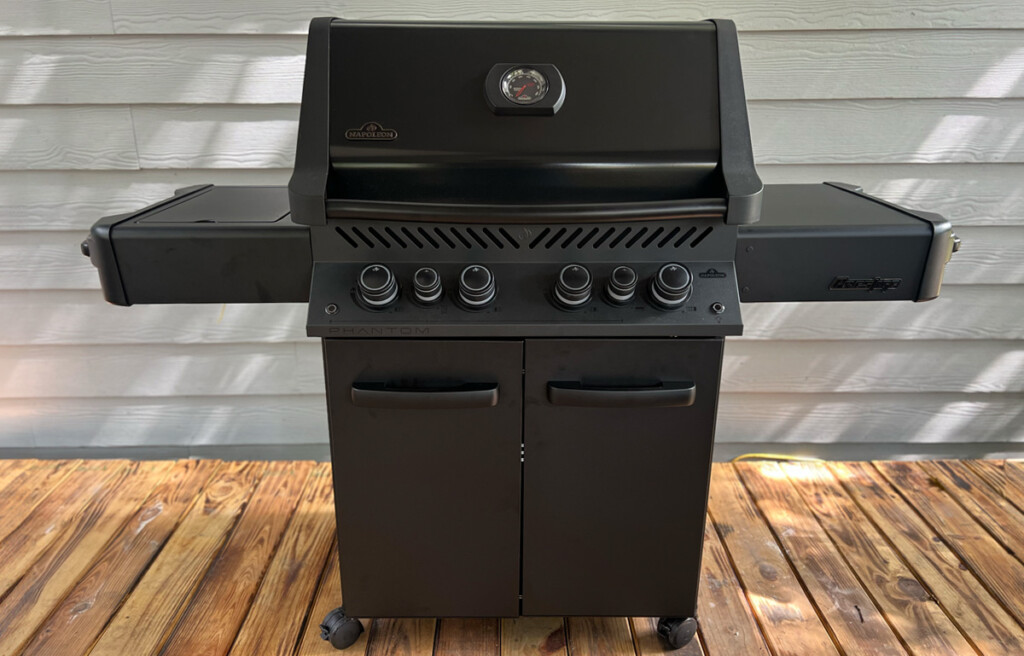
When we put the Genesis head-to-head with the Napoleon Prestige, the Napoleon won on searing. Its infrared sear station runs around 1,200°F, far hotter than any Genesis sear zone. It also includes a rotisserie with its own rear infrared burner, knobs that light up when a burner is on, igniters that relight a burner if it blows out, and a lifetime warranty.
The Genesis won on storage, side shelf space and customization, and the E-330’s Crafted frame kit only widens that lead. The dedicated sear burner closes some of the searing gap too.
The Prestige is the better searing machine, but it costs a good deal more than the E-330. If you want infrared and a rotisserie and the budget stretches, go Napoleon. If you want a well-built grill that sears well and does everything else for less, the E-330 makes more sense. Read our full Napoleon vs Weber comparison for the details.
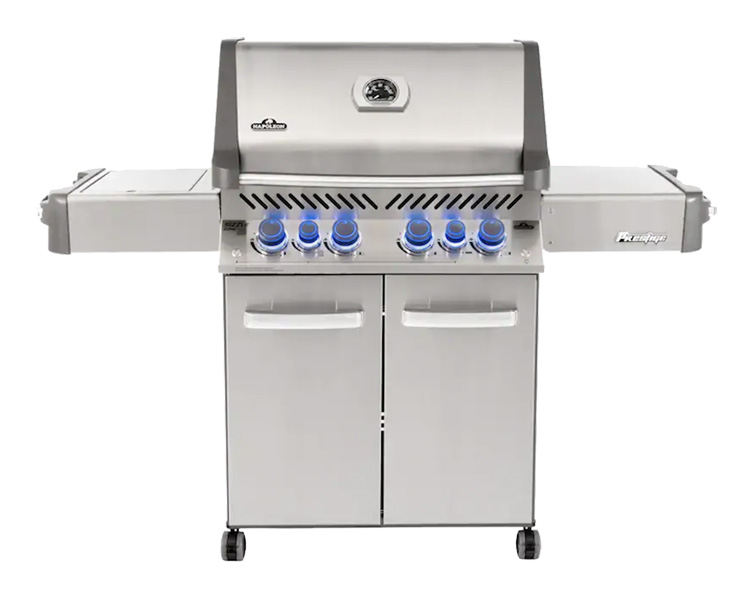
Napoleon Prestige 500 Propane Gas Grill
If you want infrared searing, a built-in rotisserie and a lifetime warranty, the Prestige is the step up from the Genesis.
CHECK BBQ GUYS PRICE
CHECK AMAZON PRICE
Weber Genesis vs Monument Eminence 605
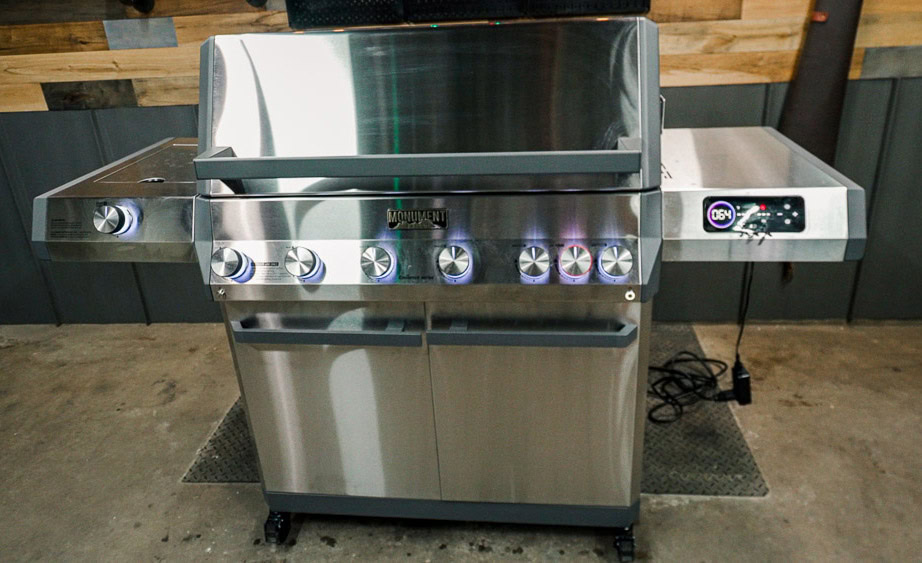
The Monument Eminence 605 is the opposite approach. You get six burners, 89,000 BTUs, 860 square inches of cooking space, an infrared side burner, a rear infrared rotisserie burner, LED knobs, a fuel gauge and a Wi-Fi controller.
On paper, it buries the E-330.
In person, the gap narrows. When I reviewed the Eminence, I found the Genesis had better fit and finish and thicker materials. The Monument is stainless rather than cast aluminum. It also needs power for the controller and lit knobs, and the stainless panels need regular wiping.
Think of the Monument as the fully loaded option list and the Genesis as the one you keep for 15 years. If you cook for big crowds and want every gadget, the Eminence gives you more grill for the money. If you’d rather have fewer features built to last, stick with the Genesis.
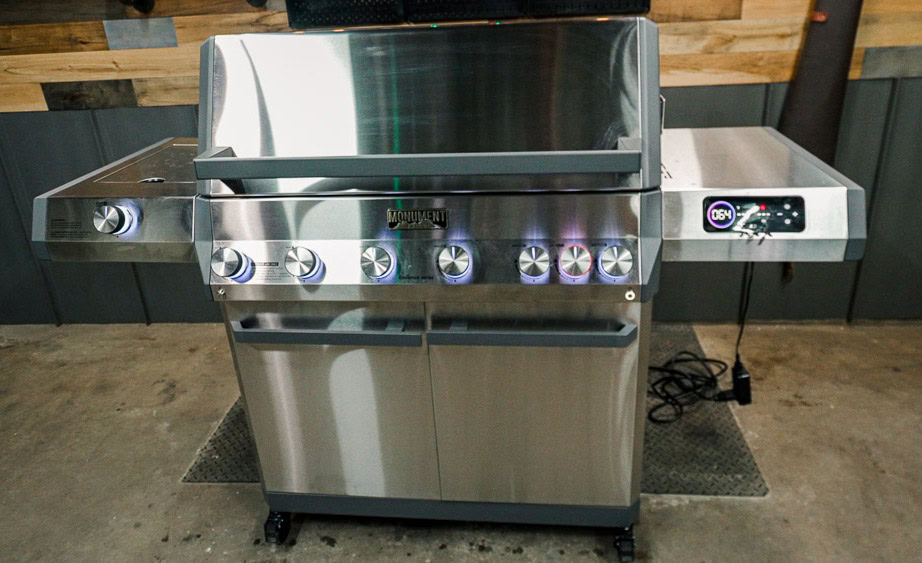
Monument Eminence 605 Gas Grill
Six burners, infrared searing and a rotisserie burner make the Eminence the most grill for the money, if you can trade some build quality for features.
Check Latest Price
Is the Weber Genesis worth it?
Weber has closed the gap with the Spirit, which now gets a seriously good sear zone of its own. But step up to the Genesis and the jump in build quality is noticeable. The cart body is sturdier, the casters roll and lock better, and the Crafted frame kit comes in the box, so you can add a griddle, pizza stone, or wok and really expand what this grill can cook.
My cons are small. Yes, the stickers are annoying, and the accessories add up. But this is a long-lasting gas grill that can feed a whole family, with a sear burner that runs as hot as you’ll ever need.
Many of you have had a
Weber Genesis E-330 Stealth 3-Burner Gas Grill
Check Latest Price
Pros:
- Sear burner pushes the grates past 750°
- Built to outlast a cheaper three-burner
- Matte black finish skips the stainless polishing
Cons:
- No interior or burner lighting
- Factory stickers leave adhesive behind
- Crafted accecssories can push your investment up
Did you miss our previous article...
https://manstuffnews.com/backyard-grilling/caramelized-onion-and-chicken-pasta