
The YS640s has been our pick for the best high-end pellet grill for a while now. Our team first got hands-on with the standard cart version. This year, All Things Barbecue sent me the YS640s on the competition cart to test out.
I put it through overnight brisket, beef ribs, chicken, burgers, and dogs. I also ran temperature and toast tests to see where the heat really goes. So this review isn’t a first impression. It’s what we’ve learned from two different setups of the same pit, and which one I’d actually spend my money on.
Here’s the good, the bad, and how to pick the right cart. If you’d rather watch, I filmed the whole thing, from the unboxing and burn-in through the toast test and the overnight brisket.
|
BEST VALUE
 |
BEST UPGRADE
 |
|
Pros:
|
Pros:
|
|
Cons:
|
Cons:
|
BEST VALUE
Pros:
- Same 10 gauge chamber, controller and cooking space
- Lighter at about 335 lb
Cons:
- Small casters struggle on gravel and decks
- Basic cart with fewer extras
BEST UPGRADE
Pros:
- Heavy 10 gauge cart with tie-downs
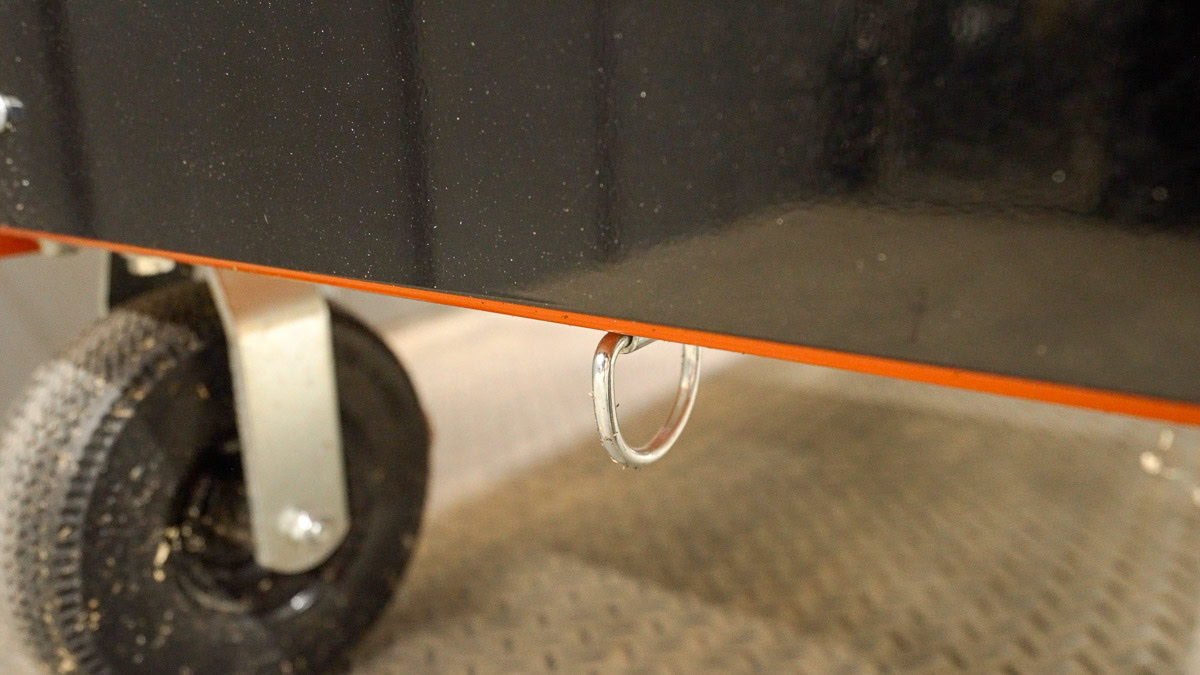
- 8" pneumatic tires and locking casters
Cons:
- Expensive, especially with the drawer
- Heavy to steer at 418 to 505 lb
UPDATED OCT 22, 2026: New hands-on testing of the competition cart, plus a standard vs. competition cart comparison.
Yoder sent me this smoker for free in return for my honest review. All thoughts and opinions are my own.
Overview & first impressions
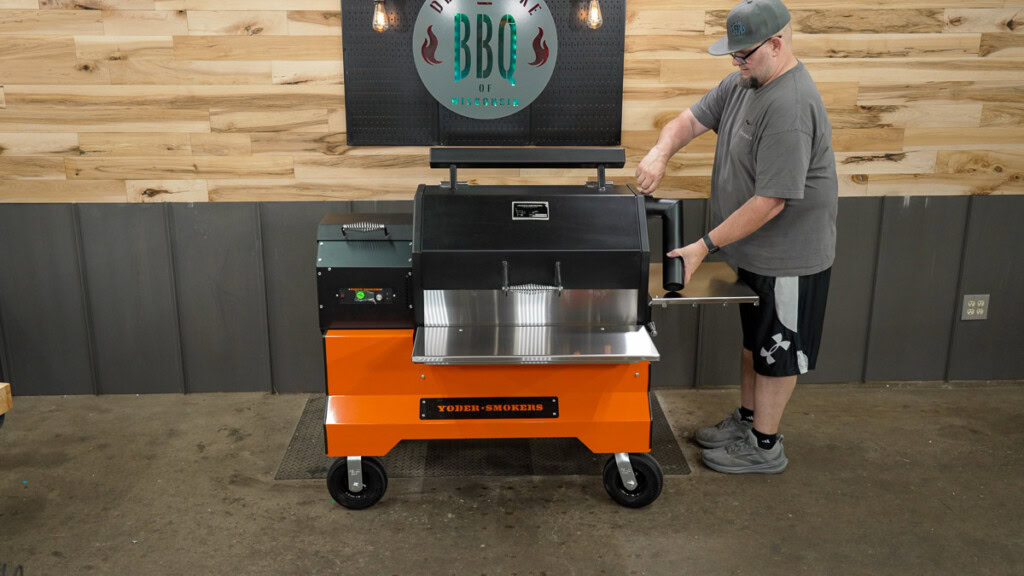
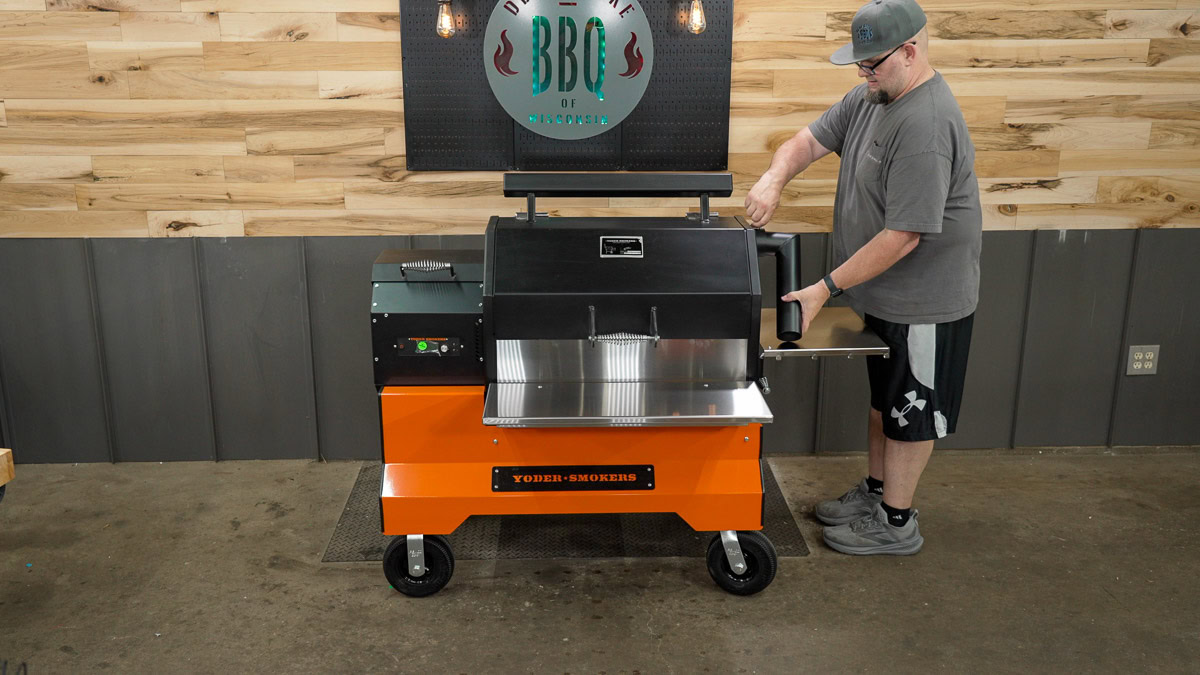
Yoder has built its name on the competition circuit with heavy-duty smokers made in Kansas. But what does that kind of pit actually do better than a box store pellet grill you can pick up for less than half the price?
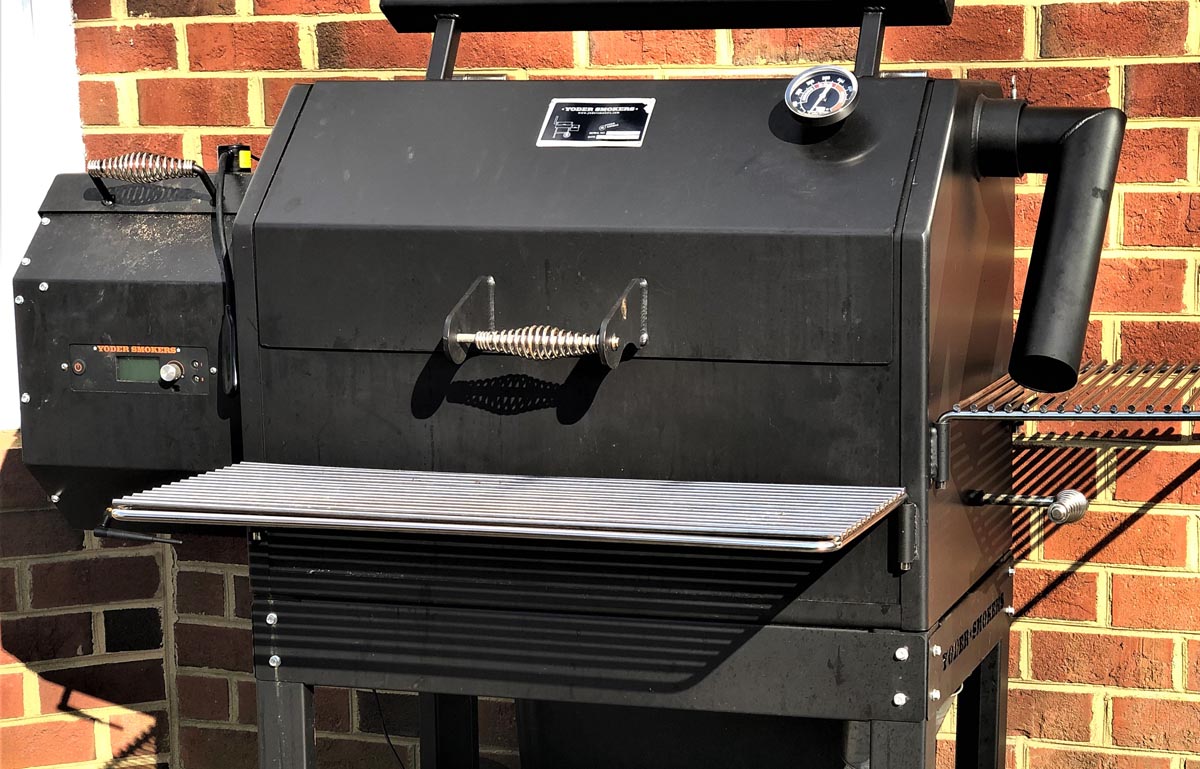
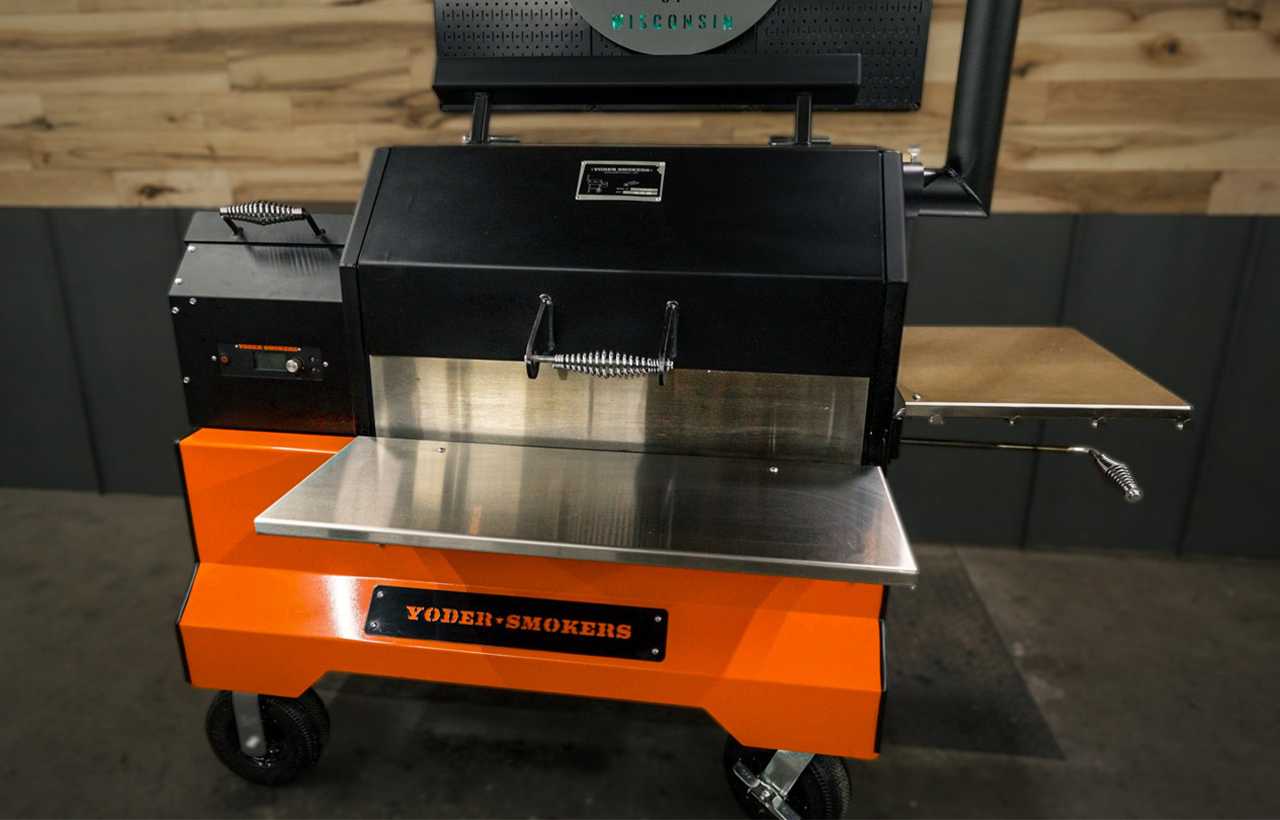
We’ve been cooking on the standard cart version for years, and I’ve spent the last few weeks putting the competition cart through its paces. The cooking chamber and controller are the same on both, so they smoke the same. But there are some key differences in the cart and day-to-day use, and I’ll get into those further down.
The YS640s is the bigger brother to the YS480s, and for most backyard cooks it’s the one I’d point you to. You get enough room for a couple of briskets or a full spread of burgers for a crowd. The bigger decision is which cart you put it on. That changes the price by up to $1,300, and I’ll walk you through all three setups below.
Yoder YS640s Specompetioncs:
| Standard Cart | Competition Cart | |
|---|---|---|
| Cooking space | 1,070 sq in (640 main grate + 430 upper rack) | 1,070 sq in (640 main grate + 430 upper rack) |
| Cooking chamber | 10 gauge steel | 10 gauge steel |
| Cart steel | 14 gauge | 10 gauge |
| Hopper | 20 lb | 20 lb |
| Controller | Yoder ACS, Wi-Fi, FireBoard app | Yoder ACS, Wi-Fi, FireBoard app |
| Weight | ~335 lb | 418 lb |
| Wheels | 8″ hard rubber + small casters | 8″ pneumatic + locking casters (10″ optional) |
| Tie-downs | No | Yes |
| Warranty | 10 yr body, 3 yr controller and igniter | 10 yr body, 3 yr controller and igniter |
| Price | Check Latest Price | Check Latest Price |
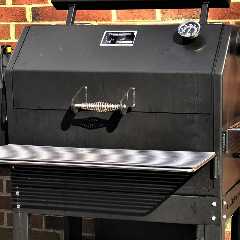
Getting the YS640s off the pallet tells you a lot about it. This thing is heavy, and you feel it the second you try to push it. Lift the lid, and there’s real weight there too, enough that Yoder added a counterweight to help you out. Rap your knuckles on the cooking chamber, and it gives off a satisfying thud.
Yoder also offers a long list of add-ons: grate options, shelves, a lid thermometer, and more. Mine came with stainless front and side shelves and a stainless drip tray, on the competition cart with the storage drawer. I’ll cover which extras are worth it as we go.
What I liked
- Real smoke flavor – noticeably smokier than most pellet grills I’ve run, especially on the brisket and ribs
- Built like a tank in the USA – 10-gauge steel cooking chamber, made in Kansas
- FireBoard app – I monitored an overnight brisket from bed without a single problem
- Grills as well as it smokes – pull the diffuser door for direct-flame searing
What I didn’t like
- Removable chimney drips grease – tip it down for storage and grease runs onto the shelf
- Heavy and hard to steer – 418 to 505 lb with no pull handle
- No pellet dump door – emptying the hopper means burning it down or scooping it out
Yoder sells direct through its sister retailer, All Things Barbecue, which is where you’ll find every configuration and accessory mentioned in this review.
Arrival and setup
The YS640s shows up on a semi with a liftgate, strapped to a pallet. When mine arrived, the driver asked if I wanted it turned around so it faced the open side of my studio. I said no. Big mistake. I didn’t have much room in that direction, and I ended up wrestling the wheels to get it off the pallet later. If you’re unloading in your driveway, you’ll be fine. If space is tight, let the driver turn it.
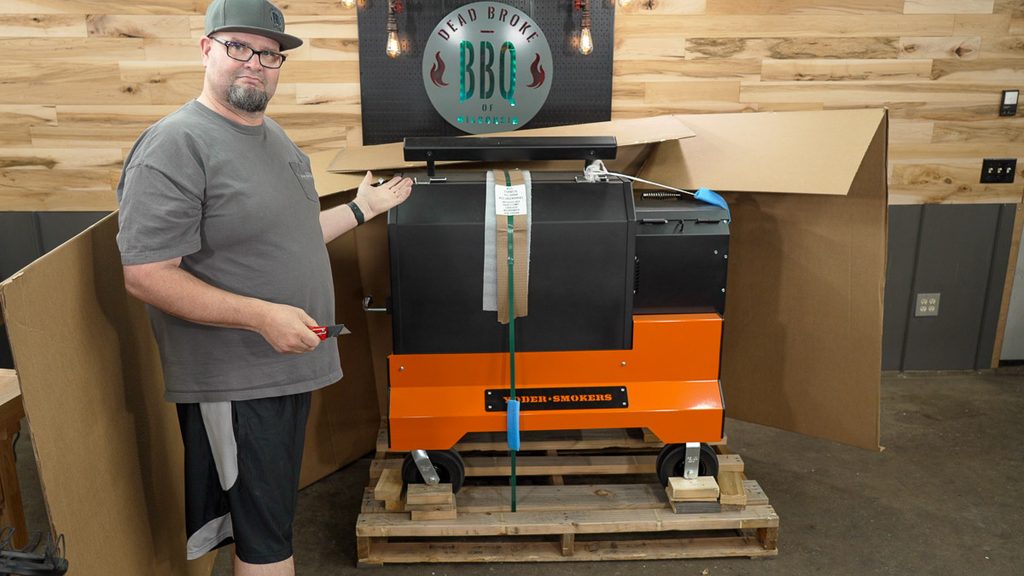
It comes in a big cardboard box, but that box is just a protective wrap. Pull it off and you’ll find the best part: the grill arrives fully assembled. No afternoon with an Allen key and a bag of bolts like most box store pellet grills.
The pit is screwed down to the pallet with wooden blocks. I used a drill and a good wrecking bar to get them off. I couldn’t get every screw out with the drill, so the wrecking bar finished the job. A reciprocating saw would work too. Just take your time so you don’t scratch anything.
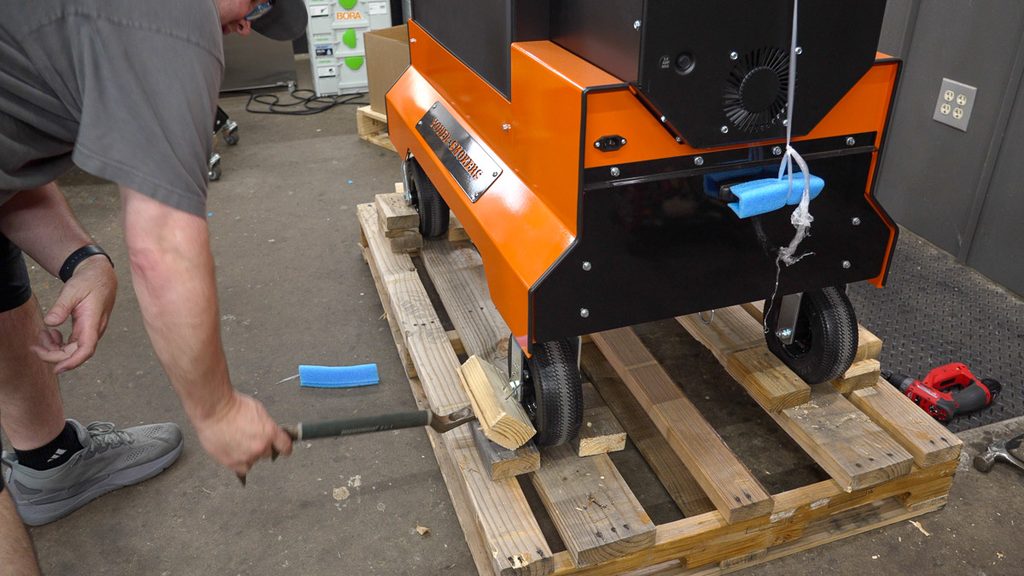
Before you roll it off, open the lid and take everything out of the cooking chamber. Then build yourself a little ramp out of a couple of 2x4s. Grab a second set of hands for this part if you can. My comp cart setup is pushing 505 lb, and you don’t want it dropping straight off the pallet onto the ground.
Once it’s on the ground, all that’s left is putting on the chimney, dropping the cooking components into the chamber, and adding your shelves.
The burn-in
Every new grill needs a burn-off. But on a pit painted with high-temp paint like this one, I like to cure the paint low and slow.
Yoder’s manual says to run it at 350°F for about an hour. I’m a little more cautious. My dad was an auto body painter, and he always talked about curing things slowly. So I start any high-temp painted pit at 225°F and run it there for at least an hour once it hits temp. Then I crank it to 350°F for at least another hour.
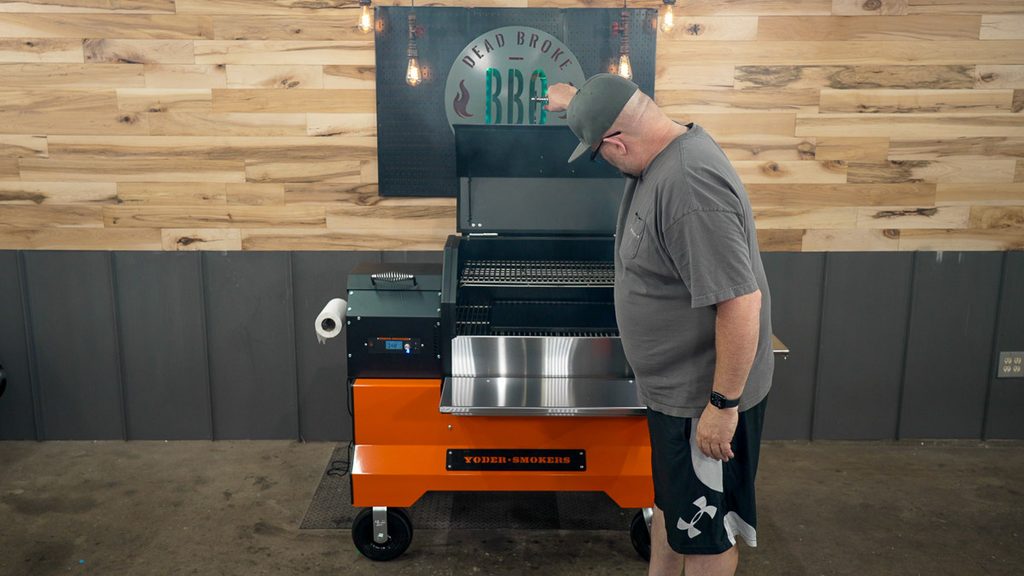
Once it’s at 350°F, I spray down the inside of the cooking chamber with oil. I skip the inside of the lid, though. I’ve had oil run down the face of a grill before, so now I let the lid season naturally over the next few weeks of cooks.
When you’re done, hit the power button and let it run through its shutdown cycle. Once it’s completely cool, you’re ready to cook.
Design and build quality
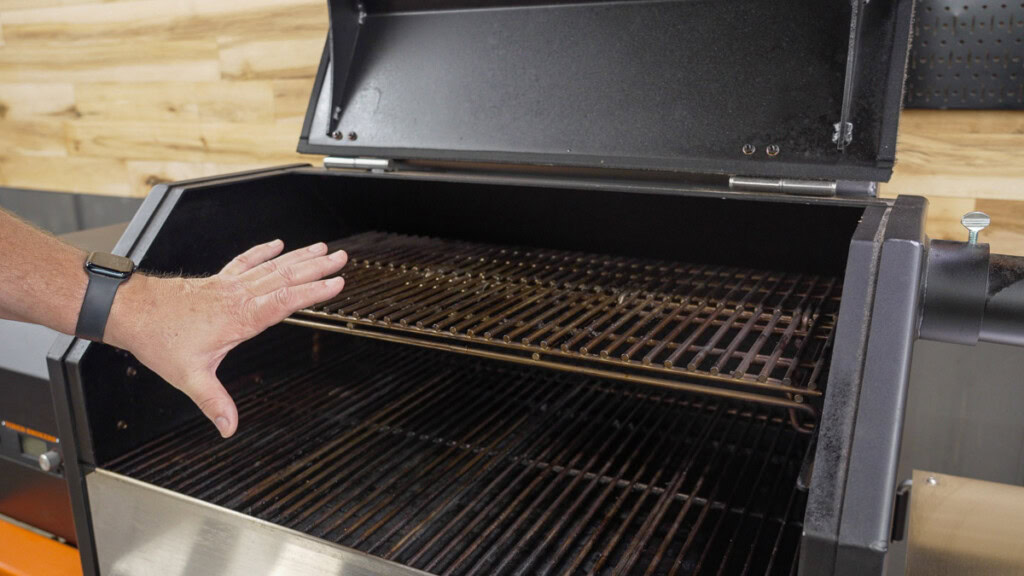
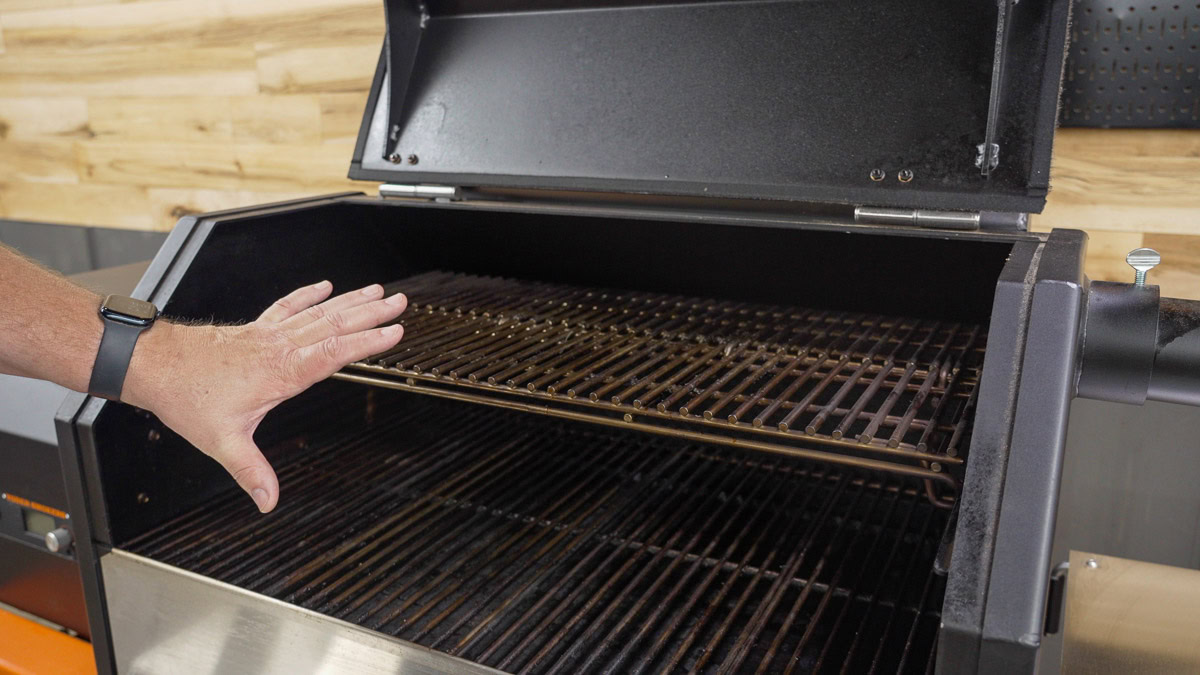
The first thing you notice about the YS640s is the weight of it. The cooking chamber is 10 gauge steel, which is roughly twice as thick as what you’ll find on most box store pellet grills. (With steel gauge, a lower number means thicker metal.) Even the upper cooking rack is seriously heavy. Pull it out for cleaning and you’ll feel it.
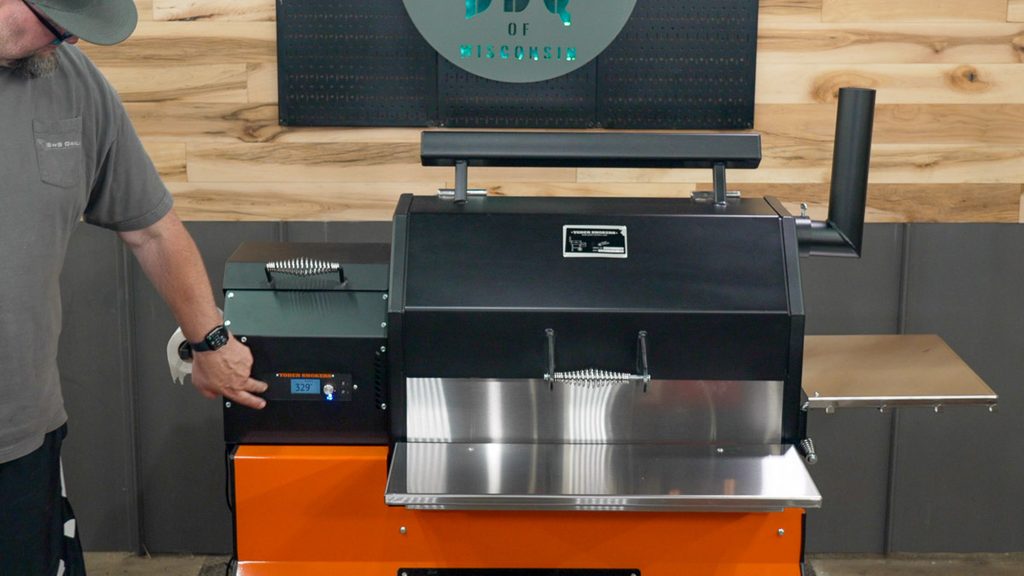
That heft shows up everywhere. The lid is heavy enough that Yoder added a counterweight to help you lift it, and it opens smoothly every time. The handles stay cool to the touch, which I appreciated when I was running it at 600°F and didn’t have to hunt for a glove. And there’s a felt gasket around the lid, so you don’t get much smoke leaking out the sides. It all comes out of the stack where it belongs.
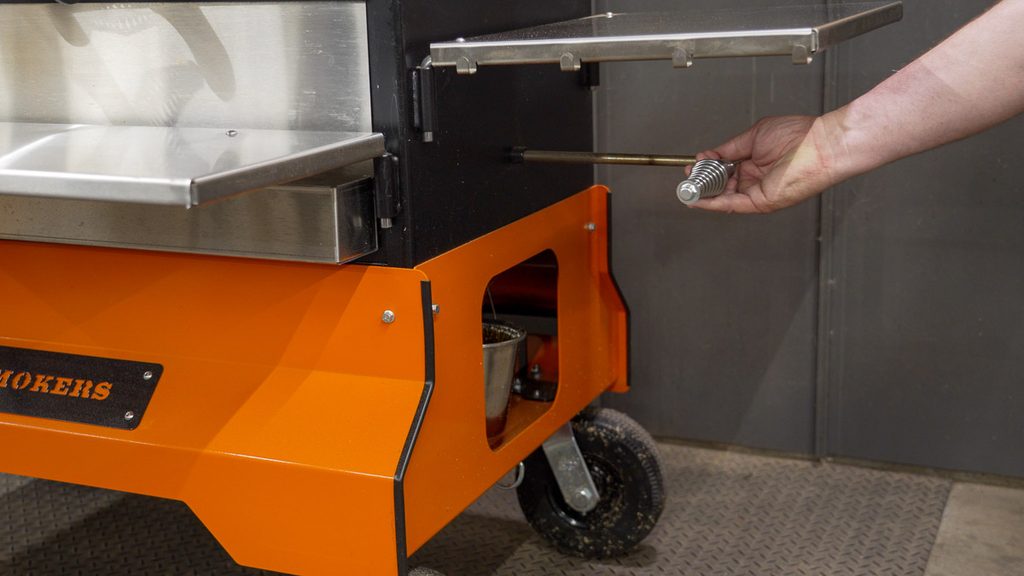
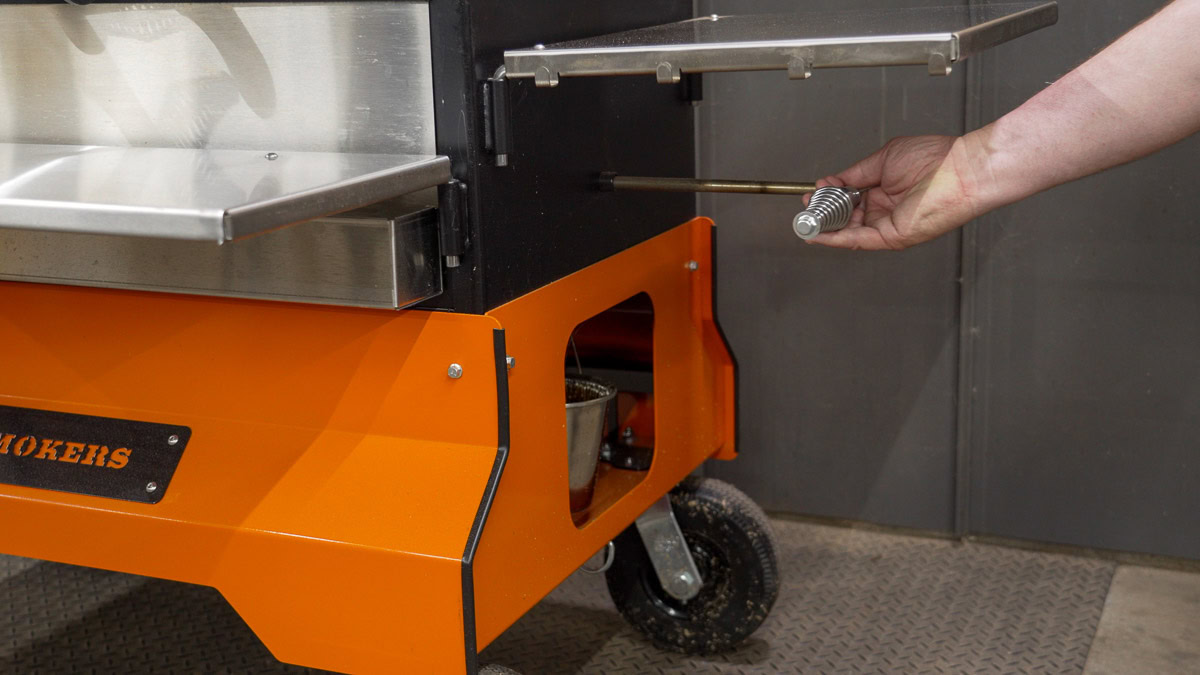
Yoder clearly thought about the practical details too. My favorite design touch is the damper handle.
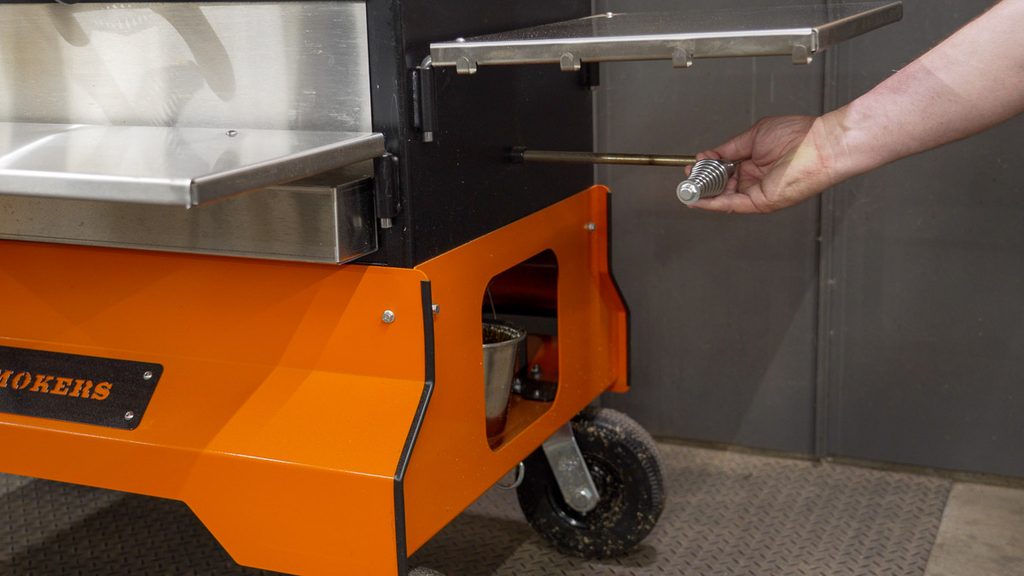
Push it all the way in and it closes off the space under the drip pan, concentrating the heat on the fire pot side. That’s perfect when you’re only grilling a couple of steaks. Pull it all the way out, and the heat spreads across the whole chamber for a full load.
One small thing I like is that the power cord detaches from the grill, so you’re not running it over every time you roll the pit into place.
Temperature performance
I’ll get to the brisket, I promise. But before I put a $100 packer on any new pit, I want to know where the hot and cold spots are. It’s a lot cheaper to find them with a few slices of bread.
The first thing I noticed during preheat is that the YS640s likes to overshoot your set temp a little. It isn’t just heating the air blowing through the chamber. It’s trying to bring all that heavy steel up to temperature, so it runs a bit hot before it settles. Give it time, and it comes back down to where you want it.
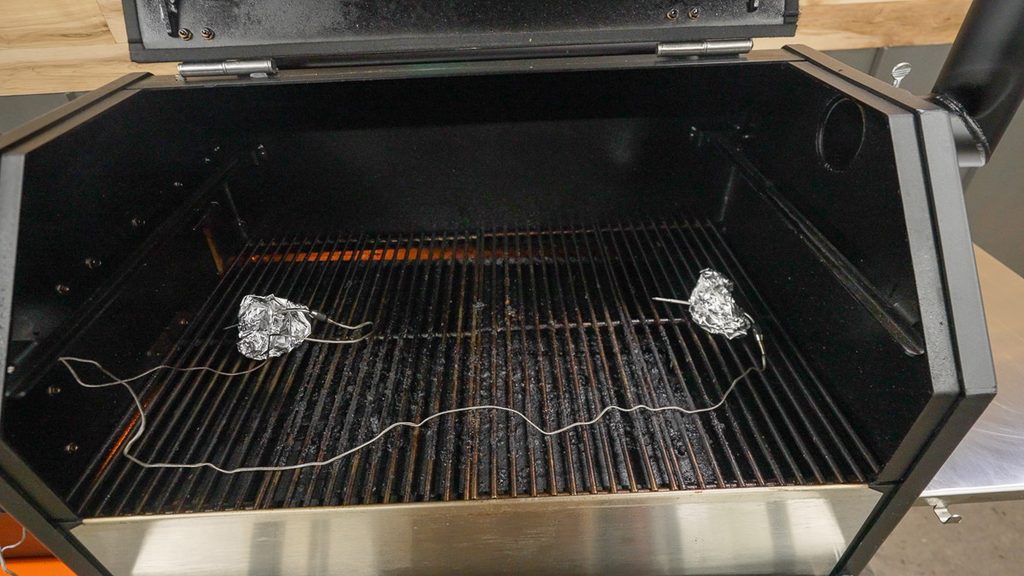
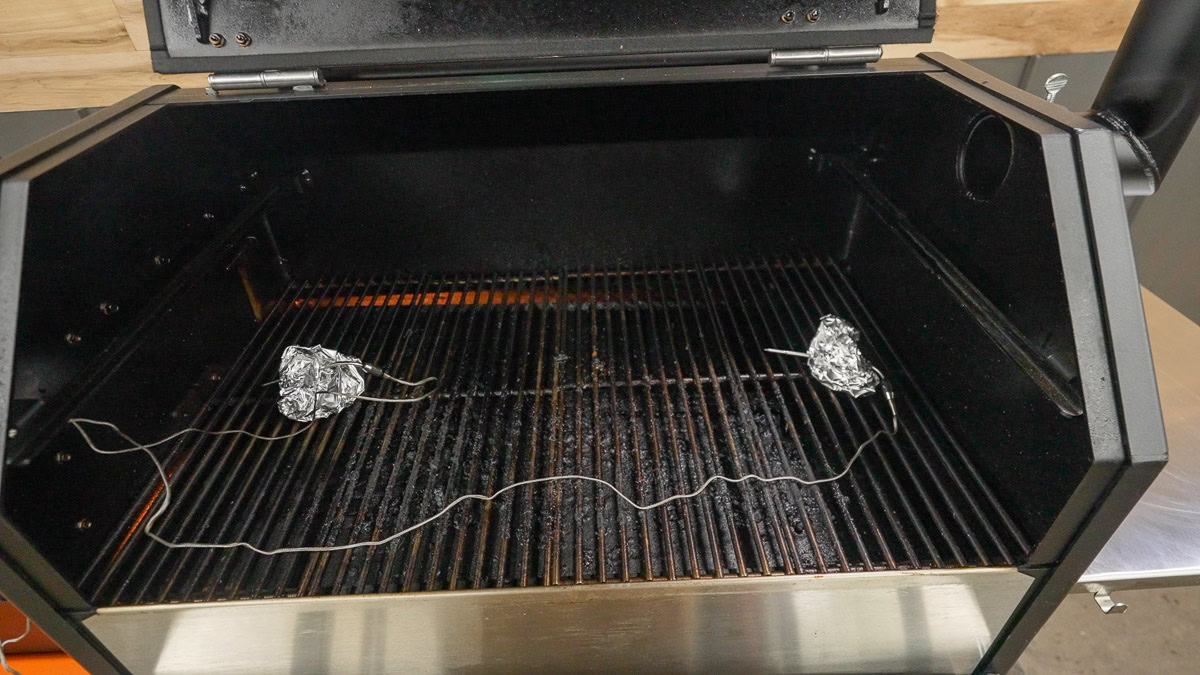
To see how evenly it cooks, I ran a left-to-right temperature test with my own FireBoard 2 Drive, not the grill’s built-in probes, with probes spread across the grate.
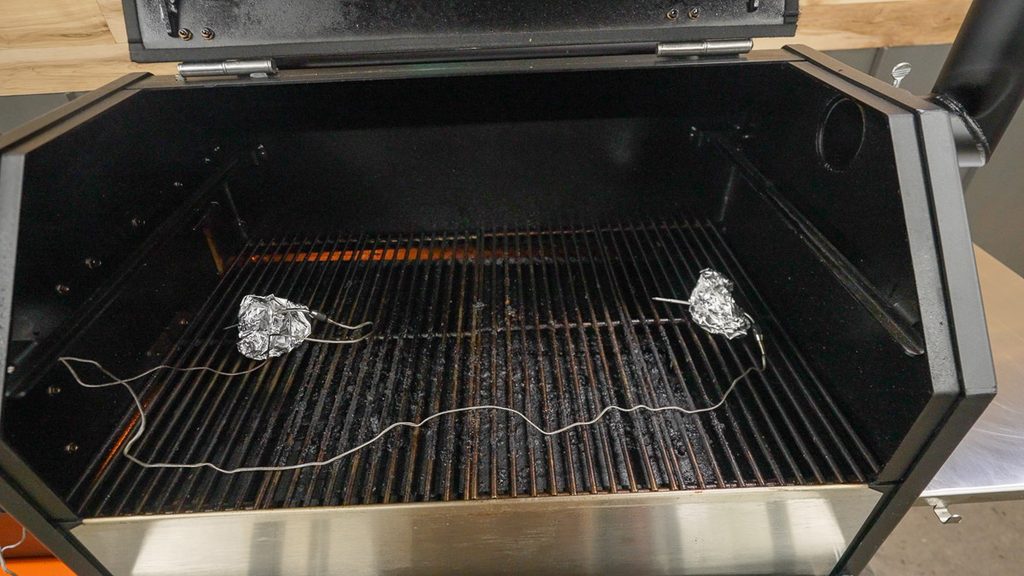
At the start of every cook, there was a 25 to 30°F difference from one side to the other. Once the pit stabilized, that closed to about 10°F, which is pretty dang good for a pellet grill this size.
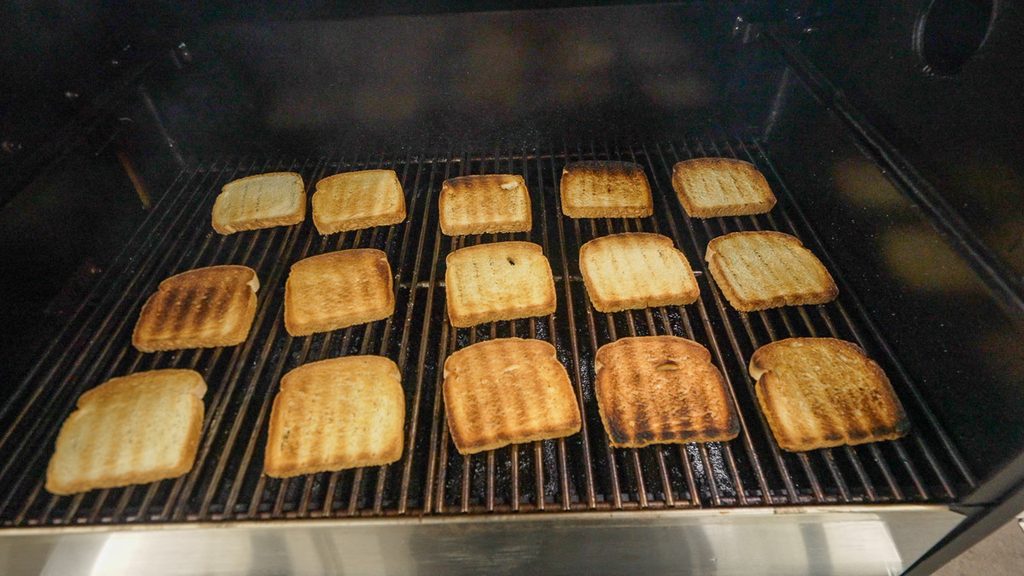
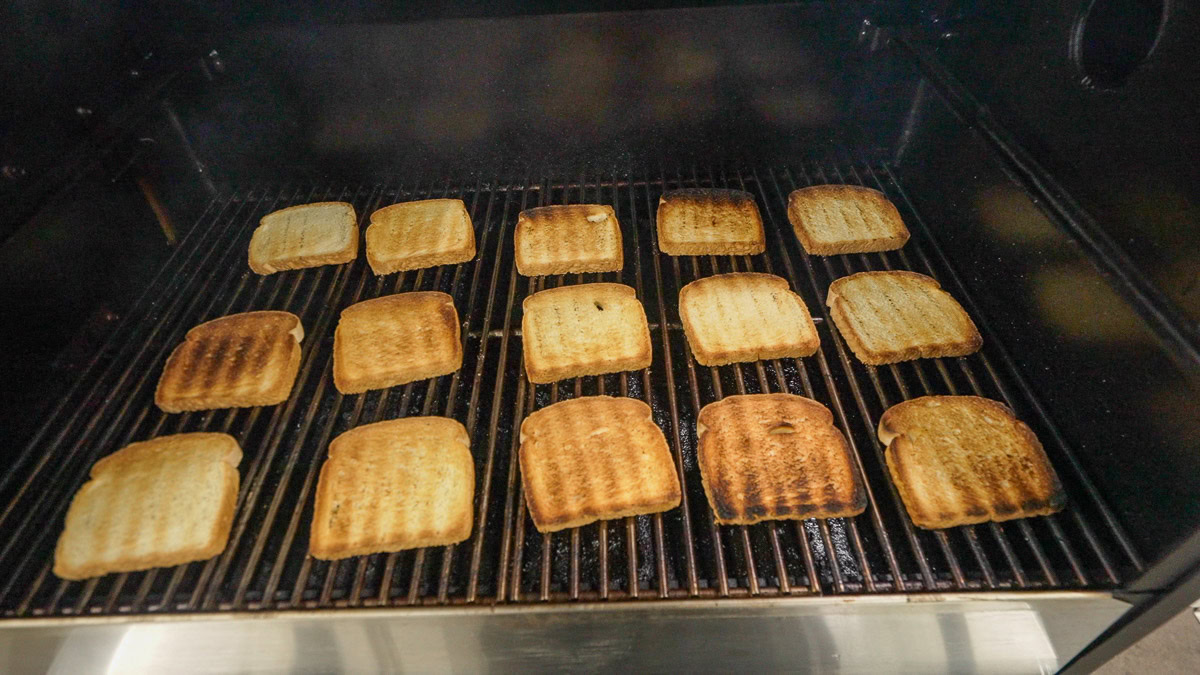
I’d seen people online talk about hot spots, so I also ran a toast test, laying bread across the whole grate to see where it browned. The toast right above the fire pot came out darkest, no surprise there.
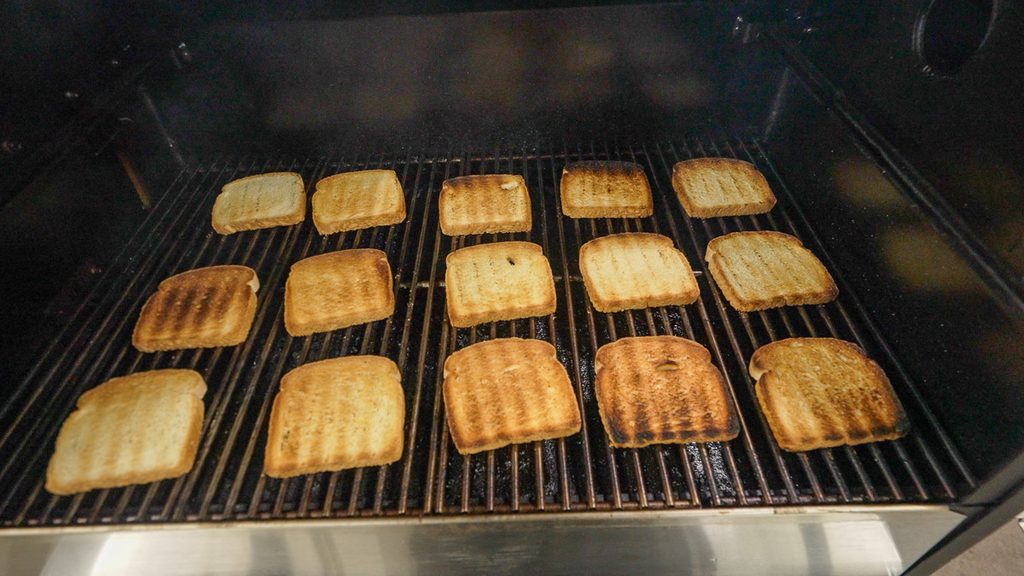
On the right side, the front and back rows were a little darker than the middle, which makes sense, since that’s where the heat travels around the drip pan and out the exhaust. On the left, the center pieces over the fire pot browned more than the outer rows.
Overall, the right side runs a little hotter than the left. But looking at the whole grate, everything was within reason except the very outer edge. I’m used to hot spots on my offset and plenty of other pellet grills, and these are easy to work with. Put the thicker cuts or the meat you want done first on the right, and anything delicate on the left.
Smoking on the YS640s
I keep going back to the smoke, because that’s one thing I wrote down on every single test cook.
Even my very first cook, which was really just about getting the Wi-Fi set up and seeing how the YS640s performs, had it bellowing smoke out of that stack.
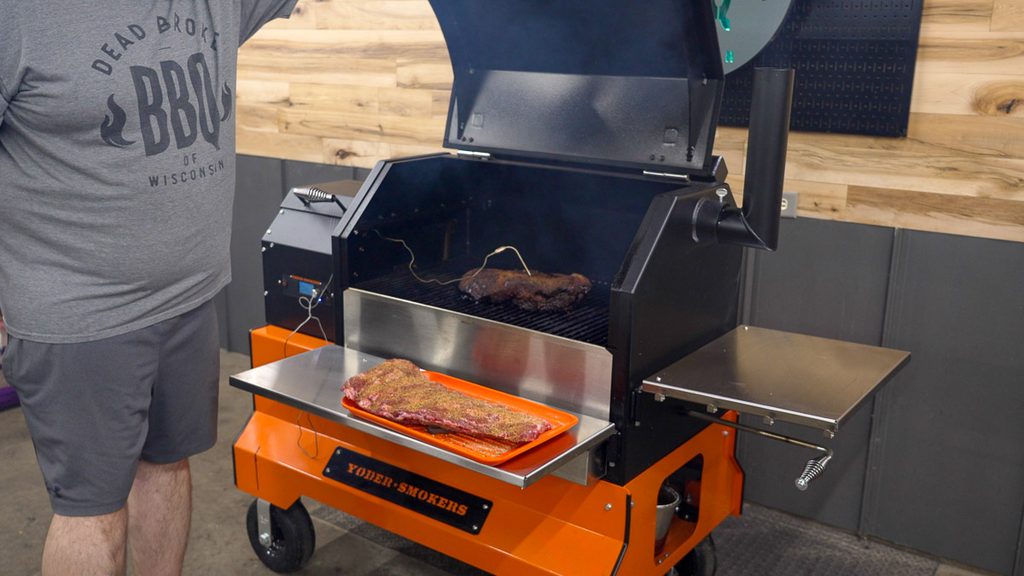
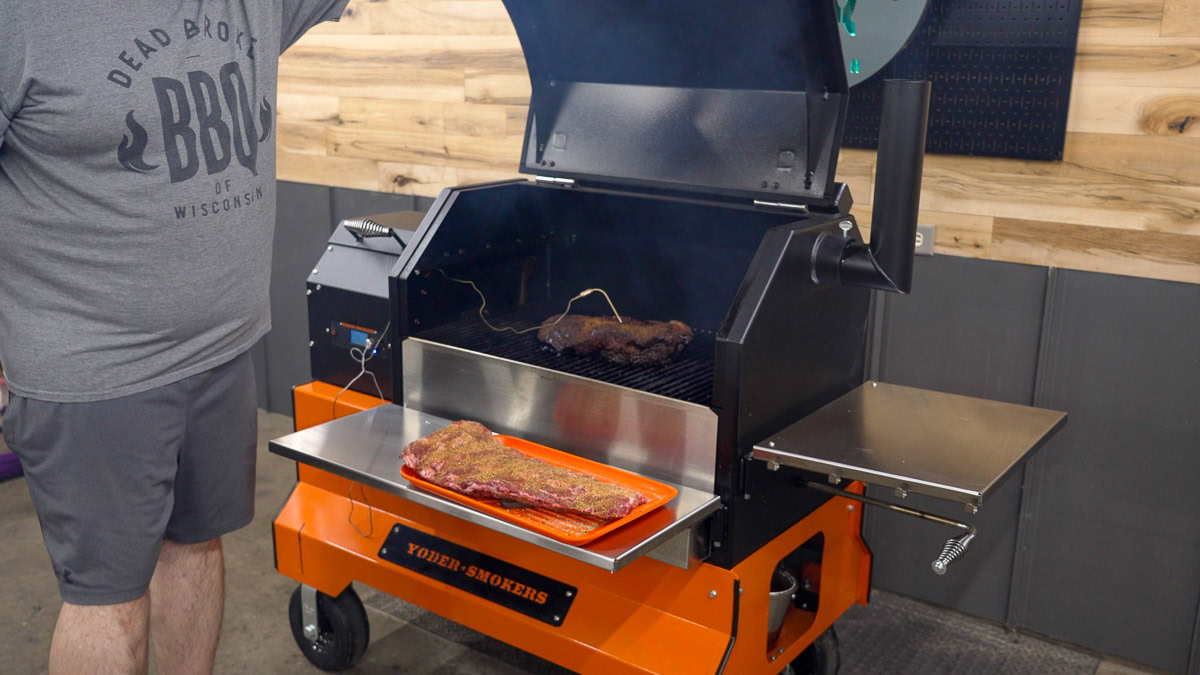
For the big test, there was no way I wasn’t doing an overnight brisket. It’s a fun little test to see how a grill performs. Thanks to the app, I could monitor it the whole time, and I’ll be honest, I only checked on that brisket four times from start to finish.
I put it on the grill, then came back hours later to add a rack of beef back ribs and give the brisket a spritz.
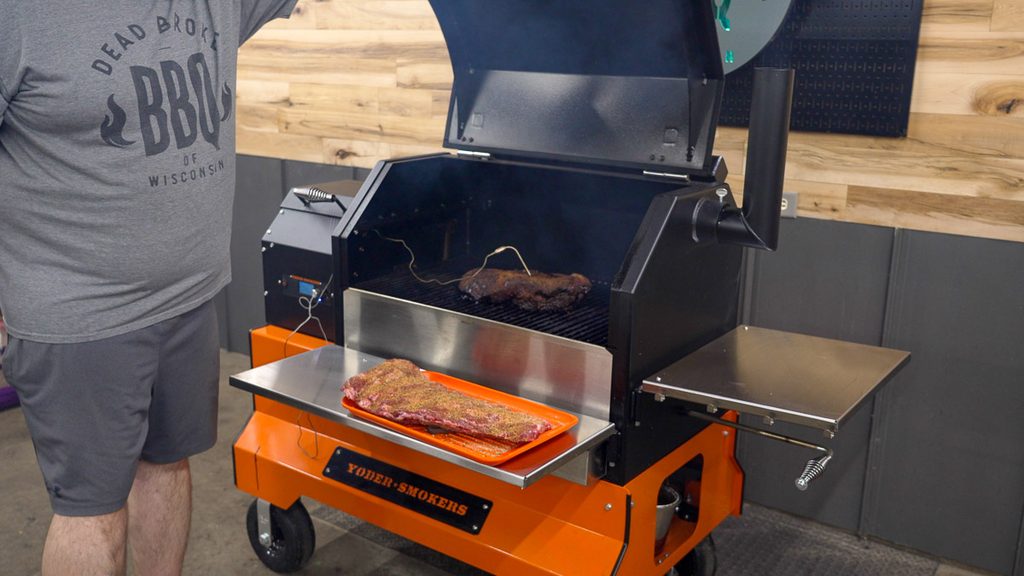
At about 180°F internal, I wrapped it in butcher paper, and when my probe read around 205°F, I came out to check. It was done.
The bonus was that the ribs were done too, so both got wrapped up and went into the cooler for a 2-hour nap.
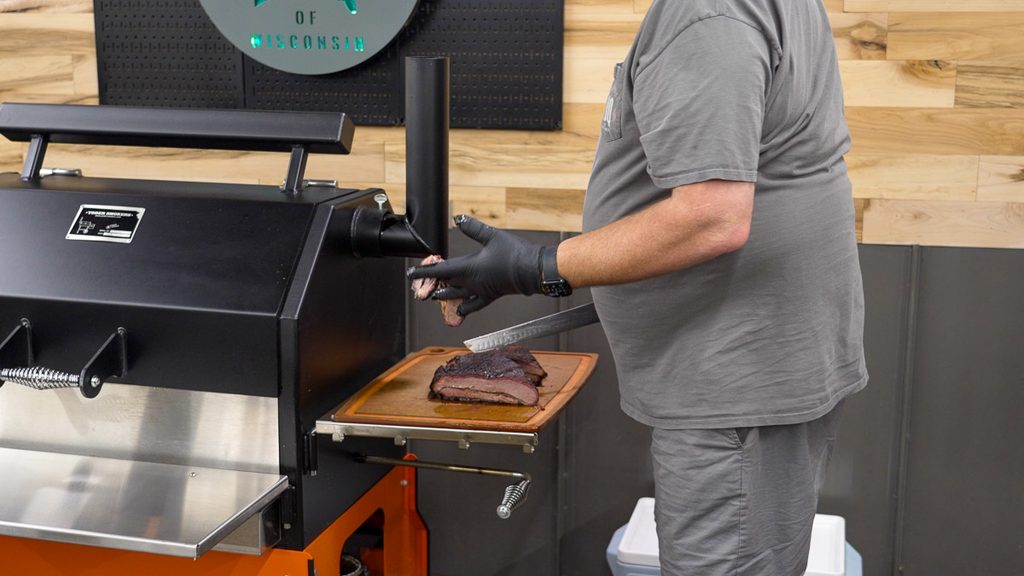
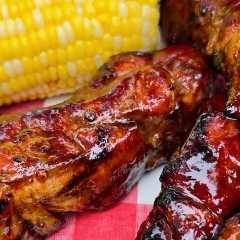
Both the brisket and the ribs were tender and juicy. But the big thing I noticed was that smoky flavor. It just seemed to have a tad more than some of the other pellet grills I’ve been running lately.
If you’re looking at the standard cart, none of this changes. It’s the same 10-gauge chamber and the same controller, so you’ll get the same results. The cart only changes how you live with the pit, not how it cooks.
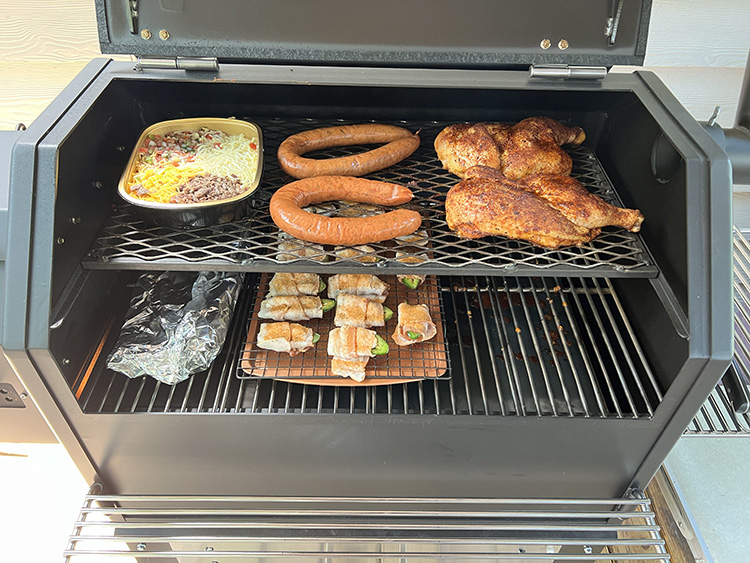
Grilling on the YS640s
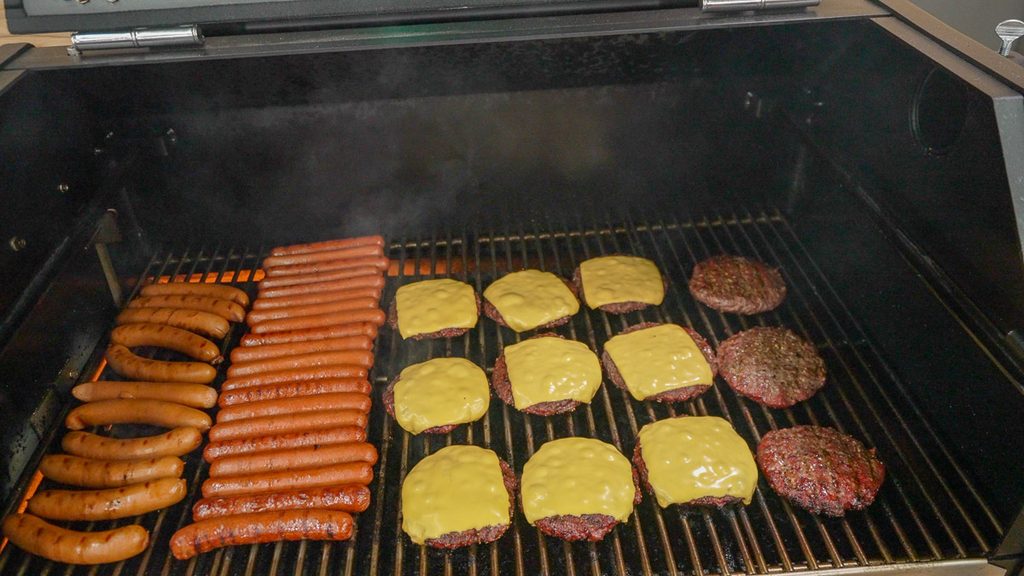
With birthdays and everything going on, I actually grilled on this pit more than I smoked on it, and there aren’t many pellet grills I can say that about.
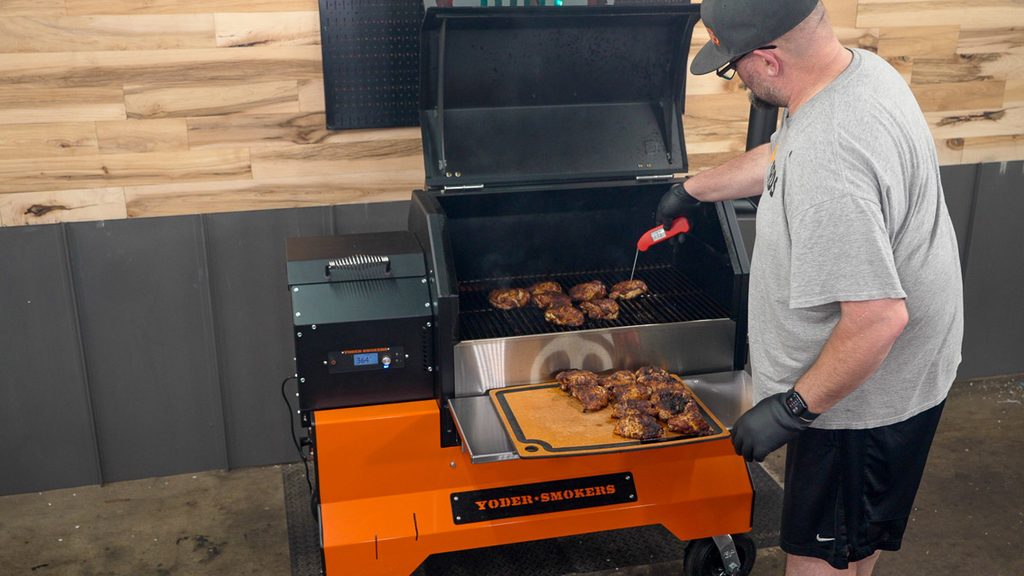
I kept it easy and set it at 350°F, which is the startup temp when you first fire it up anyway.
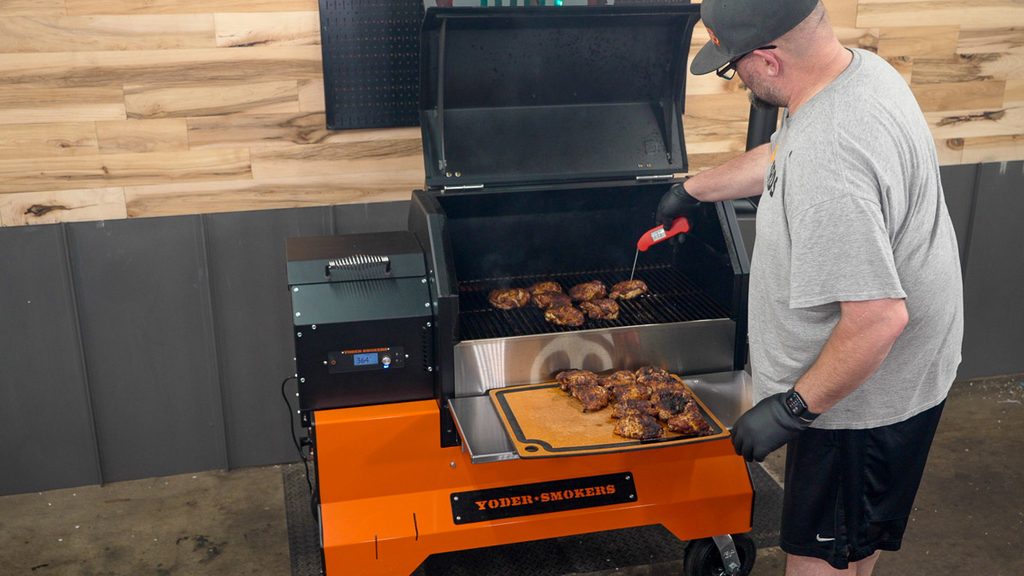
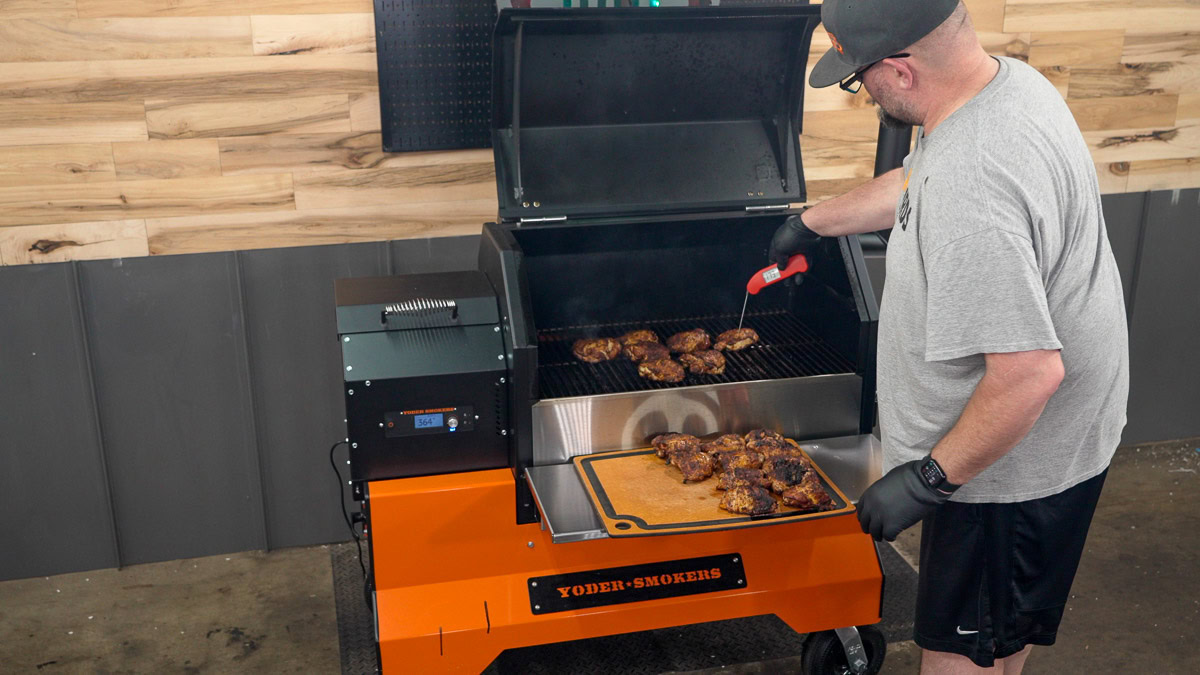
Grilled chicken thighs were a perfect chance to see how evenly the whole pit cooks, and for the most part everything was done at about the same time. A couple needed a little longer, but they were thicker. They got some nice crispy, charred color and tasted nice and smoky.
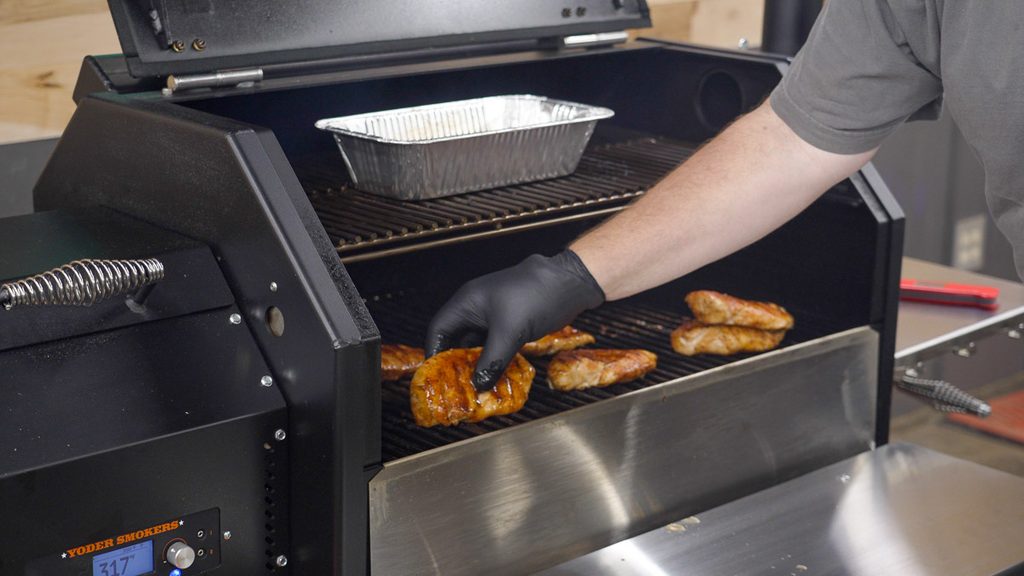
BBQ chicken breasts at 350°F were easy. I got some nice grill marks, then dipped them in our favorite sauce to give them a caramelized finish.
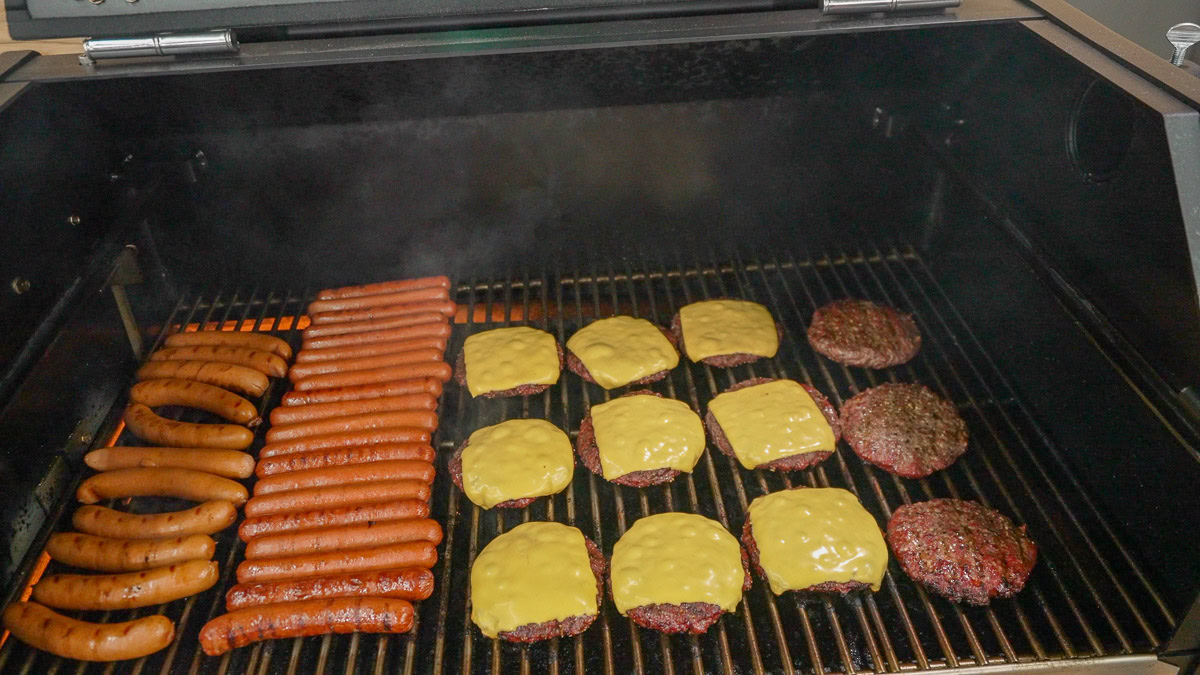
And if you’re having a party with a bunch of family coming over, this pit has no problem grilling up hot dogs and hamburgers. You even get some really nice color, a little bit of smoky red with some char marks.
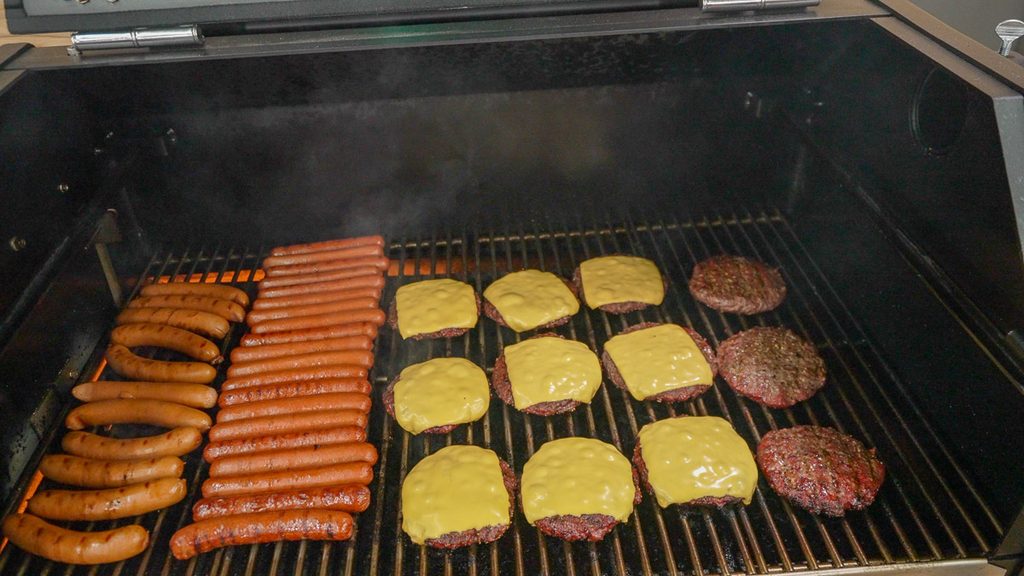
If you’re only cooking a few steaks, push the damper in to concentrate the heat over the fire pot. For true direct-flame searing, lift out the diffuser access door and cook right over the fire.
For even more heat, Yoder recommends adding GrillGrates for the YS640s, which push the max temp past 650°F.
The controller and app
Yoder runs its own ACS controller, but it partners with FireBoard for the app and temperature monitoring, and I’ve run enough FireBoard gear to say it’s one of the better setups on the market.
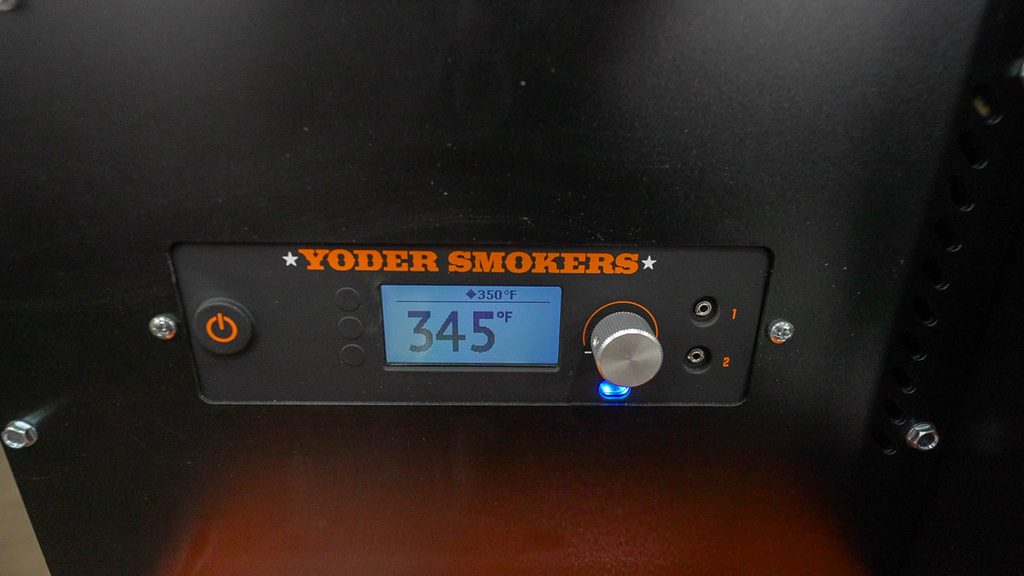
That’s what made the overnight brisket so easy. I watched the pit and meat temps from bed, and I only went outside when something actually needed doing. Two food probes come in the box. They plug in through a port inside the chamber, so you’re not running wires under the lid.
The screen itself looks a little dated compared to what you find on the latest Traegers, but you still get plenty of functionality, including a graph of pit and meat temps over the whole cook, which is handy for figuring out what happened when the stall hit.
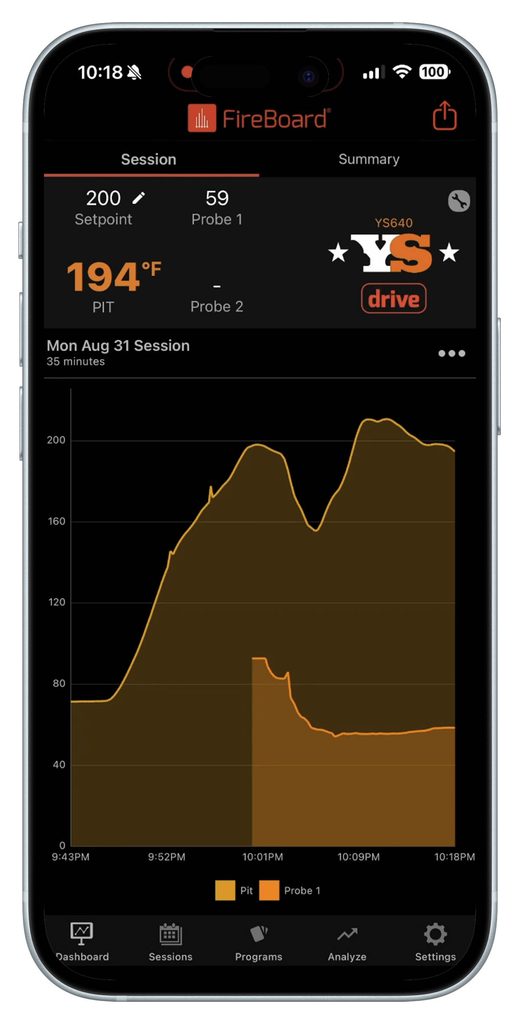
The real advantage of this system is the programs you can set up. For example, bumping the temp up at a certain time or once the meat hits a target. And because it all runs over Wi-Fi, you can check on your brisket from the grocery store while you’re grabbing whatever you forgot.
The temperature range is one of Yoder’s underrated strengths. It runs from 150 to 600°F, and both ends of that range are useful. At the bottom, 150°F is lower than a lot of pellet grills can hold. Many bottom out around 180°F, and that gap matters when you’re making jerky, smoking sausage or fish, or keeping food warm without cooking it further. At the top, 600°F gets you into real searing territory for steaks, and it’s hot enough for pizza with Yoder’s wood-fired oven insert.
It lights with a ceramic igniter, and those last a lot longer than the old hot rod igniters. Yoder backs both the controller and the igniter with a 3-year warranty.
Cleaning the YS640S
Cleaning the YS640s is pretty much the same as any other pellet grill. The one difference is that everything is heavier, especially that upper interlocking rack. That’s some seriously heavy metal, so take your time pulling it out.
For the drip pan, I’d grab a metal scraper to get all the gunk off. A plastic one will work, but on a pan this heavy I’ll always use metal. You’re not trying to sharpen anything, just get it clean.
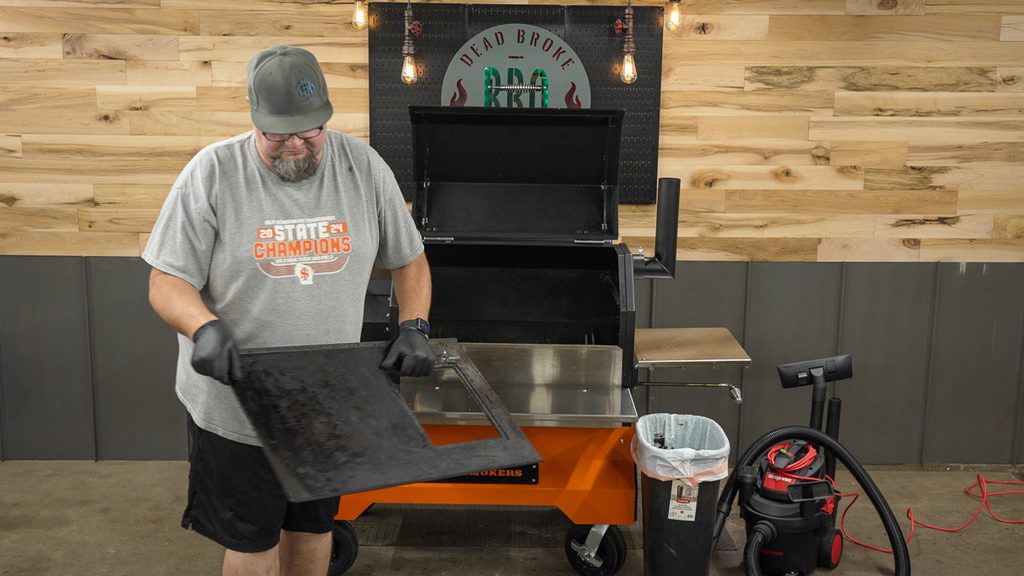
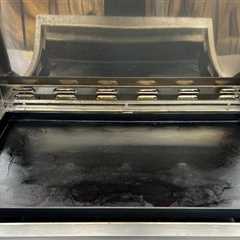
The big surprise came when I pulled the drip pan out. There wasn’t a bunch of grease in the bottom of the chamber. After five or six cooks on some pits, the grease mixes in with the ash and you have to scrape it all out. Here, I could just vacuum it straight out.
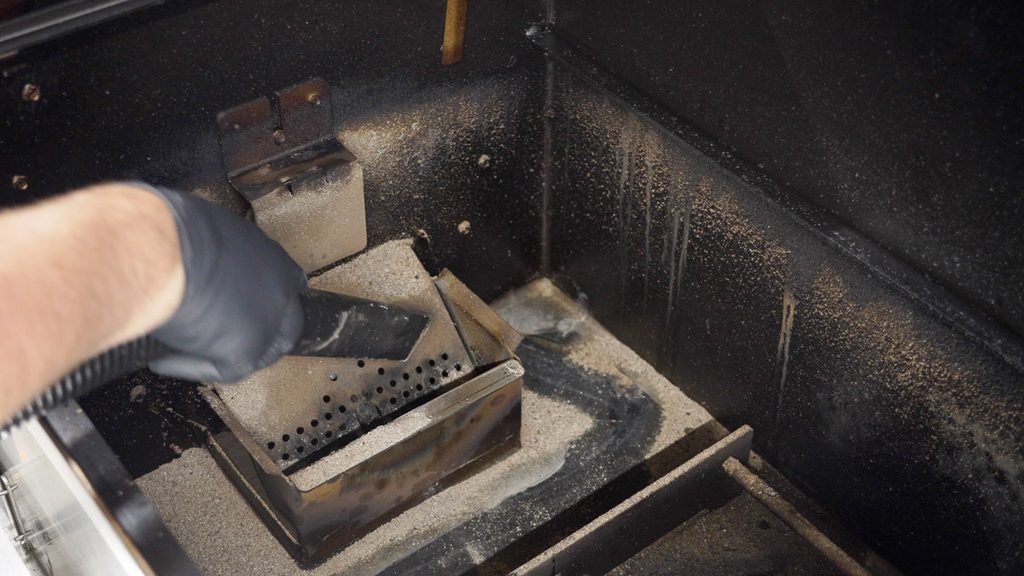
The grease that does drain off ends up in a hanging bucket. I’m usually not a big fan of that design. I’d rather have a discreet grease catch built into the grill. But Yoder was smart about it and tucked the bucket into its own cubby, out of the way, where it hooks on and can swing when you move the pit.
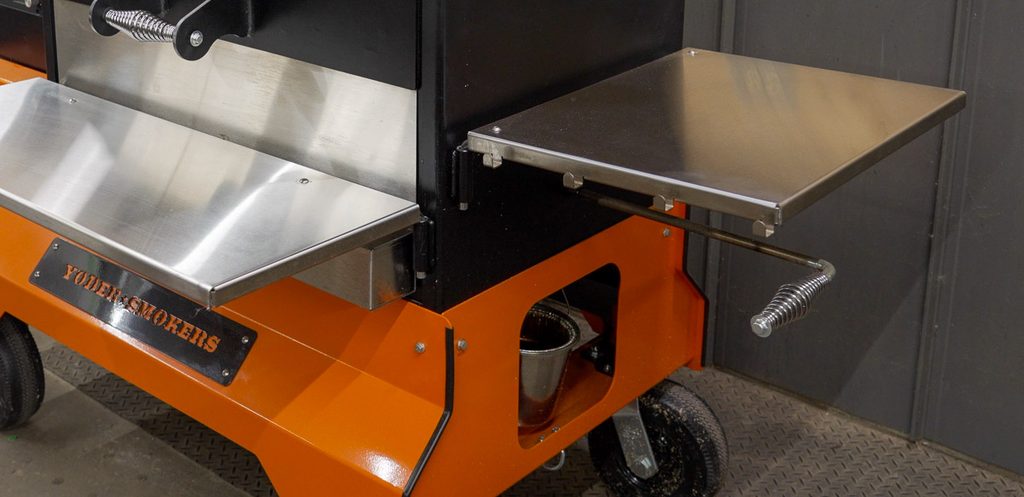
It’s not sitting out in the open waiting for someone to knock it over.
YS640s configurations and options
Every YS640s has the same cooking chamber, the same ACS controller and the same smoke performance. What you’re choosing is the cart, and the extras you build around it.
The standard cart: best value
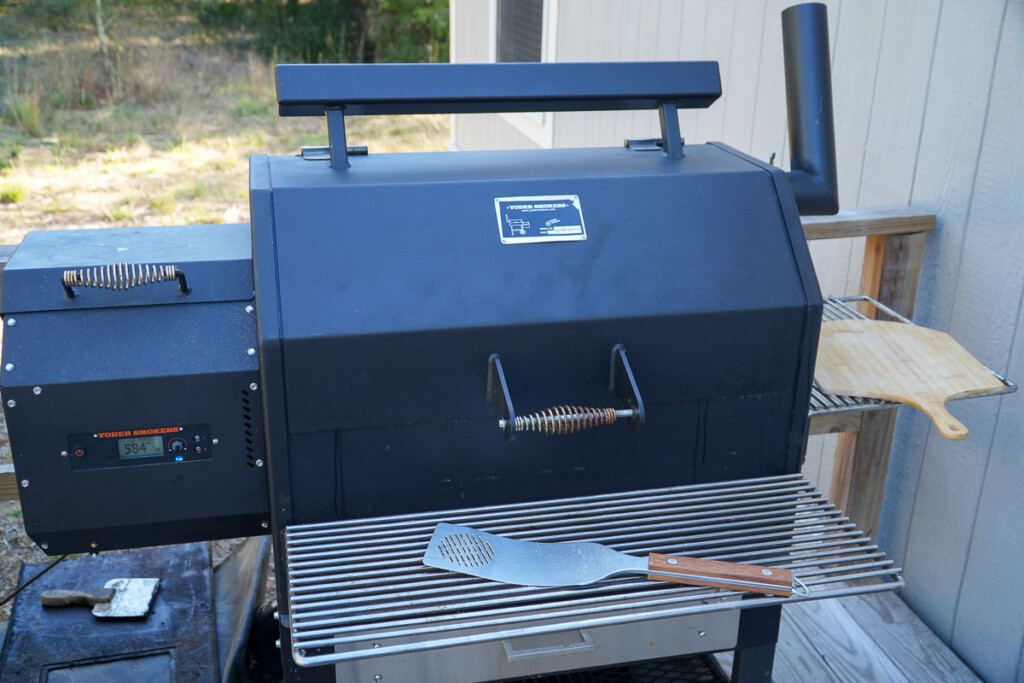
The standard cart is where I’d start most people. You get the exact same grill I’ve been cooking on for the lowest price. That makes it the best value in the lineup, and it’s the most popular configuration for a reason.
From there, there are a few add-ons worth knowing about:
- Ultimate Grilling Bundle – mostly consumables like pellets, rubs, drip bucket liners, and a brine bag, plus a few genuinely useful pieces: a cover, grease shield, stainless drip bucket, grill mat, magnetic hooks, and the magnetic paper towel holder I used on nearly every cook. It’s only offered when you buy the grill.
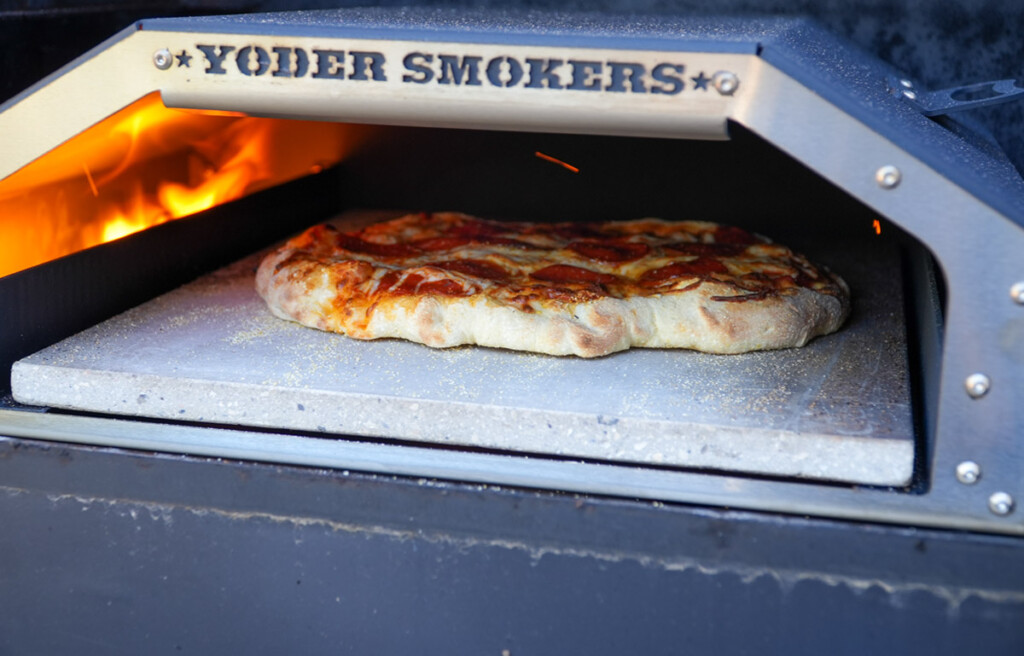
- Wood-fired oven insert – turns the YS640s into a pizza oven. We’ve tested it, and you can read our full Yoder pizza oven review here.
- Rotisserie kit – new YS640s grills come pre-drilled for it. We haven’t tested this one ourselves.
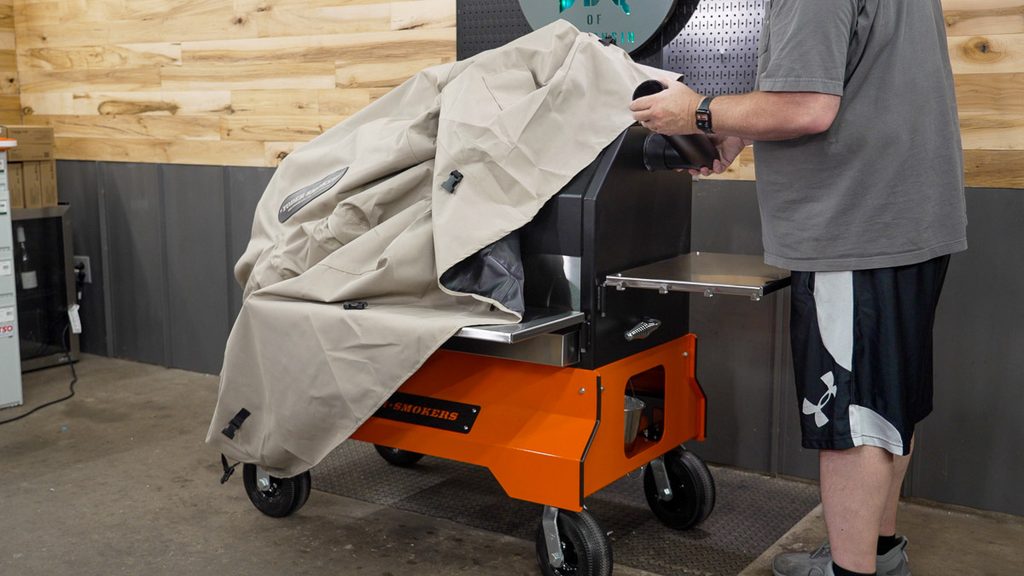
- A cover – whatever else you skip, get a cover. You’re spending serious money on steel, so protect it from the weather.
The competition cart: the upgrade
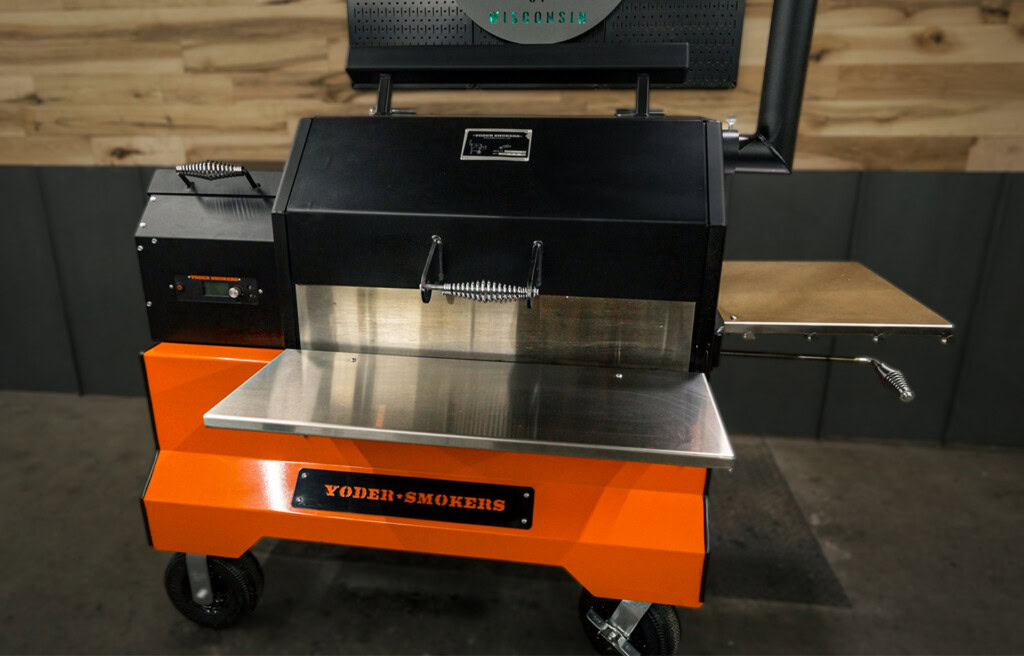
Step up to the competition cart, and you get the striking bright cart (available in seven colors), a heavier 10 gauge frame, bigger wheels with locking casters, and tie-downs for hauling it to a cookout or contest.
If you go for the comp cart you can also opt to swap the wire shelves for stainless steel (which I did, and I’d do again), and go from 8″ to 10″ tires if you’re rolling over gravel or grass.
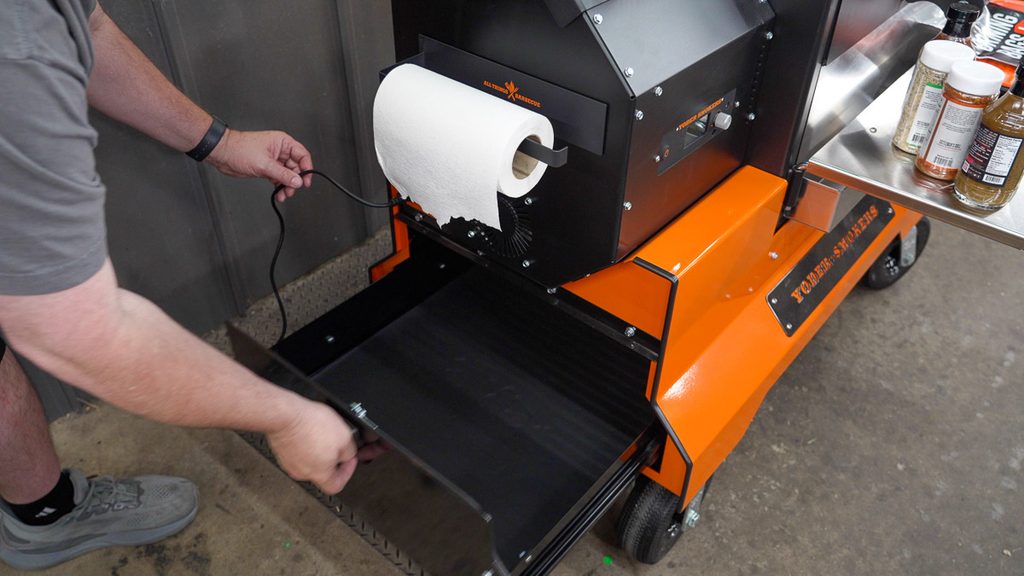
If you want even more, the competition cart with storage drawer adds the full-width pull-out drawer I raved about earlier. It’s my favorite quality-of-life feature on this pit, but it’s a big jump in price, so decide how much that storage is worth to you.
Other configurations
Yoder offers three more setups that I haven’t cooked on, but they’re worth knowing about:
- Outlander – the all-terrain option, with oversized pneumatic tires, a reinforced chassis and an integrated handle. If my biggest gripe about the comp cart (no pull handle) is a dealbreaker for you, this is the fix.
- Built-in with valance kit – drops into a non-combustible countertop in an outdoor kitchen setup.
- Built-in with double access doors – a ready-to-finish island frame with doors for storage and the drip bucket.
How the YS640s compares to the competition
Yoder YS640s vs Lone Star Grillz
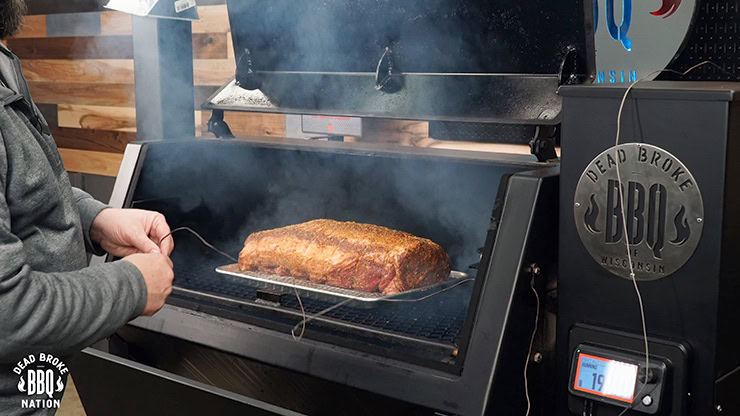
This is the matchup a lot of you asked about in the YouTube comments. Both are heavy, American-made pits built for people who care about smoke flavor, and our Lone Star Grillz review rated its smoke flavor as some of the best we’ve tasted from a pellet grill.
The LSG gives you more cooking space, double the hopper capacity, six probes, and a lifetime warranty on the chamber. The trade-off is availability. Lone Star builds to order, and wait times have run 8 to 14 weeks. The Yoder gives you a wider temperature range, more cart options, and much faster delivery through All Things Barbecue.
The base LSG starts a few hundred dollars more than the Yoder, but with configuration options you can spec it to over $10,000.
I’ll be doing a more detailed comparison of these two pits in the future.
Yoder YS640s vs Traeger Timberline
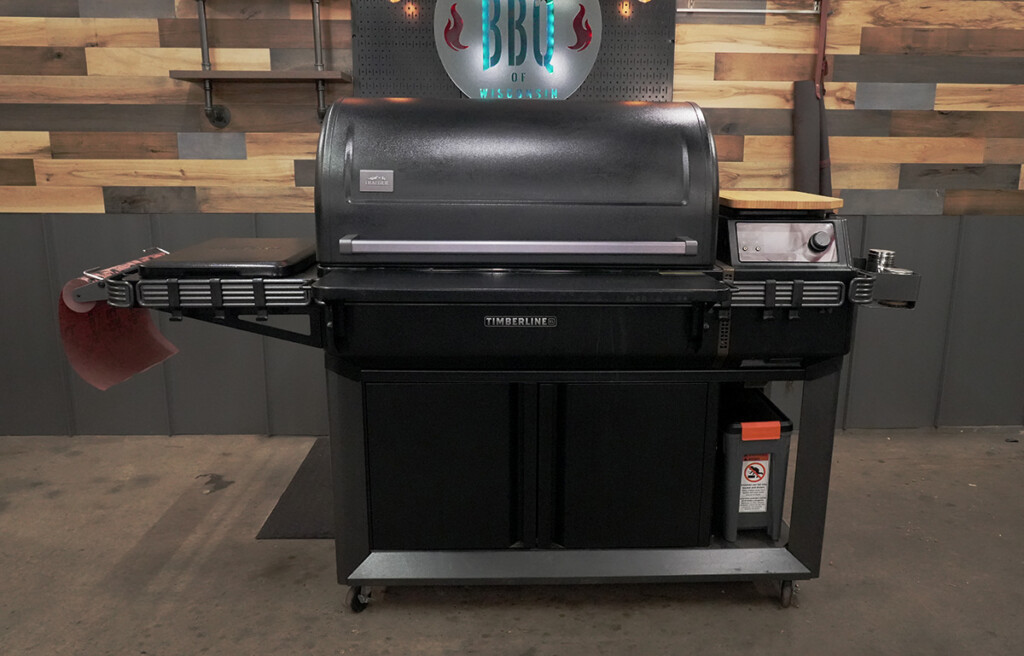
The Timberline is Traeger’s flagship, and it takes a very different approach.
Where the Yoder relies on heavy steel, the Timberline uses an insulated double-wall chamber, a touchscreen controller, a built-in induction burner, a pellet sensor, and a pellet dump.
It’s the Tesla of pellet grills: sleek, packed with tech, and built around convenience. The Yoder is more like a Ford F-150. It’s less flashy, built tougher, made in America, and it’ll still be running long after the novelty wears off.
Is the Yoder YS640s worth it?
At the start of this review, I asked what a heavy-duty, made-in-America pit actually does better than a box store pellet grill at less than half the price. After years of cooking on the standard YS640s and after putting the competition cart through its paces, here’s my answer.
It tastes like smoke. That’s the big one. I wrote it down on every cook, and the overnight brisket and ribs had a little more smoke flavor than the other pellet grills I’ve been running lately. If you’ve ever bought a pellet grill and been let down by how little smoke your food picked up, that alone is a reason to look at a Yoder.
The rest is how it’s built. The 10-gauge chamber feels like equipment, not an appliance. The temps settled to within about 10°F across the grate, and the controller and app let me sleep through a brisket. The 10-year warranty on the grill body tells you Yoder expects it to last. It isn’t perfect, though. It’s heavy and awkward to steer, and you’re paying a lot more than you would at a box store.
But none of that would stop me from buying one, and I’m not the only one who feels that way. A couple of Yoder owners we’ve talked to came over from other pellet grills, and the same thing kept coming up: they wish they’d skipped the cheaper pit and bought this one first. That’s what buy once, cry once really means.
I’m already looking forward to running a prime rib and a turkey on it this holiday season.
|
BEST VALUE
|
BEST UPGRADE
|
|
Pros:
|
Pros:
|
|
Cons:
|
Cons:
|
BEST VALUE
Pros:
- Same 10 gauge chamber, controller and cooking space
- Lighter at about 335 lb
Cons:
- Small casters struggle on gravel and decks
- Basic cart with fewer extras
BEST UPGRADE
Pros:
- Heavy 10 gauge cart with tie-downs
- 8" pneumatic tires and locking casters
Cons:
- Expensive, especially with the drawer
- Heavy to steer at 418 to 505 lb
Did you miss our previous article...
https://manstuffnews.com/backyard-grilling/reverse-sear-country-style-ribs